The best weightlifting belts can improve bracing confidence during heavy squats, deadlifts, and other demanding strength exercises. The right choice depends on more than thickness: belt shape, closure style, material, adjustability, and comfort all affect performance.
We selected 10 weightlifting belts spanning leather powerlifting designs, quick-lock models, lever belts, and adjustable options. Use the comparison and buying advice below to narrow the list to a belt that matches your training style and experience level.
Best 10 Weightlifting Belts Picks for 2026
Leather Power Support
Dark Iron Genuine Leather Belt
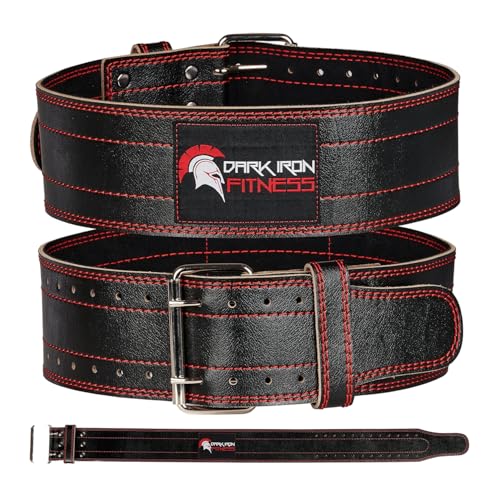
- Genuine leather with reinforced stitching
- Secure double-prong buckle
- 22–49-inch waist range
Best For: Heavy lifting and traditional leather-belt fans
Quick-Lock Performance

- Full-metal self-locking buckle
- Infinitely adjustable nylon fit
- Folds easily for gym bags
Best For: Olympic lifting and fast-paced functional training
Lightweight Leather Comfort
Gymreapers Leather Training Belt

- Reinforced real leather construction
- Lightweight and rolls for storage
- 4-inch back and core support
Best For: Bodybuilding and portable everyday strength training
Heavy-Duty Lever Pick

- Stretch-resistant 10mm leather
- Quick-locking lever buckle
- 4-inch support for squats and deadlifts
Best For: Powerlifters seeking fast, firm support
Comfort-Focused Training Pick
Genuine Leather Suede-Lined Belt

- Suede lining adds cushioning
- Reinforced double-sided leather
- Adjustable buckle for daily training
Best For: Everyday lifting with added interior comfort
Warranty-Backed Lever Pick
IPF-Style 10mm Powerlifting Belt

- Fast-release lever mechanism
- Leather with 4-inch back support
- One-year replacement warranty
Best For: Heavy lifting with quick adjustments and coverage
Best Quick-Lock Belt
Gymreapers Quick Locking Neoprene Belt

- Quick-locking buckle for fast adjustments
- Uniform 4-inch support width
- Lightweight nylon with reinforced stitching
Best For: Fast-paced lifting and cross-training
Best Leather Support
RDX Cowhide Leather Powerlifting Belt

- 7 mm genuine cowhide leather
- 4-inch or 6-inch padded back options
- 10-hole dual-pronged roller buckle
Best For: Heavy squats, deadlifts, and powerlifting
Best Wide Neoprene Support

- Six-inch back support for broad coverage
- Breathable foam core for cushioning
- Adjustable hook-and-loop closure
Best For: Comfort-focused squats, deadlifts, and intense workouts
Leather Power Support – Dark Iron Genuine Leather Belt
For lifters who prefer traditional equipment, this genuine-leather option is a durable choice among weightlifting belts. Its 4-inch width, double-row stitching, and double-prong buckle are designed to provide firm support for squats, deadlifts, powerlifting, and general strength training.
Best For: Lifters seeking rigid leather support and a highly adjustable fit for heavy training.
Pros:
- Genuine leather with reinforced double-row stitching
- Double-prong buckle and keeper loop provide a secure closure
- Twelve adjustment holes accommodate waist sizes from 22 to 49 inches
- Suitable for powerlifting, bodybuilding, CrossFit, and manual-labor support
Cons:
- Leather may require conditioning and proper storage
- Its rigid construction may feel less flexible than nylon belts
This belt is a strong fit for users prioritizing long-term leather construction and a secure double-prong fastening system. Measure around your natural waist at the belly button to select the appropriate size.
Quick-Lock Performance – Element 26 Self-Locking Belt
The Element 26 is a practical pick for athletes who want quick adjustments between sets. This 4-inch nylon belt uses a full-metal self-locking buckle, an infinitely adjustable fit, and a quick-release roller for training sessions that move between squats, deadlifts, cleans, and other lifts.
Best For: Olympic lifting, functional fitness, and lifters who value fast, precise adjustments.
Pros:
- Self-locking metal buckle engages under load
- Infinitely adjustable nylon design supports customized pressure
- Breathable, hand-washable material that does not retain sweat like some alternatives
- Folds easily into a gym bag and is designed for competition use
Cons:
- Nylon may provide a different feel than rigid leather
- The straight 4-inch profile may not suit lifters seeking a contoured belt
Choose this model if convenience, portability, and a quick-release closure matter as much as support. Its pliable nylon construction is intended to conform to the core without a break-in period.
Lightweight Leather Comfort – Gymreapers Leather Training Belt
This Gymreapers model combines real leather construction with a lightweight, form-fitting design. As weightlifting belts go, its 4-inch back support and multiple adjustment holes make it a versatile option for bodybuilding, squats, and general strength sessions without an especially bulky profile.
Best For: Bodybuilders and recreational lifters wanting leather support in a lighter, compact format.
Pros:
- Reinforced real leather and stitching
- Lightweight 1.5-pound design rolls for gym-bag storage
- 4-inch width supports the back, spine, and core
- Metal buckle and numerous adjustment holes help refine the fit
Cons:
- Leather may be less flexible than nylon
- Supplied details list a narrower sizing range than some competing options
This is a sensible middle ground for lifters who want the feel and durability of leather but prefer equipment that is easier to carry. Check the available size and adjustment range before ordering.
Extra-Wide Core Support – RitFit 6-Inch Lifting Belt
The RitFit stands out with a 6-inch contoured profile for lifters who want broader lumbar and core coverage. Its reinforced tricot construction, hook-and-loop strap, and stainless steel buckle are designed for quick adjustment during squats, deadlifts, lunges, and other strength exercises.
Best For: Lifters who prefer extra-wide, padded support and quick hook-and-loop adjustments.
Pros:
- 6-inch contoured design provides broad back and core coverage
- Reinforced tricot is designed for comfort and durability
- Hook-and-loop strap allows quick adjustments
- Available in multiple sizes and colors, with a replacement guarantee if the belt fails
Cons:
- The 6-inch width may feel more substantial than a standard 4-inch belt
- Hook-and-loop closure may appeal less to users seeking a traditional leather buckle
- Supplied size information lists M as 30–36 inches, so careful measuring is important
Consider this belt if maximum coverage and easy adjustability are higher priorities than a minimalist design. Its extra-wide shape is particularly suited to users who want more lumbar-area support during heavy lower-body work.
Heavy-Duty Lever Pick – 10mm Leather Lever Belt
For lifters comparing weightlifting belts for heavy squats and deadlifts, this 10mm leather model emphasizes firm, consistent support and fast setup. Its 4-inch width wraps the torso evenly, while the lever closure is designed for quick tightening and release.
Best For: Powerlifters who want a durable leather belt with a fast-locking lever buckle.
Pros:
- 10mm premium leather construction resists stretching for consistent support.
- Heavy-duty lever buckle enables quick, secure fastening.
- 4-inch width supports the core and lower back during squats and deadlifts.
- Designed for both men and women training with heavy weights.
Cons:
- The lever design is less convenient for frequent size changes than a prong belt.
- Accurate measuring is essential; the listing advises using true waist size rather than pants size.
This is a focused powerlifting belt for users who prioritize sturdy materials, even torso coverage, and quick adjustments. Check the sizing chart carefully before ordering.
Comfort-Focused Training Pick – Genuine Leather Suede-Lined Belt
If comfort matters when choosing weightlifting belts for regular training, this genuine leather model combines a widened support design with a suede lining. Its adjustable buckle and reinforced stitching are intended for cross-training, weightlifting, and daily fitness.
Best For: Everyday lifters who want padded, suede-lined lumbar and abdominal support.
Pros:
- Double-sided leather is designed for strength and durability.
- Suede lining adds padding and helps protect the skin during lifting.
- Widened structure provides support for the back and abdomen.
- Top stitching reinforces the belt for repeated high-strength use.
Cons:
- The listing presents several size ranges, so measuring the true waist is important.
- The 7mm thickness may provide less rigidity than the thicker 9mm or 10mm options in this roundup.
- Its conventional buckle may take longer to adjust than a lever closure.
The suede interior makes this a practical option for daily wear, especially if you prefer a more cushioned feel. Measure around the lower back and over the belly button rather than relying on pants size.
Warranty-Backed Lever Pick – IPF-Style 10mm Powerlifting Belt
For shoppers seeking weightlifting belts built around quick adjustments, this leather lever belt uses a fast-release mechanism and a 4-inch vertical back-support area. The pre-broken leather is intended for heavy squats, deadlifts, weightlifting, and bodybuilding.
Best For: Powerlifters and weightlifters who want lever convenience plus included customer support and warranty coverage.
Pros:
- Lever mechanism allows quick tightening, loosening, and release.
- Thick leather construction is designed to resist breaking, tearing, and wear.
- 4-inch vertical back support helps stabilize the core and lumbar area.
- Includes 24/7 customer support and a one-year free replacement warranty.
Cons:
- The listed medium option covers a 32- to 38-inch waist, so fit should be checked carefully.
- Lever belts are less convenient when multiple users need frequent adjustments.
- The product details list thickness as 9mm, while the title and bullets reference 10mm.
This belt stands out for its rapid lever operation and warranty-backed support. Verify the exact thickness and your waist measurement on the listing before purchase.
Best Quick-Lock Belt – Gymreapers Quick Locking Neoprene Belt
If you want weightlifting belts that are quick to adjust between exercises, the Gymreapers Quick Locking Belt uses a functional buckle system designed for fast locking and unlocking. Its uniform 4-inch width, nylon construction, and reinforced stitching provide consistent support for lifting and cross-training.
Best For: Lifters who prioritize fast adjustments, lightweight construction, and versatile training support.
Pros:
- Quick-locking buckle minimizes downtime between sets and exercises.
- Uniform 4-inch width supports the core around the torso.
- Lightweight nylon design with reinforced stitching.
- Tested for Olympic lifting, bodybuilding, powerlifting, and cross-training.
Cons:
- Nylon may not provide the rigid feel of a thick leather belt.
- Accurate sizing requires measuring around the navel rather than using pant size.
The Gymreapers belt is a practical choice for athletes who move between lifts and conditioning work. Its quick-lock buckle and lightweight build favor convenience, while the consistent width keeps the design focused on all-around support.
Best Leather Support – RDX Cowhide Leather Powerlifting Belt
For lifters seeking durable weightlifting belts with a structured feel, the RDX belt combines 7 mm cowhide leather with a padded lumbar panel. It is available in 4-inch and 6-inch versions and uses a dual-pronged roller buckle with 10 adjustment holes.
Best For: Heavy squats, deadlifts, powerlifting, and lifters who prefer leather construction with detailed adjustability.
Pros:
- Genuine cowhide leather is 7 mm thick for durability and pressure management.
- Available with 4-inch or 6-inch padded back support.
- Dual-pronged steel roller buckle helps prevent slipping and riding.
- Ten precision-drilled holes allow fine-tuned adjustment.
Cons:
- Leather construction may feel less flexible than neoprene or nylon.
- Size selection requires careful measuring rather than relying on pant size.
- The listed model is a 4-inch black version, so configuration should be checked before ordering.
The RDX stands out when durability and a more substantial lumbar-support design matter most. Its leather body, suede interior, and twin-prong buckle make it suited to serious strength training, provided you follow the sizing instructions closely.
Best Wide Neoprene Support – DMoose 6-Inch Auto-Lock Belt
The DMoose 6-inch belt is one of the more comfort-focused weightlifting belts in this lineup, pairing neoprene and nylon with a breathable foam core. Its hook-and-loop closure and advanced locking mechanism are designed to provide a snug fit during squats, deadlifts, and intense workouts.
Best For: Lifters who want broad lumbar coverage, cushioning, and easy hook-and-loop adjustability.
Pros:
- Six-inch back support provides broad coverage for heavy lifts and cross-training.
- Breathable 0.375-inch foam core adds cushioning during longer sessions.
- Hook-and-loop closure allows straightforward fit adjustments.
- Contoured neoprene and nylon construction balances flexibility and durability.
Cons:
- Hook-and-loop fastening may appeal less to lifters who prefer a metal buckle.
- The 6-inch back section may feel bulkier than a narrower belt.
- The supplied details identify a medium size, so fit should be verified before purchase.
The DMoose is a sensible option if comfort and extensive back coverage are higher priorities than a rigid leather feel. Its foam core and contoured design make it appropriate for demanding sessions where cushioning and a secure adjustable fit are useful.
How We Picked the Best Weightlifting Belts
We compared these belts by construction, closure system, width, adjustability, materials, and intended use. The selection includes sturdy leather models for powerlifting and heavy compound lifts, as well as quicker-adjusting belts suited to mixed training or shared gym use.
We also considered practical details such as reinforced stitching, buckle security, hole spacing, padding, lumbar coverage, and whether a belt is likely to accommodate different body shapes. A weightlifting belt should support consistent bracing without restricting movement or creating pressure points.
Quick Comparison
| Best For | Look For | Suitable Belt Styles |
|---|---|---|
| Heavy squats and deadlifts | Firm support, durable materials, secure closure | Leather, lever, or 10mm powerlifting belts |
| Cross-training and frequent adjustments | Fast locking and flexible sizing | Self-locking or quick-lock belts |
| New lifters | Comfortable fit and moderate structure | Adjustable leather or padded belts |
| Shared gym use | Simple, repeatable adjustment | Lever or quick-lock belts |
Key Buying Factors for Weightlifting Belts
Material and Stiffness
Leather belts generally provide a rigid, supportive feel and can last for years when cared for properly. Neoprene and other synthetic materials are often lighter and more comfortable for general training, but they may not feel as stable under maximal loads.
Width and Thickness
A 4-inch belt offers a balanced profile for many lifters. Wider 6-inch designs may provide more lumbar coverage, though they can feel restrictive depending on your torso length and lifting style. Thicker belts are typically stiffer and more supportive but require more break-in time.
Closure and Adjustability
Double-prong buckles are secure and straightforward but take longer to adjust. Lever belts provide a tight, repeatable fit, while self-locking and quick-lock systems are convenient when switching exercises or sharing equipment. Check the sizing range carefully, especially if your waist measurement is near either limit.
Fit and Comfort
Measure your waist where the belt will sit rather than relying on your pants size. The belt should feel snug when bracing, with no sharp edges or excessive gaps. A secure fit matters more than choosing the widest or stiffest model available.
Who Should Buy Which Weightlifting Belts?
For Powerlifters and Heavy Strength Training
Choose a rigid leather or lever belt with substantial thickness and a dependable closure. These models are best for lifters who want consistent support during heavy squats, deadlifts, and pressing movements.
For General Gym Training
An adjustable 4-inch leather, padded, or neoprene belt is usually the most versatile option. It can provide useful bracing support without the bulk of a competition-style design.
For Convenience and Changing Workouts
Self-locking and quick-lock belts are practical for high-volume sessions, circuit training, and gyms where you frequently change exercises. They are also easier to adjust between users.
For Beginners
Prioritize fit, comfort, and moderate support over maximum stiffness. A belt should complement sound lifting technique and bracing practice, not compensate for poor form or replace instruction from a qualified coach.