Smart bike rollers make indoor cycling more engaging by combining natural bike movement with connected training features, resistance control, or app compatibility. The right option can improve balance and handling while fitting your available space and budget.
We compared these 10 models for portability, resistance, connectivity, compatibility, and everyday usability so you can choose a roller setup that matches your training goals.
Best 10 Smart Bike Rollers Picks for 2026
Best Overall Smart Bike Rollers

- Floating system supports balance and realistic riding.
- Three magnetic resistance levels.
- Foldable design with Kinomap and Rouvy compatibility.
Best For: Riders wanting realistic, portable indoor training
Best Value Smart Bike Rollers

- Three selectable magnetic resistance levels.
- Folds for compact home storage.
- Compatible with road and mountain bikes.
Best For: Space-conscious riders wanting adjustable resistance
Best Premium Smart Bike Rollers

- Five magnetic resistance settings.
- Carbon-steel frame and 250-pound capacity.
- Heavy 25 kg design favors stability over portability.
Best For: Riders prioritizing a robust, substantial trainer
Best Low-Maintenance Smart Bike Rollers

- Tapered rollers help keep wheels centered.
- No power required and maintenance free.
- Fits 26- to 29-inch wheels and folds down.
Best For: Simple, power-free indoor riding practice
Best Connected Pick
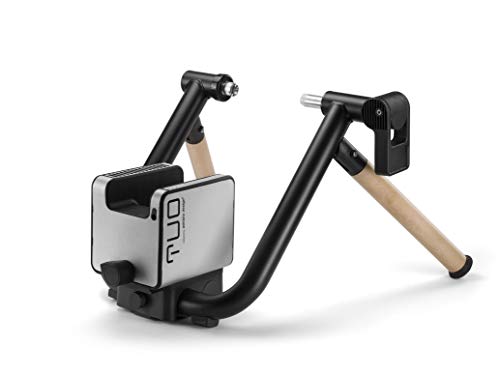
- Automatic resistance with 10% slope simulation
- ANT+ and Bluetooth connectivity
- Compact wheel-on design with two-year warranty
Best For: Connected home training and app-based workouts
Best Mechanical Precision

- Precision-machined 6061 alloy drums
- Folding frame with tool-free adjustment
- Smooth, quiet operation with sealed bearings
Best For: Durable balance and cadence training without app connectivity
Best for Virtual Climbs
ThinkRider X2Max Smart Trainer

- 2,000-watt capacity with ±2% stated accuracy
- Simulates gradients up to 18%
- ANT+ and BLE support for software such as Zwift
Best For: High-resistance virtual climbing and advanced indoor training
Portable Smart Rollers
Unbekannt Arion Roller Trainer
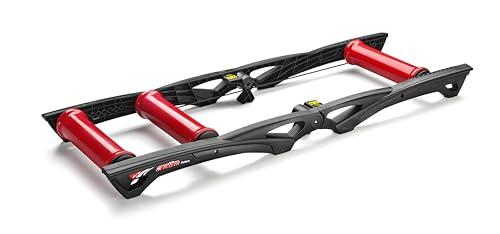
- Foldable, lightweight composite design
- App compatible with Misuro B+ sensor
- Air resistance supports progressive training
Best For: Portable app-compatible roller training
Connected Wheel-On Trainer

- No rear-wheel removal required
- ANT+ FE-C and Bluetooth connectivity
- Electromagnetic resistance for consistent workouts
Best For: Zwift-connected wheel-on training
Foldable Adjustable Rollers

- Parabolic design for added stability
- Folds flat and weighs about 6.5 kg
- Fits bikes from 16 to 29 inches
Best For: Portable mechanical roller workouts
Best Overall Smart Bike Rollers – Elite Quick-Motion
The Elite Quick-Motion is a versatile choice among smart bike rollers for riders who want a realistic indoor feel with convenient portability. Its floating system is designed to improve balance and stability, while three magnetic resistance levels support everything from warm-ups to harder sessions.
Best For: Riders seeking a realistic, foldable roller with app compatibility.
Pros:
- Floating mechanism promotes a more natural ride feel and improved balance.
- Three magnetic resistance settings allow simple intensity adjustments.
- Folds flat and works with Kinomap and Rouvy for interactive training.
Cons:
- Resistance adjustment is manual rather than electronically controlled.
- Its 10 kg weight may be less convenient for frequent transport than lighter options.
The Quick-Motion combines practical storage with smooth, quiet operation and useful app support. It is a strong all-around option when stability and portability matter as much as training flexibility.
Best Value Smart Bike Rollers – Elite Arion Mag
The Elite Arion Mag is a compact option for cyclists comparing smart bike rollers for home training. Its folding composite frame, parabolic roller design, and three manual magnetic settings provide straightforward control for endurance rides, intervals, and power work.
Best For: Home users who want compact storage and adjustable roller resistance.
Pros:
- Three resistance levels can be changed with the central selector.
- Folding dimensions suit apartments and space-limited training areas.
- Supports road and mountain bikes and works with Rouvy and Kinomap.
Cons:
- Resistance changes are manual, so it is not fully automatic.
- The supplied specifications list a plastic frame material, which may appeal less to riders seeking metal construction.
With a 150 kg load capacity and stated output up to 520 watts at 40 km/h, the Arion Mag is built for more than casual spinning. Its compact form and app compatibility make it a practical value-focused pick.
Best Premium Smart Bike Rollers – Wahoo KICKR ROLLR
The Wahoo KICKR ROLLR is a substantial indoor roller trainer for cyclists who prioritize a sturdy platform. It uses magnetic resistance and offers five settings, making it a compelling candidate for smart bike rollers when a heavier carbon-steel build and higher load capacity are important.
Best For: Riders looking for a robust roller platform with more resistance-setting options.
Pros:
- Five resistance settings provide more adjustment steps than the three-level alternatives here.
- Carbon-steel construction offers a substantial trainer platform.
- Supports up to 250 pounds according to the supplied specifications.
Cons:
- At 25 kg, it is notably heavy to move or store.
- The supplied notes do not specify app compatibility or detailed smart-control features.
- It has a one-year manufacturer warranty, shorter than some listed alternatives.
The KICKR ROLLR stands out primarily for its sturdy construction, five settings, and generous load capacity. Choose it when a solid, heavy-duty setup is more important than easy portability or clearly documented app features.
Best Low-Maintenance Smart Bike Rollers – Garmin TacX Antares
The Garmin TacX Antares is a straightforward choice among smart bike rollers for riders who want minimal setup and maintenance. Its tapered rollers help keep the wheels centered, while the retractable frame folds down for storage and fits bikes with 26- to 29-inch wheels.
Best For: Riders who want a no-power, maintenance-free roller for basic indoor practice.
Pros:
- Tapered rollers help improve wheel centering and stability.
- Requires no power and is described as maintenance free.
- Fits 26- to 29-inch wheels and folds for storage.
Cons:
- It does not offer the supplied app compatibility features listed for some competing models.
- The supplied notes do not specify adjustable resistance levels.
- Its maximum footprint expands to 53 inches by 18.5 inches during use.
The Antares focuses on simplicity rather than connected training. It is a sensible pick for riders who value centered wheels, broad wheel-size compatibility, and a power-free setup over advanced resistance control.
Best Connected Pick – Elite Tuo Interactive Trainer
The Elite Tuo is a practical choice for cyclists seeking smart bike rollers with automatic resistance and broad device compatibility. Its wheel-on design, ANT+ and Bluetooth support, and 10% slope simulation make it well suited to app-based indoor training without requiring a dedicated bike setup.
Best For: Riders who want connected workouts, simulated climbs, and a compact wheel-on trainer for home use.
Pros:
- Automatically adjusts resistance for interactive training.
- Supports ANT+ FE-C and Bluetooth FTMS, plus power, speed, and cadence data.
- Simulates gradients up to 10% and delivers up to 1,300 watts at 40 km/h.
- Compact alloy-steel frame with a two-year manufacturer warranty.
Cons:
- Its 10% slope simulation and stated power output are lower than those of the ThinkRider X2Max.
- Wheel-on trainers may require more setup attention than direct-drive designs.
The Tuo balances connectivity, practical resistance control, and a home-friendly footprint. Choose it if straightforward app integration matters more than maximum climbing simulation or power capacity.
Best Mechanical Precision – KREITLER Alloy Rollers
The KREITLER Alloy Rollers are a strong option for cyclists comparing smart bike rollers but prioritizing smooth mechanical performance over electronic connectivity. Precision-machined 6061 alloy drums, sealed bearings, and a stable folding steel frame support balance and pedaling-fluidity practice.
Best For: Serious cyclists who value quiet, smooth roller operation, durability, and portable race-day warmups.
Pros:
- CNC-machined alloy drums are designed for balance and a smooth, quiet ride.
- Sealed cartridge bearings support effortless drum rotation.
- Tool-free wheelbase adjustment accommodates different bicycles.
- Folding steel frame simplifies storage and transport.
Cons:
- It uses an air resistance mechanism rather than electronic smart resistance.
- The supplied notes do not list ANT+, Bluetooth, or app connectivity.
- It provides medium resistance, which may not suit riders seeking steep virtual climbs.
KREITLER’s appeal is its precision-built, low-maintenance roller experience rather than automated training control. It is the better fit for riders developing balance and cadence who do not need software-driven resistance.
Best for Virtual Climbs – ThinkRider X2Max Smart Trainer
The ThinkRider X2Max is designed for riders who want smart bike rollers with high power capacity and pronounced virtual climbing resistance. Its electromagnetic system supports ANT+ and BLE, works with software such as Zwift, and simulates gradients up to 18%.
Best For: Advanced indoor cyclists who want powerful resistance, software-controlled climbs, and a stable direct-drive-style training platform.
Pros:
- Provides up to 2,000 watts with stated power accuracy of ±2%.
- Simulates slopes up to 18% and automatically matches software-based gradients.
- Supports ANT+ and BLE connectivity with mainstream cycling software such as Zwift.
- I-beam triangular structure is designed for balance and stability.
Cons:
- Cassette is not included.
- At 35.2 pounds, it is less convenient to move than a lighter roller system.
- Its one-year warranty is shorter than the Elite Tuo’s stated warranty.
With its 2,000-watt ceiling and 18% gradient simulation, the X2Max is the strongest choice here for demanding virtual routes. Factor in the separate cassette requirement and heavier frame when planning your setup.
Portable Smart Rollers – Unbekannt Arion Roller Trainer
The Unbekannt Arion Roller Trainer is a practical choice for cyclists seeking smart bike rollers with app compatibility. Its foldable composite design supports road and mountain bikes, while the air resistance system delivers progressively harder training as speed increases.
Best For: Cyclists who want portable rollers with optional app connectivity through the Misuro B+ sensor.
Pros:
- Folds for easier storage and portability.
- Supports road and mountain bikes with wheels up to 29 inches.
- Works with My E-Training, Zwift, TrainerRoad, Kinomap, and other apps when paired with a Misuro B+ sensor.
- Provides up to 130 watts at 20 km/h and 280 watts at 40 km/h.
Cons:
- App connectivity requires the Misuro B+ sensor.
- Air resistance may offer less precise control than electronically controlled trainers.
The Arion stands out for compact storage and broad software compatibility, making it a flexible option for riders who value portability and traditional roller training.
Connected Wheel-On Trainer – Saris M2 Smart Indoor Trainer
Saris M2 Smart Indoor Bike Trainer, Compatible with Zwift App, Black, Made in the USA
Check Price On AmazonThe Saris M2 is a wheel-on smart bike trainer for riders who want controlled indoor workouts without removing the rear wheel. Its electromagnetic resistance connects to Zwift and other training apps through ANT+ FE-C or Bluetooth.
Best For: Riders who want app-connected, measured training with a straightforward wheel-on setup.
Pros:
- Installs without removing the bike’s rear wheel.
- Electromagnetic resistance provides consistent workouts.
- Supports ANT+ FE-C and Bluetooth connectivity and is Zwift certified.
- Includes a steel quick-release skewer and one month of Rouvy access.
Cons:
- Reported noise is 69 decibels at 20 mph.
- Listed accuracy is plus or minus 5 percent.
- The supplied compatibility details specifically identify mountain bikes and common road and mountain bike frames.
Choose the M2 when convenient setup and electronically controlled resistance matter more than the freewheel feel or compact roller format of traditional rollers.
Foldable Adjustable Rollers – ROCKBROS Bike Roller Trainer
The ROCKBROS Bike Roller Trainer offers a simple, portable approach to smart bike rollers, with an adjustable aluminum frame and mechanical resistance. Its parabolic roller shape is designed to improve stability, while the foldable construction suits riders with limited storage space.
Best For: Road, mountain, and folding-bike riders seeking lightweight, adjustable rollers for basic indoor exercise.
Pros:
- Parabolic rollers help enhance stability compared with straight rollers.
- Folds flat and weighs approximately 6.5 kg for easier carrying and storage.
- Adjusts to 16- to 29-inch bikes, including MTB, road, and folding bikes.
- Sealed bearings are designed for smoother operation.
Cons:
- Uses mechanical resistance rather than electronic app-controlled resistance.
- The supplied notes do not list Bluetooth, ANT+, or direct training-app compatibility.
The ROCKBROS is a sensible pick for riders prioritizing portability, broad bike-size adjustment, and roller stability over connected smart-training features.
How We Picked These Smart Bike Rollers
We focused on the features that matter most for consistent indoor riding: roller stability, frame portability, resistance adjustment, bike compatibility, noise considerations, and smart connectivity. Some products are traditional rollers designed for balance and technique, while others are wheel-on or hybrid trainers that offer electronic resistance and virtual-riding support.
Because product specifications and regional packages can vary, confirm the included accessories, axle compatibility, maximum rider or bike limits, and app requirements before ordering. ANT+ and Bluetooth support can also differ by device, so check that your computer, tablet, or training app is compatible.
Quick Comparison
| Best For | Look For |
|---|---|
| Balance and bike handling | Parabolic rollers, stable frames, and smooth resistance |
| Structured virtual training | Electronic resistance, ANT+ or Bluetooth, and app support |
| Small spaces | Foldable construction, retractable frames, and easy storage |
| Road and MTB flexibility | Adjustable roller spacing and broad tire compatibility |
| Outdoor-style durability | Rigid alloy construction and replaceable components |
Key Buying Factors for Smart Bike Rollers
Roller Type and Stability
Traditional rollers require more balance but provide a natural, active riding experience. Parabolic drums help keep the bike centered, making them more approachable for beginners. Wheel-on smart trainers hold the rear wheel in place and are generally easier for hard intervals, though they do not replicate free-balancing quite as closely.
Resistance and Training Features
Basic rollers may rely on gearing and cadence changes, while resistance-equipped models provide more control for climbs and structured workouts. If you plan to use Zwift or another training platform, verify whether resistance is genuinely controllable or whether the product only broadcasts speed and cadence.
Connectivity and Compatibility
ANT+ and Bluetooth are useful for pairing with cycling computers, phones, tablets, and training apps. Check whether you need a separate speed sensor, USB adapter, or front-wheel support. Also confirm compatibility with your bike’s wheel size, tire width, axle type, and drivetrain setup.
Storage, Noise, and Setup
Foldable designs are valuable in apartments or shared spaces, but a compact frame should still lock securely during use. Smooth drums and correctly inflated tires can reduce noise and vibration. Place the trainer on a firm, level surface and use a mat to protect the floor.
Who Should Buy Which Smart Bike Rollers?
Choose parabolic rollers if you want to improve balance, pedaling smoothness, and bike handling. A foldable model is the practical choice when storage space is limited. Select a connected wheel-on or hybrid trainer if your priority is automated resistance, virtual courses, and interval workouts.
Riders with multiple bikes should prioritize adjustable spacing and wide compatibility, while frequent travelers should favor a lightweight folding frame. For serious training, prioritize accurate power or resistance control and reliable wireless protocols over a low purchase price. Beginners should choose stability and simple setup first, then add connected features if they will genuinely use them.