Marathon hydration is easier when your water, fuel, and phone stay accessible without forcing you to rely entirely on aid stations. The right belt should carry enough fluid for your plan while remaining stable, comfortable, and easy to use at race pace.
We’ve selected 10 running hydration belts for marathons with different capacities, bottle styles, storage layouts, and price points. Use the guide below to match your distance strategy, fit preferences, and essential-carry needs.
Best 10 Running Hydration Belts for Marathons Picks for 2026
Fully Loaded Pick

- 12oz Quick Flow bottle with contoured fit
- Phone pocket, four gel holders, and bib toggles
- Reflective, water-resistant, bounce-free design
Best For: Race-day runners who want organized storage and built-in fueling features
Versatile Hydration Pick

- 600 ml insulated 3D hydration bottle included
- 45-degree holder supports quick bottle access
- Large zip pocket with key holder
Best For: Runners wanting lightweight hydration for races, trails, or all-weather use
Flexible Bottle Holder Pick
AiRunTech Running Hydration Belt

- Adjustable 20-49 inch hip fit
- Angled holder fits bottles up to 3.2 inches
- Three pockets plus bungee attachment storage
Best For: Runners who want broad adjustability and prefer using their own bottle
Best Lightweight Pick
Nathan Swift Plus 10 oz Hydration Belt

- Lightweight 7-ounce design
- 10-ounce flask with angled access
- Phone pocket plus gel storage
Best For: Shorter races and training runs where low weight and organization matter
Best Two-Bottle Value
Number-one Running Belt with Water Bottles

- Includes two 6.5-ounce bottles
- Layered storage fits phones and essentials
- Adjustable fit for 27- to 59-inch waists
Best For: Short-to-medium runs needing two bottles and organized storage
Best Higher-Capacity Option
Nathan Peak 18 oz Hydration Waist Pack
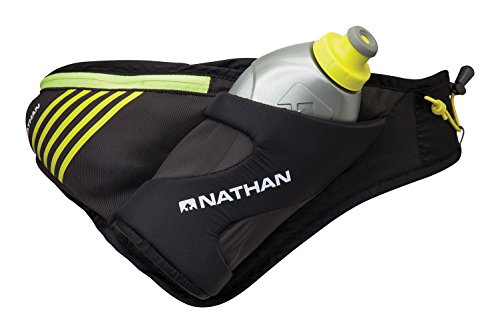
- 18-ounce Speed Draw Flask
- Expandable zippered stretch pocket
- Reflective trim and angled bottle access
Best For: Runners wanting more capacity in a compact waist-pack design
Best Anti-Slip Pick
Luckit Two-Bottle Hydration Belt

- Two included 300 ml bottles
- Nonelastic straps resist sliding
- Three-pocket storage with reflective details
Best For: Marathon training and medium-distance runs needing two bottles
Best Heavy-Duty Pick
AONIJIE Soft-Flask Running Belt

- 60 g belt with 250 ml flask
- Four pockets for phone and essentials
- Soft, quick-drying, adjustable fabric
Best For: Shorter runs and workouts where low weight matters
Best Race-Day Storage
PYFK Reflective Two-Bottle Belt

- Two BPA-free 10 oz bottles
- Main pocket fits phones up to 7 inches
- Bib clips and anti-chafe grip detail
Best For: Race days needing two bottles and bib attachment points
Fully Loaded Pick – Fitletic 12oz Hydration Belt
For runners comparing running hydration belts for marathons, the Fitletic Fully Loaded combines quick-access hydration with race-focused storage. It includes a 12-ounce bottle, four gel holders, bib toggles, reflective accents, and a zippered pocket sized for many phones.
Best For: Marathon runners who want an all-in-one belt with race-day features and organized storage.
Pros:
- Includes a contoured 12-ounce Quick Flow bottle designed to reduce bouncing.
- Large 8-by-4-inch pocket includes an organizer for essentials and fits many smartphones.
- Four gel holders, race bib toggles, reflective accents, and a water-resistant, sweat-wicking design add race-day utility.
Cons:
- The S/M version fits 24 to 34 inches, so sizing is limited for some runners.
- The bottle holds less than several larger hydration options.
- Hand-wash-only care may be less convenient.
This is a feature-rich choice for runners who want hydration, fuel storage, and bib attachment in one compact belt. Its 12-ounce capacity is best suited to shorter unsupported stretches or races with reliable aid stations.
Versatile Hydration Pick – Salomon Active Bottle Belt
The Salomon Active Bottle Belt is a lightweight option among running hydration belts for marathons, with a 600 ml insulated bottle and angled holder for easier access. Its zippered pocket provides room for gels, nutrition, and small essentials.
Best For: Runners, hikers, and multisport users seeking a lightweight belt with more than a small bottle capacity.
Pros:
- Includes a 0.6-liter 3D bottle with thermic PE foam insulation.
- The 45-degree bottle angle is intended to improve access during activity.
- Large zippered pocket includes a key holder and stores nutrition or small gear.
Cons:
- One listed pocket may provide less organization than multi-pocket belts.
- The universal sizing and buckle adjustment may require careful fitting.
- It is hand-wash-only.
With a larger bottle than many minimalist race belts, this Salomon model can reduce refill needs while remaining relatively lightweight. The single main pocket keeps the design simple, but runners carrying several small items may prefer more compartmentalization.
Minimalist Comfort Pick – CamelBak Ultra Running Belt
For runners seeking running hydration belts for marathons without a bulky setup, the CamelBak Ultra uses a stretch-fit waist design and includes a collapsible 17-ounce Quick Stow Flask. Its mesh construction, phone pocket, and reflective details support longer training runs and race-day use.
Best For: Size-specific runners who prioritize lightweight comfort, breathable materials, and compact hydration.
Pros:
- The included 17-ounce flask collapses to reduce bulk when empty.
- 3D Micro Mesh promotes airflow and cushioning to help limit heat and chafing.
- Zippered phone storage, five pockets, cargo capacity, and reflective details add useful carrying and visibility features.
Cons:
- The S/M stretch fit is not adjustable, so accurate sizing is important.
- The 17-ounce capacity may be limited for unsupported marathon sections.
- The listed dimensions and pocket configuration may feel more substantial than a truly minimal belt.
This CamelBak is a strong fit for runners who value a soft, breathable feel and a collapsible bottle. Check the size carefully before buying, since the belt does not offer adjustable sizing.
Flexible Bottle Holder Pick – AiRunTech Running Hydration Belt
The AiRunTech belt stands out among running hydration belts for marathons by letting runners use their own bottle while carrying a phone, gels, keys, and other essentials. Its adjustable hook-and-loop fit, angled bottle holder, and multiple pockets target stable, low-profile carrying.
Best For: Runners who already own a compatible bottle and need broad waist adjustability plus storage.
Pros:
- Adjusts for hips from 20 to 49 inches and is designed to sit low on the hips.
- 45-degree bottle holder fits bottles up to 3.2 inches in diameter and includes a securing loop.
- Two zippered pockets, a key hook, compression bungee, headphone hole, and reflective tab support training and races.
Cons:
- A water bottle is not included.
- Hook-and-loop closure may be less convenient than a buckle for some users.
- Water resistance is listed as water repellent rather than fully waterproof.
This is a practical, adaptable belt for runners who want to choose their own bottle and carry more than the basics. Remember to factor in the cost and fit of a compatible bottle when comparing its overall value.
Best Lightweight Pick – Nathan Swift Plus 10 oz Hydration Belt
For runners seeking running hydration belts for marathons, the Nathan Swift Plus offers a lightweight, race-ready setup with a 10-ounce flask, phone storage, and gel organization. Its angled holster is designed for quick access while helping keep the belt stable during movement.
Best For: Runners who prioritize a low-profile belt with organized storage for shorter races, training runs, and essential hydration.
Pros:
- Lightweight 7-ounce design with a 10-ounce flask.
- Zip pocket fits large phones and other running essentials.
- Gel loops and a gel trash stash pocket improve race-day organization.
- Water-resistant polyester construction and a 51-inch strap.
Cons:
- Its 10-ounce capacity may be limited for longer marathon stretches between aid stations.
- One-size design may not provide a perfect fit for every runner.
- Hand-wash-only care requires extra maintenance.
The Swift Plus is a practical choice when minimal weight, phone storage, and quick access matter more than carrying a large water supply.
Best Two-Bottle Value – Number-one Running Belt with Water Bottles
This running hydration belt for marathons includes two BPA-free 6.5-ounce bottles, giving runners separate bottles for water or other race-day fluids. Its roomy, layered waist pack also helps protect and organize a phone, keys, cards, and small essentials.
Best For: Runners who want two removable bottles, broad waist adjustability, and more organized storage for short-to-medium distance workouts.
Pros:
- Includes two 6.5-ounce BPA-free water bottles.
- Large zippered storage area with layered pockets for separating essentials.
- Adjustable, stretchable waistband fits 27 to 59 inches.
- Neoprene material is described as sweat- and water-resistant, washable, and stretchable.
Cons:
- Total listed bottle capacity is 13 ounces, which may be modest for a full marathon.
- Its 0.26-kilogram weight is heavier than the lightest minimalist belts in this roundup.
- The notes do not specify a dedicated race-style push-pull cap.
With two bottles and a generous storage compartment, this belt favors versatility and organization, though marathoners may still need course aid stations or additional hydration planning.
Best Higher-Capacity Option – Nathan Peak 18 oz Hydration Waist Pack
Among running hydration belts for marathons, the Nathan Peak stands out for its larger 18-ounce flask and expandable zippered pocket. The angled insulated holder is designed for one-handed bottle access, while reflective details add visibility in dim conditions.
Best For: Runners who want more bottle capacity than a minimalist belt provides without moving to a larger hydration pack.
Pros:
- 18-ounce/535-milliliter Speed Draw Flask offers the highest listed capacity here.
- Push-pull race cap supports quick drinking during activity.
- Expandable zippered stretch pocket stores essentials.
- Reflective trim and an angled holder support access and visibility.
Cons:
- The belt is listed as not water resistant.
- At 0.18 kilogram, it is heavier than the Swift Plus.
- Its 46-inch strap is shorter than the Swift Plus’s listed 51-inch strap.
The Peak is a strong middle ground for runners who want a larger, easily accessible bottle while retaining a compact waist-pack format for training and racing.
Best Anti-Slip Pick – Luckit Two-Bottle Hydration Belt
For runners comparing running hydration belts for marathons, the Luckit belt stands out for its nonelastic woven straps, two included 300 ml bottles, and generous waist adjustment. It is designed to keep bottles and essentials secure during longer outings.
Best For: Marathon training, medium-distance runs, and runners who prioritize a stable, two-bottle setup.
Pros:
- Includes two approximately 10 oz water bottles with elastic securing straps.
- Nonelastic woven straps are designed to reduce sliding during exercise.
- Main zip pocket and two hidden pockets organize a phone, keys, cards, and cash.
- Reflective detailing, breathable mesh, and a 23.6–51.2-inch waist range support varied outdoor use.
Cons:
- The 190 g belt is heavier than the lightweight soft-flask option.
- Hand washing is recommended.
- The included bottles provide a combined capacity of about 600 ml.
Its secure strap design and two-bottle capacity make it a practical choice when bounce prevention and easy access to more water matter more than minimizing weight.
Best Heavy-Duty Pick – AONIJIE Soft-Flask Running Belt
If low weight is your priority when choosing running hydration belts for marathons, the AONIJIE combines a 60 g belt with a 250 ml soft flask. Its stretch waistband, multiple pockets, and quick-drying fabric suit runners who want compact hydration without a bulky pack.
Best For: Shorter training runs, gym workouts, and runners seeking a lightweight soft-flask belt.
Pros:
- The belt weighs 60 g, and the bottle brings the total to about 170 g.
- Includes a 250 ml leak-proof soft water bottle.
- Three multifunctional pockets plus a main pouch fit essentials and phones up to 6.9 inches.
- Adjustable elastic waistband is designed for bounce-free wear; reflective branding adds visibility.
Cons:
- It is not listed as water resistant.
- The included 250 ml bottle offers less capacity than two-bottle designs.
- The selected M/L size is intended for a 76–88 cm waist; other sizes must be chosen separately.
This is the most weight-conscious option in the group, though its smaller bottle makes it better suited to shorter outings or runs with additional water access.
Best Race-Day Storage – PYFK Reflective Two-Bottle Belt
For runners choosing running hydration belts for marathons, the PYFK offers two 10 oz bottles, a phone-friendly main pocket, and bib clips for race-day organization. Its silicone grip detail and soft Lycra construction are intended to limit bounce and rubbing.
Best For: Race-day runners who want two bottles, bib attachment points, and storage for a phone and small essentials.
Pros:
- Includes two BPA-free 10 oz pull-top bottles secured in neoprene pockets.
- The main pocket accommodates phones up to 7 inches, though bulky cases may need removal.
- Silica gel grip and soft Lycra are designed to reduce bounce and chafing.
- Reflective straps, a 25–60-inch waist range, and two bib clips add race-oriented utility.
Cons:
- Only two pockets are listed, providing less compartmentalization than some alternatives.
- Its 135 g weight is higher than the AONIJIE belt.
- The one-size design may offer less tailored sizing than belts with multiple size choices.
The PYFK balances hydration and race-day features well, particularly for runners who appreciate bib clips and want two bottles without carrying a larger hydration pack.
How We Picked the Best Running Hydration Belts for Marathons
We focused on the features that matter most during long races: bottle capacity, bounce control, adjustability, pocket space, accessibility, weight, and visibility. The selection includes minimalist belts for runners who use frequent aid stations, higher-capacity designs for longer gaps between stops, and models with room for gels, a phone, keys, or cards.
We also considered whether bottles or flasks can be reached while moving, whether the waist pack is likely to shift as it fills or empties, and how well each design suits different body shapes and race strategies. Product specifications can vary by size and version, so confirm the listed capacity and dimensions before ordering.
Quick Comparison
| Best For | Look For |
|---|---|
| Minimal carry | One soft flask, slim profile, and a secure phone pocket |
| Longer aid-station gaps | Higher capacity or multiple bottles |
| Fuel-heavy race plans | Expandable storage for gels and small essentials |
| Race bib organization | Bib toggles or dedicated attachment points |
| Low-light running | Reflective details and a secure, visible fit |
Key Buying Factors for Running Hydration Belts for Marathons
Capacity and Bottle Format
Choose capacity based on your personal fluid plan, weather, pace, and access to aid stations. A single 10- to 18-ounce flask may suit runners who refill or drink at frequent stops, while dual bottles or larger combined capacity can provide more flexibility. Soft flasks are generally comfortable and compress as they empty; rigid bottles may be quicker to grab but can feel more noticeable.
Fit and Bounce Control
A hydration belt should sit securely around your natural waist or hips without restricting breathing. Look for broad adjustability, stretch panels, grippy materials, and a buckle that stays closed. Test the belt on a training run with full bottles and planned fuel, since a design that feels stable empty may move once loaded.
Storage and Access
Check whether the pocket fits your phone with its case, plus keys, identification, and enough gels for your race plan. Zippered compartments protect valuables, while open stretch pockets can make fueling faster. Bottle placement also matters: front access is convenient, but side or rear layouts may distribute weight more comfortably.
Comfort, Visibility, and Durability
Breathable fabrics, soft edges, and low weight help reduce chafing over several hours. Reflective accents are useful for early-morning training, while durable stitching and water-resistant materials can improve everyday reliability. No belt is completely waterproof unless the manufacturer specifically states it is.
Who Should Buy Which Running Hydration Belts for Marathons?
Choose a minimalist single-flask belt if you prefer a light feel and plan to use aid stations regularly. Choose a dual-bottle or higher-capacity model if you run in heat, want fewer stops, or carry more fluid between stations. Choose a belt with expandable zip storage if you need room for a larger phone, gels, keys, or an emergency layer. Choose a bib-friendly design if you want race organization without safety pins or a separate belt. Whichever style you select, practice with it during long training runs before marathon day.