Manual treadmills can provide a straightforward way to walk or run at home without relying on a motor. They are often compact, quieter, and easier to store than conventional electric models.
This roundup compares 10 manual treadmills for beginners, including folding designs, walking pads, incline models, and higher-capacity options. Use the guide below to match features, resistance, footprint, and comfort to your routine.
Best 10 Manual Treadmills for Beginners Picks for 2026
Best Compact Pick
Sunny Health & Fitness Manual Walking Treadmill

- Non-electric and foldable for convenient storage
- Fixed 14% incline with dual flywheel operation
- LCD tracking, Bluetooth, and 330-pound capacity
Best For: Beginners needing a compact incline treadmill for home walking
Best Full-Size Option
Adjustable-Resistance Curved Manual Treadmill

- Eight resistance levels for progressive workouts
- Roomy 59 x 15.7-inch non-slip belt
- Curved design and LED metric display
Best For: Beginners wanting a larger deck and adjustable resistance
Best Electric Alternative
Foldable Home Walking Pad with Incline
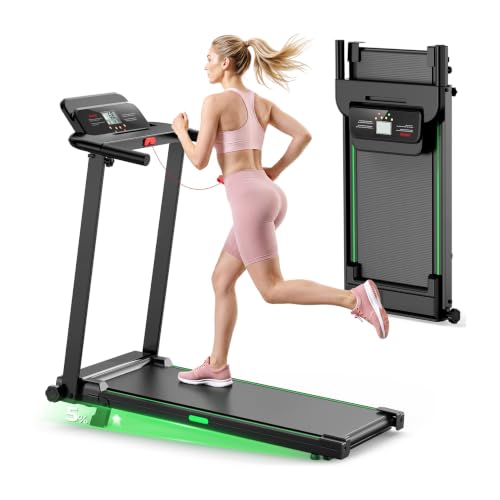
- 0.6–6.2 mph motorized speed range
- Twelve programs and three countdown modes
- Folds compactly and includes safety handrails
Best For: Beginners preferring guided motorized walking in small spaces
Best Lightweight Manual
AKLUER Manual Treadmill with Incline

- Cordless, foldable design for small spaces
- Dual flywheel with fixed incline adds resistance
- LCD tracker and 330-pound capacity
Best For: Beginners learning manual walking and gentle jogging
Compact Electric Starter

- 0.6–4 MPH walking, jogging, and running modes
- Folds for storage in small spaces
- LED tracking with remote control
Best For: Beginners wanting compact electric walking and light jogging
Progressive Home Trainer
Manual Incline Folding Treadmill
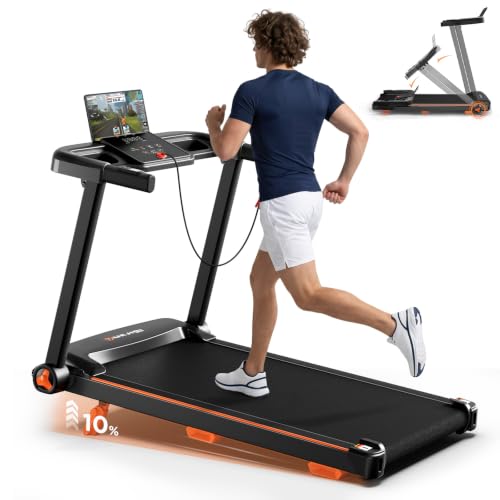
- 10% manual incline for added challenge
- 0.8–8.5 MPH powered speed range
- 300-pound capacity with 12 programs
Best For: Beginners progressing from walking to running at home
True Manual Pick
ANCHeer Foldable Manual Treadmill

- Self-powered operation needs no outlet
- 20% incline for more demanding cardio
- 500-pound capacity and foldable frame
Best For: Beginners seeking non-electric incline walking and cardio
Best with Extra Features
AKLUER Dual Flywheel Manual Treadmill

- Foldable cordless design for smaller spaces
- LCD tracks key workout metrics
- Fixed incline and dual flywheels increase effort
Best For: Beginners focused on brisk walking and light jogging
Best Running-Ready Pick
Curved Manual Treadmill with 350-LB Capacity

- Curved track supports self-paced running
- Long 51.2-inch deck provides extra room
- Foldable design includes wheels and LED display
Best For: Beginners building toward running or sprint workouts
Best Low-Impact Walking Pick
JOROTO Curved Manual Walking Pad

- Curved deck supports natural walking mechanics
- Foldable and wheeled for easy storage
- 99% pre-assembled with 330-pound capacity
Best For: Beginners focused on walking and light jogging
Best Compact Pick – Sunny Health & Fitness Manual Walking Treadmill
For shoppers comparing manual treadmills for beginners, this Sunny Health & Fitness model offers a compact, non-electric setup with a fixed 14% incline. Its folding frame, transport wheels, hand grips, and LCD monitor make it practical for home offices, apartments, and smaller workout spaces.
Best For: Beginners who want a space-conscious manual treadmill for walking and incline-focused home workouts.
Pros:
- Operates without electricity and folds for storage.
- Fixed 14% incline and dual flywheel support a more challenging, quiet workout.
- LCD monitor tracks time, speed, distance, and calories.
- Supports up to 330 pounds and includes Bluetooth connectivity.
Cons:
- The fixed incline may feel demanding for beginners who prefer flat walking.
- The 42 x 13-inch deck is relatively compact.
This is a well-rounded choice when convenience, portability, and a built-in incline matter more than a large running surface. Beginners should be comfortable starting gradually because the incline adds intensity from the first step.
Best Full-Size Option – Adjustable-Resistance Curved Manual Treadmill
Rongle Manual Treadmill, Adjustable Resistance, Foldable, LED Display, Supports up to 350 lbs
Check Price On AmazonThis curved manual treadmill is designed for users who want more room and adjustable effort as they learn. Its 59 x 15.7-inch belt, eight resistance levels, zoned running surface, and non-slip rubber belt support walking, jogging, or faster training without a motor.
Best For: Beginners who want a larger deck and the ability to increase resistance over time.
Pros:
- Eight resistance settings allow workout intensity to be adjusted.
- Large 59 x 15.7-inch running belt provides generous stepping space.
- Curved design promotes a natural forefoot-oriented running posture.
- LED display shows workout metrics including time, calories, speed, distance, pace, and heart rate.
Cons:
- At 152 pounds, it is substantially heavier than compact manual models.
- The listed product details conflict on weight capacity, citing both 350 and 300 pounds; verify the current specification before buying.
- No warranty service is listed.
The adjustable resistance and roomy belt give this model a more training-oriented feel than a basic walking treadmill. However, its weight and unclear capacity listing make careful specification checking especially important for first-time buyers.
Best Electric Alternative – Foldable Home Walking Pad with Incline
Although it is electric rather than manual, this compact walking pad is worth considering alongside manual treadmills for beginners who prefer motor-assisted pacing. It offers speeds from 0.6 to 6.2 mph, a manual incline function, preset programs, safety handrails, and storage-friendly folding dimensions.
Best For: Beginners who want guided, motorized walking or light jogging in a small home office or apartment.
Pros:
- Adjustable 0.6–6.2 mph speed range supports walking, jogging, and running.
- Twelve preset programs and three countdown modes add workout structure.
- Folds to 40.5 x 18 x 4.7 inches for under-bed or sofa storage.
- Includes a shock-absorbing, non-slip belt, safety handrails, and transport wheels.
Cons:
- It is corded electric, so it does not provide the outlet-free operation of a manual treadmill.
- The 220-pound user capacity is lower than several manual options in this roundup.
- The 35 x 14.4-inch running area is modest for sustained running.
This model makes sense for beginners who value consistent motorized speed and preset workouts over manual-belt feedback. Its compact fold and 1-year manufacturer warranty add practical appeal for everyday home use.
Best Lightweight Manual – AKLUER Manual Treadmill with Incline
The AKLUER manual treadmill combines a compact foldable frame with a fixed incline and dual flywheel system. For beginners exploring manual treadmills for beginners, its handles, non-slip belt, LCD tracker, and detailed setup guidance provide useful support while learning to control the belt smoothly.
Best For: Beginners who want a lightweight, cordless treadmill for brisk walking and gentle jogging.
Pros:
- Requires no power outlet and folds into a compact format.
- Fixed incline and dual flywheel create additional resistance as effort increases.
- LCD display tracks workout duration, pace, distance, and calories.
- 330-pound capacity with foam grips and a non-slip belt.
Cons:
- The 36 x 15-inch deck is better suited to walking and gentle jogging than long-stride running.
- The fixed incline may be challenging for users new to manual treadmills.
- Users need to follow careful belt-starting and handrail guidance.
This is a practical entry point for buyers prioritizing cordless operation, portability, and basic tracking. Its included safety tips are especially useful for first-time users, who should begin slowly on a flat, stable surface.
Compact Electric Starter – Folding Walking Pad
Although it is not a manual treadmill, this compact electric walking pad may suit beginners who want a simple indoor starting point. Its remote-controlled speed range covers walking, jogging, and light running, while the foldable design helps conserve space.
Best For: Beginners who want a compact electric treadmill for walking, light jogging, or office use.
Pros:
- Three speed modes range from 0.6 to 4 MPH.
- Foldable, compact design with front transport rollers.
- LED display tracks speed, distance, time, and calories.
- Shock-absorbing belt design helps reduce vibration and noise.
Cons:
- It requires an electrical outlet, unlike a true manual treadmill.
- Its 242-pound maximum load is lower than some full-size options.
- Maximum speed is limited to 4 MPH.
For shoppers using “manual treadmills for beginners” as a broad search for straightforward equipment, this is an approachable space-saving alternative. Choose it when convenience and low-speed indoor walking matter more than non-electric operation.
Progressive Home Trainer – Manual Incline Folding Treadmill
This folding treadmill combines powered movement with a 10% manual incline, giving beginners a practical way to add hill-focused effort without immediately increasing speed. Its 0.8–8.5 MPH range supports gradual progression from walking to running.
Best For: Beginners and families who want an adjustable, powered treadmill with manual incline and room to progress.
Pros:
- Manual incline adds intensity without requiring a faster pace.
- 0.8–8.5 MPH speed range accommodates walking, jogging, and running.
- 300-pound capacity and cushioned deck support shared home use.
- Folding frame, 12 programs, Bluetooth, and pulse sensors add versatility.
Cons:
- It is powered and not a fully non-electric manual treadmill.
- The 42 x 16-inch deck is relatively compact for running.
- Manual incline is limited to 10%.
Among options associated with manual treadmills for beginners, this model is a useful middle ground: the incline is adjusted manually, while the motor keeps belt movement predictable. It is a stronger fit than a basic walking pad for users who expect to build toward jogging or running.
True Manual Pick – ANCHeer Foldable Manual Treadmill
For shoppers specifically seeking manual treadmills for beginners, this ANCHeer model delivers genuinely self-powered operation: walking starts the belt, so no outlet is needed. Its 20% incline increases the effort, while the foldable steel frame keeps storage manageable.
Best For: Beginners who want a non-electric treadmill for incline walking, jogging, or home cardio.
Pros:
- Self-powered operation requires no electricity.
- 20% incline can increase cardio intensity and muscle engagement.
- 500-pound stated weight capacity with a reinforced steel frame.
- Folds for storage and includes transport wheels.
Cons:
- The 14-inch-wide belt is narrower than many powered treadmill decks.
- The steep 20% incline may feel demanding for some beginners.
- Manual belt movement requires the user to maintain momentum.
This is the clearest match for the keyword because it is non-electric, foldable, and designed for walking, jogging, and running. Beginners should start slowly, especially with the fixed 20% incline, and use the LCD monitor to track progress.
Best with Extra Features – AKLUER Dual Flywheel Manual Treadmill
For beginners comparing manual treadmills for beginners, the AKLUER offers a compact, foldable setup with a fixed incline and dual flywheel resistance. Its LCD tracker covers basic workout stats, while the non-slip belt and comfort grips support controlled walking or gentle jogging.
Best For: Beginners who want a space-saving treadmill for brisk walking and light jogging.
Pros:
- Foldable, cordless design suits smaller rooms and flexible placement.
- LCD display tracks time, pace, distance, and calories.
- Fixed incline and dual flywheels add resistance as you move.
- 330-pound weight recommendation and non-slip belt provide a sturdy foundation.
Cons:
- The 36-by-15-inch deck is more suited to walking and gentle jogging than long-stride running.
- The fixed incline may feel challenging for users expecting a flat walking surface.
- Beginners need to follow the startup and handrail guidance carefully because the belt is manually driven.
The AKLUER is a practical entry point when compact storage, straightforward tracking, and adjustable effort matter more than a large running surface. Start slowly, use the handrails, and keep the unit on a stable floor.
Best Running-Ready Pick – Curved Manual Treadmill with 350-LB Capacity
Among manual treadmills for beginners, this curved model stands out for its longer running surface, self-propelled operation, and unrestricted pace. Its zoned track helps users accelerate, maintain speed, and slow down naturally, although its running-focused design may be more machine than a cautious first-time walker needs.
Best For: Beginners progressing toward running, sprint practice, or higher-intensity self-powered workouts.
Pros:
- Curved design supports a natural forward lean and engages more muscles.
- No motor-imposed speed limit gives users direct pace control.
- 51.2-by-15.75-inch rubber track offers more running room than a compact walking deck.
- Foldable handrails, transport wheels, LED display, and no-assembly design add convenience.
Cons:
- At 110 pounds, it is less convenient to reposition than lighter compact models.
- The curved, unrestricted track may require a learning period for new users.
- Its running and sprint orientation may be excessive for beginners seeking only easy walking.
This treadmill is a stronger choice for users who want room to develop beyond walking. The curved track and pace zones encourage active control, while the 350-pound capacity and two-year manufacturer warranty add reassurance for regular home use.
Best Low-Impact Walking Pick – JOROTO Curved Manual Walking Pad
For beginners seeking manual treadmills for beginners, the JOROTO emphasizes controlled walking and light jogging rather than running. Its curved surface encourages a natural stride, while the textured belt, detachable handle, transport wheels, and nearly assembled design make it approachable for home or office use.
Best For: New users who prioritize low-impact walking, easy storage, and simple self-powered operation.
Pros:
- Curved deck promotes a natural walking posture and controlled movement.
- Textured anti-slip belt and 41.34-by-15.75-inch surface support stable steps.
- Foldable, wheeled design with a detachable handle simplifies storage and transport.
- Arrives 99% pre-assembled and supports up to 330 pounds.
Cons:
- It is designed for walking and light jogging, not running.
- The curved manual belt may take practice for users unfamiliar with self-propelled treadmills.
- Its wood-and-steel construction may be less visually minimal than a basic compact treadmill.
The JOROTO is a beginner-friendly option when comfort, portability, and a controlled pace are the priorities. Its belt stops when you pause, but new users should keep both hands on the rail and increase speed gradually.
How We Picked the Best Manual Treadmills for Beginners
We focused on features that matter most when starting a home walking or running routine: ease of use, stability, belt dimensions, folding or storage convenience, incline options, resistance control, weight capacity, and display functionality. We also included different formats, from compact walking pads to curved manual treadmills and models with handles.
Because manual treadmills vary considerably, specifications should be checked carefully before purchase. A model intended for walking may not provide the belt length, balance, or stability needed for running.
Quick Comparison
| Best For | Look For | Trade-Off |
|---|---|---|
| First-time walkers | Stable handles, simple controls, comfortable belt | Usually lower top speed |
| Small spaces | Folding frame, transport wheels, compact deck | May have a shorter walking surface |
| Incline workouts | Adjustable manual or motorized incline | Can require more balance and effort |
| Heavier users | Clearly stated capacity above your body weight | Often larger and less portable |
| Light running | Longer belt, secure handrails, higher speed rating | Typically costs more and takes up more room |
Key Buying Factors for Manual Treadmills for Beginners
Manual Resistance and Belt Movement
On a fully manual treadmill, your stride moves the belt. This can feel more demanding than walking on a powered treadmill, especially at an incline. Adjustable resistance lets you change the effort level, while curved designs may encourage a more natural stride. Beginners should start slowly and confirm that the belt moves smoothly without sticking.
Deck Size and Stability
Choose a belt long and wide enough for your natural stride. A short deck can feel restrictive and may be unsuitable for running. Look for a solid frame, secure handrails, non-slip surfaces, and a design that stays stable on your floor. Place the treadmill on a level surface and use a mat if recommended by the manufacturer.
Incline, Display, and Storage
Incline increases workout intensity but may make balance more challenging. A basic display showing time, speed, distance, or calories can help track sessions, though readings are estimates. For apartments or shared rooms, prioritize folding construction, transport wheels, and a manageable stored size.
Capacity and User Fit
Never treat the listed maximum capacity as a target. Select a treadmill with a meaningful margin above the heaviest user’s weight, and verify whether the rating applies to walking only or also to running. Also check warranty coverage, assembly requirements, and replacement-part availability.
Who Should Buy Which Manual Treadmills for Beginners?
Choose a compact folding walking pad if you mainly want short walking sessions, easy storage, or an under-desk format. Select a handle-equipped folding treadmill if you value extra support and are building confidence as a beginner. An adjustable-incline model suits users who want more challenging walks without increasing speed.
For regular running, prioritize a longer, sturdier deck and clear running specifications rather than the smallest footprint. Higher-capacity models are better for larger users when their frames, belts, and warranty terms fit the intended activity. If you are unsure, begin with the most stable model that fits your available space and allows room to progress.