Finding the best manual treadmill for seniors means looking beyond speed and horsepower. Stable handrails, a low step-up height, simple controls, reliable braking, and a comfortable walking surface can matter more than advanced workout features.
This roundup compares 10 compact, folding, self-propelled, and electric treadmill options for home use. Use the guide below to match your space, mobility needs, preferred walking style, and budget with the right design.
Best 10 Manual Treadmill for Seniors Picks for 2026
Compact Manual Pick
Portable Folding Walking Treadmill

- Non-electric manual operation
- Three incline settings with adjustable handles
- Folds for small-space storage
Best For: Portable light walking and home workouts without an outlet
Gentle Start Choice
Redliro Senior Treadmill with Dual Handrails

- Starts at 0.3 MPH
- Extended side rails and front crossbar
- Includes foldable non-slip floor mat
Best For: Supported, low-speed walking and home recovery routines
Small-Space Electric Alternative

- Compact under-desk design
- 0.5–3 MPH adjustable speed
- Adjustable handlebar and fixed incline stages
Best For: Light powered walking in small home or office spaces
Quiet Recovery Option
Redliro Senior Treadmill with Incline

- Long handrails for continuous support
- 0–2% manual incline
- Includes foldable protective rubber mat
Best For: Quiet, supported home walking and light recovery exercise
Senior-Friendly Incline Pick

- Extended handrails support balance
- 15-level automatic incline adds workout variety
- Large display and soft-drop folding design
Best For: Seniors wanting supported walking with incline control
True No-Power Pick
Portable Manual Walking Treadmill

- Operates without electricity or an outlet
- Three incline settings and adjustable handles
- Folds compactly and includes shock absorption
Best For: Light walking without electrical power
Best Overall
FYC Foldable Incline Treadmill

- 0.5–8.5 MPH speed range with a 330-lb capacity
- Three manual incline settings and shock-absorbing deck
- Folds for storage and includes handle heart-rate sensors
Best For: Seniors wanting a feature-rich powered treadmill for home walking or jogging
Best for Incline Variety
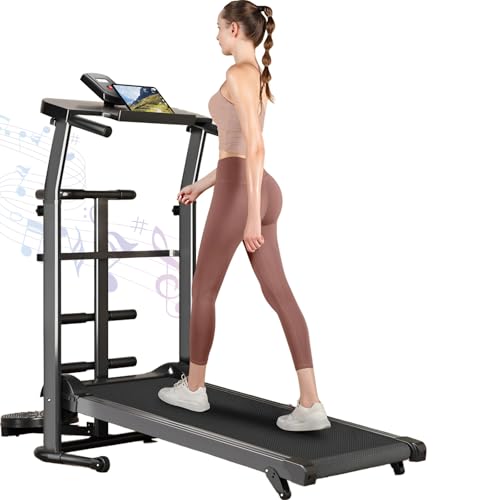
- Self-propelled design with three inclines up to 12%
- Adjustable handlebar, height, and non-slip walking belt
- Includes shock absorption and several exercise options
Best For: Users wanting a quiet manual treadmill with stronger incline and workout versatility
Compact Manual Pick – Portable Folding Walking Treadmill
If you want a manual treadmill for seniors that does not depend on an outlet, this compact folding model offers a straightforward walking setup for smaller homes. It has adjustable incline settings, height-adjustable handlebars, and a cushioned, slip-resistant belt for walking or light jogging.
Best For: Seniors and adults who want a portable, non-electric treadmill for light home workouts in limited spaces.
Pros:
- Manual, non-electric operation needs no outlet.
- Three adjustable incline settings and height-adjustable handles support varied routines.
- Folding design, transport wheels, and compact folded dimensions simplify storage.
- 20 mm shock absorption and a slip-resistant belt add walking comfort.
Cons:
- Its 220-pound weight capacity may not suit every user.
- The LCD display requires a battery, which is not included.
- The manual design may be less suitable for users seeking motorized speed control.
This model stands out for combining manual operation, incline adjustment, and portability. Check the belt size and 220-pound capacity against your needs before choosing it for senior walking.
Gentle Start Choice – Redliro Senior Treadmill with Dual Handrails
For shoppers comparing a manual treadmill for seniors with a particularly gentle starting pace, this Redliro setup begins at 0.3 MPH. Its extended side rails, front crossbar, flat walking option, and included rubber mat are designed for supported movement at home.
Best For: Seniors, beginners, and users who value a very slow start, extensive handrail support, and floor protection.
Pros:
- Starts at 0.3 MPH for gradual, controlled walking.
- Dual extended handrails and a front crossbar provide multiple grip points.
- Flat walking mode and three-level manual incline offer routine flexibility.
- Includes a 6 mm non-slip rubber mat that helps reduce vibration and protect flooring.
Cons:
- The treadmill reaches 5.5 MPH, so it may be more equipment than needed for very light walking.
- The bundled mat adds storage considerations even though it folds.
- Its many controls and preset programs may be unnecessary for users wanting a basic manual unit.
The 0.3 MPH starting speed and multiple handrails make this a strong support-oriented choice. Its 300-pound capacity and foldable design add practical value for home use, while the mat helps create a more complete station.
Small-Space Electric Alternative – Lifepro Mini Walking Pad
Although it is electric rather than manual, the Lifepro mini walking pad is worth comparing when shopping for a manual treadmill for seniors and prioritizing compact storage. Its adjustable handlebar, 0.5–3 MPH speed range, and small footprint support light walking at home or under a desk.
Best For: Adults and seniors who want a compact powered walking pad with handlebar support for light exercise or workday activity.
Pros:
- Compact 32.7-by-25-by-7-inch design fits small areas.
- Adjustable handlebar can provide added balance support.
- Two fixed incline stages, including 5 and 7 degrees, vary the walking routine.
- Wheels, installation-free setup, and a 220-pound capacity improve everyday convenience.
Cons:
- It requires corded electric power, so it is not a true manual treadmill.
- Its maximum speed is limited to 3 MPH.
- The fixed incline stages may be less flexible than a continuously adjustable incline.
This is best viewed as a compact powered alternative rather than a manual model. Choose it if powered speed adjustment, a small footprint, and under-desk use matter more than outlet-free operation.
Quiet Recovery Option – Redliro Senior Treadmill with Incline
This Redliro model is another powered alternative to a manual treadmill for seniors, with features aimed at quiet, supported home walking. Long handrails, a 0–2% manual incline, pause-resume tracking, and a protective rubber mat make it suited to controlled daily routines.
Best For: Seniors and home-recovery users who want long handrails, a gentle incline range, quiet controls, and a space-conscious setup.
Pros:
- Long handrails and a reinforced frame provide continuous grip assistance.
- Manual 0–2% incline supports flat walking and light resistance work.
- Mute, screen-off, and pause-resume functions can make home sessions less distracting.
- Includes a foldable 6 mm rubber mat, cup holder, phone holder, and self-lubricating system.
Cons:
- It is motorized, so it does not provide the outlet-free operation of a manual treadmill.
- The 0–2% incline range is narrower than some models.
- The included treadmill and mat still require storage space despite their foldable designs.
With long handrails and a low incline range, this model focuses on steady, comfortable walking rather than intense training. It is a practical alternative for users who prefer powered controls and quieter home operation.
Compact Support Pick – Folding Treadmill with Handles
For shoppers comparing a manual treadmill for seniors with powered alternatives, this folding electric model emphasizes support, quiet operation, and easy storage. Its handles, shock-absorbing belt, and speed range starting at 0.6 MPH make it suitable for controlled walking at home, while the 400-pound stated capacity adds versatility.
Best For: Seniors and adults who want a supported, foldable treadmill for walking, light jogging, or small-space use.
Pros:
- Sturdy handlebars and a safety key provide added support during workouts.
- Six-layer shock absorption is designed to reduce impact on knees and joints.
- Folding design, transport wheels, and operation under 45dB suit apartments and home offices.
- Large LED display tracks speed, time, distance, calories, and heart rate.
Cons:
- It is an electric treadmill, so it requires a power connection rather than manual operation.
- The 14.13-inch belt width may feel limiting for users who prefer a more spacious walking surface.
- Some listed specifications differ, including the motor and maximum-speed details, so verify the current listing before purchase.
This is a practical option when stability, cushioning, and compact storage matter more than a truly non-electric design. Buyers should confirm the final specifications and allow enough room for its 37.4-by-14.13-inch platform.
Senior-Friendly Incline Pick – WELLFIT Foldable Treadmill
Although it is powered rather than manual, this WELLFIT model is a strong alternative for shoppers seeking a treadmill for seniors with straightforward controls. Extended handrails, a large high-contrast display, cushioning, and speeds from 1.0 to 8.7 MPH make it adaptable to gentle walking and more demanding workouts.
Best For: Seniors who prioritize long handrails, easy-to-read controls, cushioning, and adjustable incline.
Pros:
- Lengthened handrails offer extra balance and grip support.
- Fifteen automatic incline levels adjust at the press of a button.
- Large LED console displays key workout metrics with an intuitive interface.
- Soft-drop folding, transport wheels, and 95% pre-assembly simplify setup and storage.
Cons:
- It requires a grounded electrical outlet, so it cannot be used as a manual, no-power treadmill.
- Automatic incline and the 8.7 MPH top speed may be more capability than some walkers need.
- Its large, heavy-duty construction may require planning for placement and relocation.
For senior users who want maximum adjustability and dedicated balance support, this is one of the more purpose-built choices in the group. The powered incline and extended rails are useful advantages, provided a grounded outlet is available.
True No-Power Pick – Portable Manual Walking Treadmill
If you specifically want a manual treadmill for seniors, this portable walking model is the only true non-electric option in this selection. It needs no outlet, uses a dual-flywheel system for resistance, and combines adjustable incline settings with height-adjustable handles for home use.
Best For: Seniors and adults seeking a compact, no-electricity walking machine with handles and adjustable incline.
Pros:
- Manual operation requires no outlet or power cord.
- Three incline settings and adjustable handles allow some workout customization.
- Cushioned, slip-resistant belt includes 20mm shock absorption.
- Folding construction and relocation wheels help conserve space.
Cons:
- The 220-pound weight capacity is lower than the other listed treadmills.
- Manual resistance may require more effort than powered walking, particularly at higher speeds.
- The LCD requires a battery, which is not included.
This model best matches the keyword because it is genuinely manual and can operate without electricity. Its compact format and handles are appealing for light walking, but buyers should check the 220-pound limit and consider whether manual belt movement feels comfortable before purchasing.
Best Overall – FYC Foldable Incline Treadmill
For shoppers comparing a manual treadmill for seniors with a powered home model, the FYC offers useful comfort and safety features. Its 0.5–8.5 MPH speed range, sturdy frame, folding design, heart-rate sensors, and three manual incline settings support walking, jogging, and more challenging workouts.
Best For: Seniors and adults who want a powered, foldable treadmill with handles, shock absorption, and adjustable incline options.
Pros:
- Dual-layer deck, rubber dampers, and spring absorbers help reduce impact.
- Three manual incline settings provide workout flexibility.
- Handles include heart-rate sensors, while the LCD tracks key metrics.
- 330-pound capacity and foot-operated folding design suit home use.
Cons:
- It is electric rather than self-propelled.
- Its maximum incline is listed as 3%, which may feel modest for hill training.
- Bluetooth and app features may be more than some users need.
Overall, this is a well-equipped choice for users prioritizing stability, monitoring, cushioning, and convenient storage over a purely manual design.
Best Budget Manual Option – Foldable Self-Powered Walking Machine
This mechanical treadmill is a straightforward option for anyone seeking a manual treadmill for seniors without using household power. The adjustable handle, LCD tracking, foldable frame, transport wheels, and shock-absorbing belt make it suited to basic home walking and light jogging routines.
Best For: Users who want an unpowered treadmill with adjustable support, compact storage, and basic workout tracking.
Pros:
- Mechanical, no-power operation avoids an electrical connection.
- Adjustable handle height can accommodate different users.
- LCD displays time, distance, calories, and heart rate.
- Folds for storage and includes wheels for easier movement.
Cons:
- The supplied notes do not specify a speed range or detailed model specifications.
- Its 150 kg maximum capacity is approximately 330 pounds, but individual fit and stability should still be considered.
- Manual operation may require more effort than a powered treadmill.
Choose this model when simplicity and no-power operation matter most. The adjustable handle and cushioning add practical value, though buyers should be comfortable with the greater involvement required by a mechanical belt.
Best for Incline Variety – Self-Propelled Walking Pad
For shoppers looking for a manual treadmill for seniors with more exercise variety, this self-propelled walking pad combines an adjustable handlebar with three manual incline settings up to 12%. Its non-slip belt, shock absorption, LED display, and compact home-oriented design support walking, climbing-style workouts, and other included exercises.
Best For: Seniors and families wanting a self-propelled treadmill with adjustable height, incline training, and multiple workout options.
Pros:
- Self-propelled operation is quiet and does not require motor power.
- Three manual incline settings reach up to 12%.
- Adjustable handlebar supports posture and different user heights.
- Non-slip belt and shock absorption are designed to reduce joint impact.
Cons:
- Capacity information is inconsistent in the supplied notes: the title lists 200 pounds, while a bullet lists 220 pounds.
- The self-propelled belt may demand more effort than a powered treadmill.
- Its additional pull rope, waist twister, and sit-up bench may not suit users seeking only basic walking.
This model stands out for incline range and versatility. Before buying, confirm the current weight limit and make sure the added exercise accessories align with the intended senior user’s comfort and balance needs.
How We Picked the Best Manual Treadmill for Seniors
We focused on features that can make home walking more approachable and manageable for older adults: dependable support rails, a stable frame, accessible controls, useful incline adjustment, a clear display, folding or compact storage, and a walking belt that provides enough room for a comfortable stride.
Because product listings use “manual treadmill” inconsistently, this selection includes self-propelled walking machines as well as electric treadmills with senior-friendly features. Always confirm the exact motor, power, handrail, and incline specifications before buying.
Quick Comparison
| Best For | Look For | Most Useful Features |
|---|---|---|
| Balance support | Full-length or dual handrails | Wide stance, firm frame, easy-access controls |
| Small homes | Folding or walking-pad design | Wheels, compact footprint, simple storage |
| Gentle conditioning | Low-speed walking range | Shock absorption, quiet operation, gradual incline |
| Independent users | Simple controls and display | Large buttons, readable metrics, safety key |
Key Buying Factors for a Manual Treadmill for Seniors
Stability and Handrail Design
Prioritize a solid frame that does not wobble during mounting or walking. Dual rails can provide more confidence than a single front bar, especially for users who need support while changing pace. Check the rail height and spacing against the user’s reach and posture.
Walking Surface and Step-Up Height
A low step-up height can make getting on and off easier, while a sufficiently wide and long belt helps reduce missteps. If the user has a short stride, a compact model may be appropriate; taller users may need a longer deck. A nonslip surface and shock absorption are valuable for comfort and joint protection.
Manual Versus Electric Operation
A true manual treadmill moves when the user walks and does not require a motor, but it may demand more leg effort and balance. Electric models offer consistent belt movement and speed controls, which may be easier for some seniors. Choose based on mobility, confidence, and whether a caregiver will assist.
Incline, Controls, and Safety
Incline can increase workout intensity, but it is not essential for every user. Look for gradual adjustment, prominent stop controls, a safety key or clip, and a display that is easy to read. Avoid complicated interfaces if the treadmill will be used independently.
Storage, Noise, and Weight Capacity
Measure the usable floor area, ceiling clearance, and storage route before ordering. Folding designs save space, while walking pads are easier to store but may provide less support. Select a weight capacity comfortably above the user’s current weight and verify noise expectations for apartments or shared rooms.
Who Should Buy Which Manual Treadmill for Seniors?
- Choose a handrail-equipped folding treadmill for users who want added balance support and need to clear floor space after walking.
- Choose a compact walking pad for confident walkers with limited room who primarily need low-speed indoor exercise.
- Choose a motorized model when consistent belt motion, speed control, and a predictable walking pace are more important than manual simplicity.
- Choose an incline model for users who want progressive conditioning and can safely manage the added challenge.
- Choose the most supportive frame available for anyone with balance concerns, and consider professional guidance before regular use.
Before purchase, verify dimensions, assembled weight, warranty coverage, return terms, maximum speed, belt size, and the exact meaning of “manual” in the listing. A treadmill should be placed on a level surface with clear space around it, and new users should begin slowly while holding the rails only as needed.