Incline treadmills with heart rate monitors make it easier to raise workout intensity while keeping an eye on effort. The 10 models in this roundup span compact walking machines, foldable home treadmills, and higher-capacity options for running and hill training.
Use the comparison and buying advice below to match features such as incline range, speed, belt size, folding design, and weight capacity to your training space and fitness goals.
Best 10 Incline Treadmills with Heart Rate Monitors Picks for 2026
Best Overall

- 15% auto incline with 12 HIIT programs
- Handrail pulse sensors and FitShow app
- 8.8 MPH speed with compact folding design
Best For: Versatile home cardio and interval training
Best 3-in-1 Design
Foldable 12% Incline Treadmill

- 12% manual incline and 7.5 MPH top speed
- Heart-rate display with 12 HIIT programs
- Bluetooth, speaker, and foldable 3-in-1 design
Best For: Multifunctional home and office workouts
Best for Steep Inclines
UMAY U70 20% Auto Incline Treadmill

- 20% auto incline with 20 levels
- Pulse sensors and touchscreen metrics
- 4.0 HP motor and 400-pound stated capacity
Best For: Steep hill simulations and high-intensity home training
Versatile Home Gym Choice
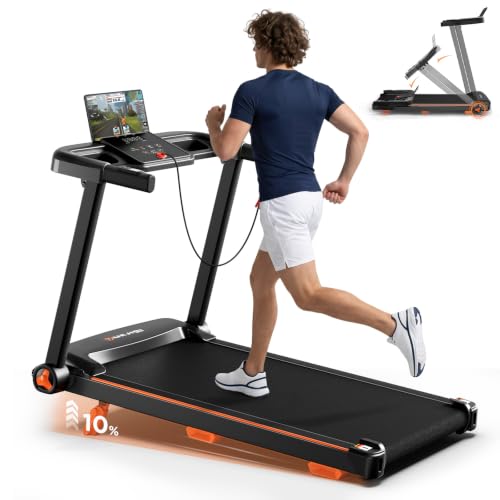
- 10% manual incline with speeds up to 8.5 MPH
- Heart rate, speed, distance, time, and calorie tracking
- 12 programs, Bluetooth, and foldable small-space design
Best For: Structured walking, jogging, and steady home running
High-Capacity Comfort Pick
Cardirun 10% Incline Treadmill

- 400-pound capacity with a 3.5 HP brushless motor
- 0%, 3%, and 10% manual incline levels
- Handrail pulse sensor, cushioning, app support, and assisted folding
Best For: Higher-capacity users seeking quieter, cushioned home workouts
Quiet Connected Climber

- 15% automatic incline
- Integrated handrail pulse sensors
- 8.5 MPH brushless motor
Best For: Home users wanting automatic hill training and heart-rate tracking
Compact Manual Hill Trainer

- 12% manual incline
- 41-pound folding design
- 6.2 MPH brushless motor
Best For: Walkers and light joggers in small spaces
High-Capacity Incline Walker

- 16% maximum incline
- 400-pound capacity
- 42-inch raised handrails
Best For: Users seeking steep incline training and extra support
Best Overall – JAGJOG JT60 Incline Treadmill
The JAGJOG JT60 is a strong all-around option for shoppers comparing incline treadmills with heart rate monitors. Its 15% auto incline, 12 HIIT programs, 8.8 MPH top speed, and pulse sensors support varied walking, jogging, and running workouts.
Best For: Home users who want automatic incline adjustments, preset interval workouts, and a quieter folding treadmill.
Pros:
- 15% auto incline and 12 HIIT programs add workout variety.
- Handrail pulse sensors track heart rate during exercise.
- 3.5 HP brushless motor operates below 48 dB and reaches 8.8 MPH.
- Folds compactly and requires no assembly according to the supplied notes.
Cons:
- The 26.8-inch width may feel compact for some runners.
- Heart-rate tracking is described through handrail pulse sensors rather than a wireless chest-strap system.
With automatic hill simulation, cushioning, app connectivity, and a large touchscreen, the JT60 offers a balanced feature set for everyday home cardio without taking over the room.
Best High-Capacity Value – CURSOR FITNESS SF20 Manual Incline Treadmill
The CURSOR FITNESS SF20 is a compact choice among incline treadmills with heart rate monitors, featuring a three-position manual incline that reaches 16%. It also provides a 400-pound stated capacity, three LED displays, and a 0.6–7.0 MPH speed range for walking through steady running.
Best For: Walkers and compact-home users who prioritize weight capacity, manual hill settings, and simple controls.
Pros:
- Manual incline adjusts to 0%, 8%, or 16%.
- Supports up to 400 pounds according to the supplied details.
- Three LED displays show time, speed, distance, and calories.
- Brushless motor is rated at 45 dB or less and the treadmill folds for storage.
Cons:
- The 7.0 MPH maximum speed is lower than some running-focused models.
- Incline changes are manual rather than automatic.
- The supplied details do not specifically list heart-rate metrics, despite the roundup keyword.
This model makes the most sense for users who want a stable, easy-to-store treadmill with a high stated capacity and straightforward incline control, rather than advanced connected features.
Best 3-in-1 Design – Foldable 12% Incline Treadmill
This 3-in-1 foldable treadmill is a practical pick for shoppers seeking incline treadmills with heart rate monitors and flexible home use. It combines 12% manual incline, a 0.6–7.5 MPH speed range, 12 HIIT programs, and an LED display that reports heart rate and other workout metrics.
Best For: Home users who want a multifunctional treadmill for walking, jogging, office use, and entertainment.
Pros:
- 12% manual incline supports more demanding walking and jogging sessions.
- LED display tracks speed, time, distance, calories, and heart rate.
- Offers 12 HIIT programs, three quick-start modes, Bluetooth, and a built-in speaker.
- 3.0 HP brushless motor is rated below 45 dB.
Cons:
- The incline is manual, so it cannot be changed automatically during a workout.
- The 14.96-by-37.4-inch belt is relatively compact for longer running strides.
- Product details list differing capacity figures: 300 pounds in the feature description and 330 pounds in the specifications.
The combination of heart-rate tracking, preset programs, Bluetooth audio, and a folding 3-in-1 format gives this treadmill broad everyday appeal, especially where space and convenience matter.
Best for Steep Inclines – UMAY U70 20% Auto Incline Treadmill
The UMAY U70 stands out among incline treadmills with heart rate monitors for its 20% auto incline and 400-pound stated capacity. Its touchscreen and pulse sensors display heart rate alongside speed, distance, time, and calories, while the 4.0 HP motor reaches 8.0 MPH.
Best For: Users who want steep, automatically adjustable incline training and a sturdier home treadmill.
Pros:
- Auto incline offers 20 levels from 2% to 20%.
- Touchscreen and pulse sensors provide real-time heart-rate feedback.
- 4.0 HP quiet brushless motor operates below 45 dB.
- 400-pound stated capacity, suspended deck, and seven-layer shock absorption support demanding workouts.
Cons:
- The 8.0 MPH top speed may not suit faster runners.
- The product is listed as 90% pre-assembled, so some setup remains.
- Its 52-inch listed height may require more vertical clearance than lower-profile models.
For hill-focused training, the U70 offers the steepest automatic incline in this group, plus useful heart-rate and workout-metric tracking. It is a compelling choice when incline range and capacity matter more than compact dimensions.
Compact Incline Pick – Foldable 5% Incline Treadmill
This compact option is a practical choice among incline treadmills with heart rate monitors for walking, jogging, and moderate running at home or in an office. Its 5% incline, foldable design, handrail pulse sensors, and 7.5 MPH top speed support varied workouts without requiring a full-size gym setup.
Best For: Small spaces, walking-to-jogging routines, and users who want basic pulse tracking with entertainment features.
Pros:
- 5% incline supports more challenging walking and jogging workouts.
- Handrail pulse sensors display heart rate during exercise.
- Foldable design, USB charging, and Bluetooth speaker compatibility suit home or office use.
- 300-pound capacity and six-layer shock absorption add support and cushioning.
Cons:
- Its 5% incline is less aggressive than models with steeper grades.
- The 7.5 MPH maximum speed is better suited to walking, jogging, and moderate running than fast training.
- Warranty coverage is limited to 30-day easy returns.
This treadmill emphasizes compact convenience and straightforward workout tracking. Choose it if foldability, a moderate incline, and integrated pulse monitoring matter more than high-speed or steep-incline training.
Versatile Home Gym Choice – 10% Manual Incline Treadmill
For shoppers comparing incline treadmills with heart rate monitors, this model combines a 10% manual incline with a 0.5-to-8.5 MPH speed range. Hand-pulse sensors, 12 preset programs, Bluetooth, and a folding frame make it adaptable for walking, jogging, and steady running in a home or office gym.
Best For: Adults who want structured workouts, manual hill training, and a broad speed range in a foldable treadmill.
Pros:
- 10% manual incline adds purposeful hill-focused cardio.
- 3 HP brushless motor supports speeds up to 8.5 MPH.
- Handrail sensors measure heart rate along with speed, distance, time, and calories.
- 12 programs, Bluetooth, and a folding design add workout variety and convenience.
Cons:
- The incline is manual rather than automatically adjusted during a workout.
- The 42-by-16-inch deck may feel limited for users who prefer a larger running surface.
- Pulse readings require contact with the handrail sensors.
This is a balanced choice for users who want more incline and speed flexibility than a basic walking treadmill provides. Its manual adjustment keeps the design practical, while the programs and heart rate display help add structure to indoor training.
High-Capacity Comfort Pick – Cardirun 10% Incline Treadmill
The Cardirun stands out among incline treadmills with heart rate monitors for its 400-pound capacity, 10% manual incline, and low-noise brushless motor. A 16-by-40-inch belt, layered cushioning, handrail pulse sensor, and app support make it suited to comfortable home or office workouts.
Best For: Higher-capacity users who prioritize cushioning, quieter operation, manual incline options, and connected workout features.
Pros:
- 400-pound capacity pairs with a 3.5 HP brushless motor.
- Three manual incline levels—0%, 3%, and 10%—allow intensity changes.
- Handrail pulse sensor provides real-time heart rate readings.
- Seven-layer belt, eight shock absorbers, and six cushions support a more comfortable stride.
Cons:
- The top speed is 7.6 MPH, so it is less suited to fast running.
- Incline changes are manual rather than electronically controlled.
- The 16-by-40-inch running area is compact for some runners.
Choose the Cardirun when capacity, cushioning, and quieter operation are central to your buying decision. App compatibility, voice control, preset programs, and assisted folding add convenience, while the handrail sensor covers basic heart rate monitoring.
Quiet Connected Climber – YUEJIQI 3220S
For shoppers comparing incline treadmills with heart rate monitors, the YUEJIQI 3220S stands out with automatic incline adjustment from 0% to 15% and integrated pulse sensors in the handrails. Its brushless motor, folding design, and app connectivity make it a versatile option for home walking, jogging, and running.
Best For: Home users who want automatic hill training, heart-rate tracking, and a relatively quiet connected treadmill.
Pros:
- Automatic incline adjusts up to 15% with dedicated controls.
- Integrated handrail pulse sensors provide real-time heart-rate readings.
- Quiet 3.5 HP brushless motor operates at a stated 45 dB and reaches 8.5 MPH.
- Folds with a one-touch knob and supports users up to 300 pounds.
Cons:
- The 42-inch belt may feel short for some runners.
- Heart-rate monitoring is handled through the handrail sensors rather than a chest strap.
- App features require a Bluetooth connection and compatible apps.
The 3220S is the strongest all-around choice here for shoppers who specifically want automatic incline and pulse monitoring. Its compact folding format adds convenience, while the 15% range offers meaningful progression for incline workouts.
Compact Manual Hill Trainer – 970NX Foldable Treadmill
The 970NX is a compact folding treadmill with a manually set 12% incline, making it suitable for users who want steeper walking workouts without an electronically adjustable deck. Its 3.0 HP brushless motor, six-layer cushioning, and lightweight frame are geared toward smaller home spaces.
Best For: Walkers and light joggers seeking a compact, manually inclined treadmill for apartments or limited storage areas.
Pros:
- 12% manual incline can increase workout intensity and hill-training variety.
- Brushless motor runs below a stated 50 dB and supports speeds up to 6.2 MPH.
- Folds for storage and weighs 41 pounds, with built-in wheels for portability.
- Six-layer cushioning helps reduce impact on the knees and joints.
Cons:
- The incline is manual, so it cannot be changed during a workout from the console.
- The supplied specifications list speed, time, calories, and distance tracking but do not list a heart-rate monitor.
- Its 38-by-15-inch running surface is more limited than wider running decks.
This model is a practical space-saving pick, but it is not the best match for shoppers who require integrated heart-rate monitoring. Choose it when portability and a manual hill setting matter more than live pulse data or higher running speeds.
High-Capacity Incline Walker – SF30 16% Treadmill
With a maximum 16% incline, the SF30 is designed for challenging uphill walking, jogging, and running sessions. It combines raised 42-inch handrails, a 400-pound capacity, seven-layer shock absorption, and a folding frame, though the supplied specifications do not identify a heart-rate monitor.
Best For: Users prioritizing a steep incline, higher weight capacity, supportive handrails, and compact storage.
Pros:
- 16% incline provides the steepest hill setting among these options.
- Supports up to 400 pounds and includes a seven-layer shock-absorbing system.
- 42-inch raised handrails offer additional grip support during workouts.
- Arrives 99% pre-assembled and folds to approximately 4 inches thick.
Cons:
- The supplied details do not list heart-rate monitoring, so it may not meet a strict pulse-tracking requirement.
- Its 7.5 MPH maximum speed is lower than the YUEJIQI model’s stated speed.
- The notes do not mention Bluetooth or app connectivity.
The SF30 is compelling for incline-focused users who need a higher weight rating and substantial handrail support. If heart-rate monitoring is essential, verify the console features before buying, since it is not identified in the supplied product information.
How We Picked the Best Incline Treadmills with Heart Rate Monitors
We focused on the features that matter most in a home treadmill: incline capability, heart rate tracking, maximum speed, running-surface dimensions, motor design, user weight capacity, folding convenience, and overall practicality. The selection includes manual and automatic incline models, compact walking-focused machines, and treadmills built for more demanding running sessions.
Heart rate monitoring can come from handle sensors or compatible wireless equipment, so shoppers should verify the exact tracking method and whether readings are displayed continuously or only during contact with the grips.
Quick Comparison
| Best For | Features to Prioritize | Models to Consider |
|---|---|---|
| Everyday walking | Compact footprint, quiet operation, simple controls | 3-in-1, small foldable, and 10% incline models |
| Hill workouts | Automatic incline, at least 15% incline range | JAGJOG, UMAY, YUEJIQI, and 16% models |
| Running at home | Long belt, stable frame, higher speed and motor output | 8.5–10 MPH models with wider running decks |
| Higher-weight users | Strong frame and generous stated capacity | Cardirun and 300-pound-capacity options |
Key Buying Factors for Incline Treadmills with Heart Rate Monitors
Incline Type and Range
Automatic incline is more convenient for interval training because you can change elevation from the console or controls. Manual incline systems may cost less but require stopping to adjust. A 10%–12% incline suits general fitness, while 15%–25% provides more demanding hill workouts.
Heart Rate Tracking
Grip sensors are useful for quick checks, but they may be less consistent than a chest strap or wearable. Look for clear display feedback and confirm whether the treadmill supports the monitoring method you already use.
Deck, Speed, and Motor
Walkers can often use a shorter deck, while runners generally benefit from a longer, wider belt and a stable frame. Match the top speed to your workout style, and remember that motor horsepower claims are not always directly comparable between brands.
Space and Capacity
Measure both the treadmill’s operating footprint and its folded dimensions. Leave clearance around the machine, especially behind the deck. Choose a weight capacity comfortably above the heaviest user’s weight for better stability and durability.
Who Should Buy Which Incline Treadmills with Heart Rate Monitors?
Choose a compact 3-in-1 or smaller foldable treadmill if you primarily walk, work out in a limited space, or need easy storage. Select a 15%–20% automatic-incline model if structured hill intervals and calorie-intensive workouts are your priorities. Runners should favor a longer belt, stronger frame, and at least an 8.5 MPH top speed. If stability and user capacity are most important, consider the 300- or 400-pound-capacity options and verify the deck dimensions before purchasing.