Incline treadmills can make indoor walking more challenging without requiring faster speeds, but the best beginner model should still feel stable, simple to control, and comfortable to use.
We selected 10 options ranging from compact walking pads to foldable treadmills with higher inclines, handles, and room for gradual progression.
Best 10 Incline Treadmills for Beginners Picks for 2026
Best All-Around Pick
FOUSAE 5-in-1 Incline Treadmill

- 0.6–7.5 MPH range for walking through running
- 10% incline, app support, and 12 HIIT programs
- 400-pound capacity with a 3.0HP brushless motor
Best For: Beginners wanting a versatile treadmill that can support progressing workouts
Best Under-Desk Option
Walking Pad 12% Auto-Incline Treadmill

- Nine auto-incline levels reaching 12%
- 450-pound capacity and compact 44-pound design
- FitYo app, Bluetooth speaker, and 3-year warranty
Best For: Beginners focused on walking, desk use, and easy incline adjustments
Best Compact Manual-Incline Pick
3.0HP Folding Incline Treadmill

- 12% manual incline for hill-style workouts
- 0.6–6.2 MPH speed range for walking and jogging
- 41-pound foldable design with six-layer cushioning
Best For: Beginners needing a portable treadmill for small-space home workouts
Best Steep-Incline Trainer

- Five manual settings from 0% to 40% incline
- 51-inch handrails and 350-pound capacity
- 0.6–6.2 MPH range with seven-layer cushioning
Best For: Beginners who want extra support and room to progress into steep incline training
Compact Starter Pick

- 0.6–6.2 MPH speed range
- Manual incline feet
- Folds for compact storage
Best For: Beginners focused on walking, light jogging, and small-space storage
Most Adjustable
20% Auto-Incline Home Treadmill

- 20% one-touch auto incline
- 8.7 MPH maximum speed
- Wide 16 x 41-inch deck
Best For: Beginners planning to progress from walking into jogging and running
Quiet High-Capacity Pick
LONTEK 15% Incline Walking Pad
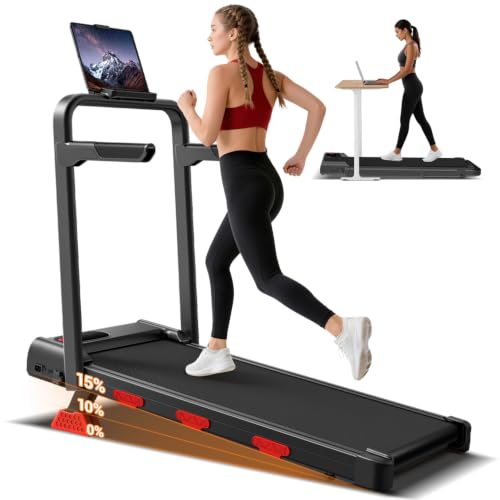
- Flat, 10%, and 15% manual incline
- Quiet motor below 45 dB
- 350-pound weight capacity
Best For: Quiet walking workouts and users who want a higher capacity
Easy-Control Pick
WELLFIT Folding Incline Treadmill

- Handlebar, remote, and app controls
- 10% manual incline and cushioned belt
- Folds and rolls away for storage
Best For: Beginners and daily walkers seeking simple controls
Quiet Manual-Incline Pick

- Manual incline reaches 12%
- Brushless motor rated around 55 dB
- Compact, cushioned, and wheeled
Best For: Beginners wanting quiet hill-walking workouts
Best All-Around Pick – FOUSAE 5-in-1 Incline Treadmill
For beginners comparing incline treadmills for beginners, the FOUSAE stands out as a versatile home option with walking, jogging, and running speeds up to 7.5 MPH. Its 10% incline, app compatibility, and multiple workout modes make it suitable for gradually building a routine.
Best For: Beginners who want one treadmill for walking, jogging, running, and guided training.
Pros:
- Offers speeds from 0.6 to 7.5 MPH for multiple workout styles.
- Includes a 10% incline, 12 HIIT programs, and app compatibility.
- Uses a 3.0HP brushless motor and supports up to 400 pounds.
- Folding handle, remote control, cushioning, and countdown modes add convenience.
Cons:
- The 40-by-16-inch deck may feel compact for longer-stride runners.
- Its broad feature set may be more than beginners need for basic walking.
The combination of a low starting speed, incline training, and higher running speed gives this model room to grow with your fitness level. It is a strong choice when versatility matters more than the simplest setup.
Best Under-Desk Option – Walking Pad 12% Auto-Incline Treadmill
This walking pad is a practical pick among incline treadmills for beginners who prioritize walking, desk use, and compact storage. Its nine-level auto incline makes hill-style workouts easier to adjust than a manual system.
Best For: Beginners seeking a compact walking treadmill with automatic incline and strong weight capacity.
Pros:
- Provides one-button, nine-level incline adjustment up to 12%.
- Supports up to 450 pounds with a reinforced steel frame.
- Includes a free FitYo app, Bluetooth audio, and 3-year warranty.
- Compact 44-pound design includes cushioning and an RGB metrics display.
Cons:
- Its 4 MPH maximum speed is geared toward walking rather than running.
- The 41-inch deck is shorter than many traditional treadmill running surfaces.
Automatic incline control is the main advantage here, especially for beginners who want to vary intensity without stopping. The limited top speed keeps it focused on walking and light incline training rather than faster cardio.
Best Compact Manual-Incline Pick – 3.0HP Folding Incline Treadmill
For shoppers seeking straightforward incline treadmills for beginners, this compact folding model offers a manually adjustable 12% slope and a simple speed range of 0.6 to 6.2 MPH. It is designed for home users who need an easily stored treadmill without giving up incline training.
Best For: Beginners in apartments or small spaces who want walking and light jogging with manual incline control.
Pros:
- Provides a 12% manual incline for hill-style workouts.
- Starts at 0.6 MPH and reaches 6.2 MPH for walking and jogging.
- Folds for storage and weighs approximately 41 pounds.
- Six-layer cushioning and a smart memory display support comfortable use.
Cons:
- Manual incline requires stopping to change the slope.
- The 38-by-15-inch running surface is relatively compact.
- Its 300-pound weight capacity is lower than the other listed options.
This treadmill keeps the feature set approachable while still offering a meaningful incline. It makes the most sense for beginners who value portability and storage over automated adjustments or high-speed running.
Best Steep-Incline Trainer – CURSOR 40% Incline Treadmill
The CURSOR is a specialized choice among incline treadmills for beginners, offering five manual settings up to an unusually steep 40%. While that maximum slope is geared toward ambitious hill and stair-style training, its low 0.6 MPH starting speed and extended handrails can also support controlled beginner sessions.
Best For: Beginners who want strong handrail support and a treadmill capable of steep incline progression.
Pros:
- Offers five manual incline settings from 0% to 40%.
- Extended 51-inch handrails provide added support, particularly for taller users.
- Supports speeds from 0.6 to 6.2 MPH and up to 350 pounds.
- Includes a seven-layer belt, shock absorbers, folding design, and transport wheels.
Cons:
- Incline changes are manual rather than automatic.
- The steepest settings may be excessive for someone starting with basic walking.
- It has a 1-year manufacturer warranty.
The CURSOR offers the widest incline range in this roundup, but beginners should start at a low setting and progress gradually. Its long handrails and stable base make it more approachable for incline walking, while the 40% maximum is best viewed as room for future progression.
Compact Starter Pick – Foldable Incline Walking Pad
If you need an affordable-feeling, space-conscious starting point among incline treadmills for beginners, this foldable walking pad covers basic walking, jogging, and light running. Its manual incline feet add intensity without complicated electronic settings, while the compact folded profile suits apartments and home offices.
Best For: Beginners who want basic incline training, preset programs, and easy under-bed storage.
Pros:
- 0.6–6.2 MPH range supports walking, jogging, and light running.
- Manual incline feet provide a simple way to increase workout intensity.
- Folds to 40.5 x 18 x 4.7 inches and includes transport wheels.
- Offers 12 preset programs, countdown modes, and a 35 x 14.4-inch belt.
Cons:
- The incline is manual rather than motorized.
- The 220-pound weight capacity and 14.4-inch belt may feel limiting for some runners.
This is a practical entry-level choice when storage space and straightforward controls matter most. It is better suited to walking and light jogging than sustained high-speed running.
Most Adjustable – 20% Auto-Incline Home Treadmill
For beginners who want room to progress, this model stands out among incline treadmills for beginners with a one-touch 20% auto incline, handrail controls, and speeds up to 8.7 MPH. Its wider deck and shock absorption add comfort for walking, jogging, and eventual running.
Best For: Beginners who want guided incline progression, a wider belt, and fitness-app connectivity.
Pros:
- 20% auto incline allows quick intensity adjustments.
- 3.5 HP motor reaches 8.7 MPH, supporting progression from walking to running.
- 16 x 41-inch deck provides more room than a typical compact walking pad.
- Handrail controls, touchscreen metrics, Bluetooth, and app connectivity support workout tracking.
Cons:
- At 63.9 pounds, it is less convenient to move than a lightweight walking pad.
- The listed warranty is 90 days.
- Its 47-inch depth may require more dedicated floor space when unfolded.
The automatic incline is the key advantage here, especially if you prefer changing intensity during a workout rather than stopping to adjust the machine manually. Confirm that the larger footprint fits your room before buying.
Quiet High-Capacity Pick – LONTEK 15% Incline Walking Pad
This LONTEK walking pad is a strong option among incline treadmills for beginners if you value quiet operation, a high weight capacity, and simple incline changes. Instead of electronic incline controls, you switch between flat, 10%, and 15% levels by repositioning the included supports.
Best For: Beginners who want quiet walking workouts, manual incline choices, and a higher 350-pound capacity.
Pros:
- Three incline positions—flat, 10%, and 15%—are easy to change by hand.
- Quiet brushless motor operates below 45 dB and supports speeds from 0.6–6.2 MPH.
- 350-pound capacity and a cushioned 37.4 x 15-inch running surface suit a range of users.
- Low-profile design stores under desks, beds, or sofas and includes a removable device holder.
Cons:
- Incline changes are manual, so they cannot be adjusted during a workout from the controls.
- The 6.2 MPH maximum speed is geared more toward walking and light jogging than fast running.
- The 15-inch belt width may feel narrow for users who prefer a larger running surface.
Its quiet motor and high capacity make it appealing for daily home walking, while the three incline levels offer useful variety without complex programming. Choose another style if you need automatic incline changes or higher running speeds.
Easy-Control Pick – WELLFIT Folding Incline Treadmill
For beginners comparing incline treadmills for beginners, the WELLFIT emphasizes simple controls, cushioning, and convenient storage. Its manual incline reaches 10%, while handlebar buttons, a remote, and app controls make it easier to adjust speed without bending forward.
Best For: Beginners, daily walkers, seniors, and small-space users who want straightforward controls and a cushioned walking surface.
Pros:
- Handlebar controls allow speed adjustments without leaning forward.
- Five-layer, shock-absorbing 36-by-16-inch belt is designed to reduce impact on knees and ankles.
- Self-aligning belt is designed to stay centered without manual adjustments.
- Folds for storage and includes wheels, app syncing, and substantial support coverage.
Cons:
- Its 6.2 MPH top speed is better suited to walking and light jogging than faster running.
- The incline is manual rather than electronically adjustable.
- The 36-inch deck length may feel limited for users with a longer stride.
The WELLFIT is a practical entry point for users who value ease of use over high-speed training. Its accessible controls and joint-friendly belt make it especially appealing for steady walking workouts at home.
Quiet Manual-Incline Pick – Aiteid 12% Incline Treadmill
The Aiteid is one of the more approachable incline treadmills for beginners who want added hill training without a large machine. Its manual incline reaches 12%, and the 0.6-to-6.2-MPH range supports walking through light jogging while the brushless motor is rated for quieter operation.
Best For: Beginners and apartment users who want a compact treadmill with manual hill adjustment, preset programs, and joint-focused cushioning.
Pros:
- Manual 12% incline adds a stronger hill-walking option.
- Brushless motor is designed to operate at approximately 55 dB.
- Six-layer belt, silicone shock absorbers, and impact-reduction pads provide cushioning.
- Preset programs, pause functionality, wheels, and a 300-pound stated capacity add convenience.
Cons:
- Incline adjustment requires adding the included foot pads manually.
- The 39-by-15-inch belt is relatively compact.
- Its 6.2 MPH maximum speed limits faster running workouts.
The Aiteid offers useful incline variety and a compact footprint without moving to a fully automated system. It is a sensible choice for beginners who mainly plan to walk, use short jogging intervals, or train on a budget-conscious home setup.
Advanced Incline Pick – 16% Auto-Incline Folding Treadmill
For beginners who want room to progress, this model stands out among incline treadmills for beginners with one-button 0-to-16% auto incline. It also offers a 0.6-to-7.5-MPH speed range, a longer 44.88-inch deck, and a 350-pound stated capacity, making it more training-oriented than basic walking pads.
Best For: Beginners who want automated hill adjustments and a treadmill they can continue using for more demanding walking and jogging workouts.
Pros:
- Automatic 0-to-16% incline with 12 adjustable levels enables convenient progression.
- 7.5 MPH maximum speed accommodates brisk walking and light running.
- Six-layer cushioning and a 38-by-15-inch belt are designed to reduce impact.
- Folds without tools, includes wheels, and has a 350-pound stated capacity.
Cons:
- The steepest incline may be more challenge than some beginners initially need.
- At 58 pounds, it is heavier than the lighter compact models in this roundup.
- The supplied details list a 1-year manufacturer warranty.
This is the strongest progression pick of the three, particularly for users who want button-controlled incline changes and more headroom for jogging. Beginners should start at a comfortable incline and speed, then build gradually.
How We Picked the Best Incline Treadmills for Beginners
We evaluated these Incline Treadmills for Beginners by focusing on the features that matter most during regular home use: incline range, speed control, walking-surface dimensions, stability, portability, noise, controls, and available support features. We also considered whether each design suits walking only, brisk walking, light jogging, or more demanding workouts.
Because product specifications can vary by seller and configuration, verify the current deck size, maximum user weight, incline operation, warranty, and assembly requirements before ordering. A higher advertised incline is not automatically better if the treadmill feels unstable or is difficult to adjust.
Quick Comparison
- Best for basic walking: Compact walking pads with modest incline ranges and straightforward controls.
- Best for progression: Foldable models offering roughly 10% to 20% incline and speeds suitable for brisk walking or jogging.
- Best for steep hill training: Higher-incline designs, including models rated up to 40%, provided the frame, handles, and user weight rating meet your needs.
- Best for small spaces: Portable or under-desk treadmills with folding components and transport wheels.
Key Buying Factors for Incline Treadmills for Beginners
Incline Control
Automatic incline adjustment is convenient and makes it easier to change effort during a workout. Manual incline systems may cost less but require stopping to adjust the deck. Beginners should prioritize smooth, clearly labeled controls over the highest possible percentage.
Speed Range and Motor Performance
Walking-focused models may top out around 6 mph, while full-size foldable treadmills can reach 7.5 mph or more. Choose a speed range that matches your plans rather than paying for unused capacity. Brushless or low-noise motor claims can be useful, but actual noise also depends on flooring, belt lubrication, and user weight.
Deck Size and Stability
A longer, wider belt provides more room to recover from a misstep and is especially valuable for taller users or anyone planning to jog. Strong handrails, a rigid frame, and a suitable maximum user weight are important safety considerations when using steeper inclines.
Storage and Everyday Usability
Measure both the operating footprint and the folded dimensions. Check whether the treadmill can be moved easily, whether the controls are reachable while walking, and whether the display shows speed, time, distance, and incline clearly.
Who Should Buy Which Incline Treadmills for Beginners?
Choose a compact walking pad if you need occasional walking, under-desk use, or easy storage. Choose a foldable treadmill with handles if you want better stability, structured workouts, or room to build toward light jogging. Choose a higher-incline model if hill training is a priority and you have enough space for a sturdier frame. For most first-time buyers, a stable deck, simple controls, and a moderate automatic incline are more useful than extreme incline numbers.