If you want reliable training data without constant charging, heart rate monitors with long battery life are the smart pick. They’re ideal for runners, cyclists, gym users, and anyone tracking performance over days or weeks at a time.
This roundup focuses on battery endurance, sensor accuracy, connectivity, and comfort so you can choose a monitor that fits your workouts and your device ecosystem.
Best 10 Heart Rate Monitors with Long Battery Life Picks for 2026
Endurance Pick
GEOID HS500 Chest Strap Monitor

- 800-hour battery life with replaceable CR2032
- ANT+ and Bluetooth compatibility
- IP67 waterproof with LED connection indicator
Best For: Low-maintenance training with very long battery life
Performance Data Pick

- Up to 2 months of rechargeable battery life
- Heart rate, HRV, and running dynamics support
- Can record workouts and sync to Garmin Connect
Best For: Data-focused athletes in the Garmin ecosystem
Rechargeable Runner Pick
Wahoo TRACKR Heart Rate Monitor

- Over 100 hours of rechargeable battery life
- ANT+ and Bluetooth connectivity
- Slim strap with LED status indicators
Best For: Regular training with a comfortable rechargeable chest strap
Accuracy Classic

- Up to 400 hours of battery life
- Bluetooth, ANT+, and 5 kHz connectivity
- Fully waterproof with internal memory
Best For: Accurate, widely compatible training
Arm-Worn Training Focus
COROS Heart Rate Monitor, Auto-wear Detection

- 38 hours of full operation
- Auto wear detection support
- Bluetooth connection to up to 3 devices
Best For: Workout-focused athletes who want an arm-worn sensor with easy comfort
Ultra-Endurance Pick
CYCPLUS H1 Armband Heart Rate Monitor

- 110-hour battery life
- 30-minute full charge time
- Bluetooth 5.1 and ANT+ support
Best For: Riders and multisport athletes who prioritize maximum battery life
Everyday Fitness Tracker
24/7 Health Watch with Long Runtime

- 24/7 heart rate and health tracking
- 120+ exercise modes
- Smartwatch features like notifications and reminders
Best For: Users who want a daily fitness watch with broad health tracking
Long-Run Strap Pick
POWR LABS Dual-Mode Chest Strap
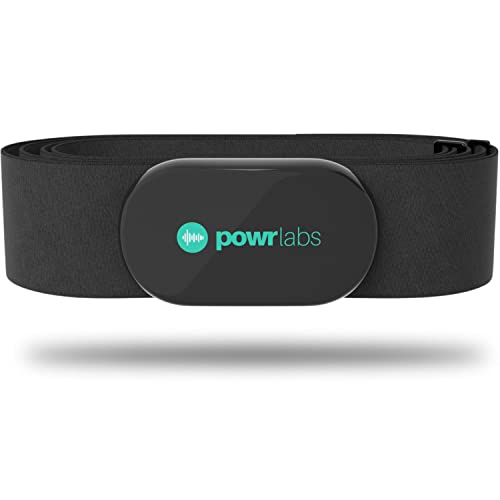
- 400+ hour battery life
- Dual ANT+ and Bluetooth support
- Soft, sweatproof chest strap
Best For: Long training blocks and users who need broad compatibility
Battery-First Wrist Band

- Up to 21 days battery life
- Bright 1.72-inch AMOLED display
- Heart rate and sleep tracking
Best For: Everyday wear and buyers who want long battery life in a slim band
Budget Long-Life Tracker

- Ultra-long battery life claim
- Includes two interchangeable straps
- 24/7 heart rate and sleep tracking
Best For: Affordable daily tracking with extra strap value
Endurance Pick – GEOID HS500 Chest Strap Monitor
If you want heart rate monitors with long battery life for everyday training, the GEOID HS500 is a straightforward chest strap built around efficiency. Its 800-hour battery claim, replaceable CR2032 cell, and fast wake-up time make it a practical option for runners, cyclists, and gym users who don’t want to charge often.
Best For: Athletes who want a low-maintenance chest strap with very long battery life and broad app/device compatibility.
Pros:
- Up to 800 hours of battery life with a replaceable CR2032 battery
- ANT+ and Bluetooth support for phones, watches, bike computers, and fitness apps
- IP67 waterproof rating and quick under-1-second wake-up time
- LED indicator helps confirm heart rate detection and connection status
Cons:
- Swimming is not recommended despite the waterproof rating
- Chest strap design may not suit users who prefer wrist-based tracking
Overall, the HS500 stands out if battery longevity matters more than advanced training extras. It keeps the feature set focused on reliable heart-rate tracking, broad compatibility, and low upkeep.
Performance Data Pick – Garmin HRM 600
For buyers comparing heart rate monitors with long battery life and richer training data, the Garmin HRM 600 is the most feature-packed option here. Its rechargeable battery lasts up to 2 months, and it adds real-time heart rate and HRV data, running dynamics, and workout recording when you can’t wear a watch.
Best For: Data-driven athletes who want advanced running metrics, swim support, and rechargeable battery convenience.
Pros:
- Up to 2 months of battery life from a rechargeable battery
- Tracks heart rate, HRV, and detailed running dynamics like stride length and ground contact time balance
- Can record workouts when you can’t wear a watch and sync to Garmin Connect
- Supports swim activities and syncs saved data afterward
Cons:
- Some advanced features require a compatible Garmin smartwatch
- Battery life is long for a rechargeable sensor, but far shorter than coin-cell models in this roundup
The HRM 600 makes sense if your priority is data depth rather than maximum runtime. It combines a rechargeable design with advanced performance tools, which is ideal for athletes already in the Garmin ecosystem.
Rechargeable Runner Pick – Wahoo TRACKR Heart Rate Monitor
The Wahoo TRACKR is a solid choice if you want heart rate monitors with long battery life and a simple, rechargeable setup. It offers over 100 hours of active battery life, ANT+ and Bluetooth connectivity, and a slim strap designed to stay secure during intense workouts.
Best For: Athletes who want a comfortable rechargeable chest strap with strong battery life and easy app/device pairing.
Pros:
- Over 100 hours of active battery life from a rechargeable battery
- ANT+ and Bluetooth support for training apps and equipment
- Slender, soft strap designed for comfort and secure fit
- LED indicators confirm heart rate detection, battery status, and connection
Cons:
- Battery life is strong, but not as extreme as some coin-cell competitors
- Chest strap format may not appeal to users who prefer wrist wearables
In practical terms, TRACKR lands in the sweet spot between convenience and endurance. It should suit regular trainees who want a rechargeable monitor that’s easy to live with and quick to connect.
Accuracy Classic – Polar H10 Chest Strap Monitor
If accuracy is your priority in heart rate monitors with long battery life, the Polar H10 remains a strong all-around chest strap. It offers 400 hours of battery life, broad compatibility, and a waterproof design with internal memory for multiple hours of training.
Best For: Athletes who want a highly compatible, accurate chest strap with strong battery life and waterproof versatility.
Pros:
- Up to 400 hours of battery life from an included CR2025 battery
- Bluetooth, ANT+, and 5 kHz connectivity for wide compatibility
- Fully waterproof with internal memory for multiple hours
- Comfort-focused pro strap with improved electrodes and silicone dots
Cons:
- Uses a replaceable coin-cell battery rather than USB charging
- Does not include the advanced running-dynamics extras found in some newer models
The H10 is still a dependable pick when you want proven sensor performance and long runtime without extra complexity. Its combination of accuracy, compatibility, and battery life makes it easy to recommend for general training use.
Arm-Worn Training Focus – COROS Heart Rate Monitor, Auto-wear Detection
If you want heart rate monitors with long battery life for workout sessions, the COROS armband is built around sport use rather than all-day wellness tracking. It uses an optical sensor for reliable workout data, and the arm-worn design is softer and easier to live with than a chest strap.
Best For: Athletes who want a comfortable arm band for workout-only heart rate tracking.
Pros:
- 38 hours of full operation and up to 80 days of standby on a single charge
- Auto wear detection powers the monitor on and off when worn
- Bluetooth support with connections to up to three devices at once
- Soft, breathable band designed for comfort and quick cleaning
Cons:
- Not intended for daily heart rate tracking purposes
- Bluetooth only; not compatible with ANT+
- Type-C adapter is not included
Overall, this is a practical option if your priority is dependable workout tracking and a long runtime between charges. The comfort-focused band and automatic wear detection make it easy to use during regular training.
Ultra-Endurance Pick – CYCPLUS H1 Armband Heart Rate Monitor
For heart rate monitors with long battery life, the CYCPLUS H1 stands out with an advertised 110-hour average life and fast magnetic charging. It combines Bluetooth 5.1 and ANT+ support, so it can work across a wide range of fitness devices and training setups.
Best For: Long training weeks, riders, and multisport users who need maximum runtime.
Pros:
- Battery life rated at 110 hours
- Charges fully in about 30 minutes with magnetic charging
- Supports both Bluetooth 5.1 and ANT+ connections
- IP67 waterproof rating for added durability
Cons:
- No display, so you rely on connected devices for readouts
- Uses a simple button-based control approach
This is the strongest battery-first choice in the group if you want to train often without constantly thinking about charging. The dual connectivity and quick top-up charging make it especially convenient for mixed-device athletes.
Everyday Fitness Tracker – 24/7 Health Watch with Long Runtime
Fitness Tracker with Heart Rate Blood Oxygen Blood Pressure Monitor Sleep Tracker Activity Trackers
Check Price On AmazonIf you want heart rate monitors with long battery life plus everyday smartwatch features, this fitness tracker combines 24/7 heart rate monitoring with blood oxygen, blood pressure, sleep tracking, and activity data. It is more of an all-in-one wrist tracker than a dedicated sports sensor, so it suits users who want broad health visibility in one device.
Best For: People who want a feature-rich fitness watch for daily health tracking and exercise.
Pros:
- 24/7 heart rate monitoring with blood oxygen and blood pressure tracking
- 120+ exercise modes for varied workouts
- All-day activity tracking for steps, distance, and calories
- Extra smartwatch tools like notifications, reminders, and weather
Cons:
- Battery life is not specified in the supplied details
- More of a smartwatch-style tracker than a dedicated training armband
As a daily companion, this model offers the broadest set of health and convenience features in the roundup. If your focus is not just workouts but also continuous wrist-based wellness tracking, it makes sense as an all-purpose option.
Long-Run Strap Pick – POWR LABS Dual-Mode Chest Strap
If you want heart rate monitors with long battery life for hard training, this POWR LABS chest strap stands out for its no-charging design and wide device support. It uses dual ANT+ and Bluetooth, so it can connect with cycling computers, smartwatches, Garmin, Wahoo, Polar, Peloton, and 400+ fitness apps while staying comfortable through long sessions.
Best For: Athletes who want a reliable chest strap with broad compatibility and months of battery life.
Pros:
- 400+ hour battery life means you can train for months without charging.
- Dual ANT+ and Bluetooth support works with a wide range of devices and apps.
- Soft, seamless fabric is designed to reduce chafing and slipping.
- IPX67 sweatproof and water resistant for tough workouts and wet conditions.
Cons:
- Chest strap design is less convenient than wrist-based trackers for everyday wear.
- To pair correctly, the monitor must be worn before pairing.
This is a strong pick if you care more about accuracy, long runtime, and compatibility than smartwatch-style extras. The replaceable battery and athlete-focused build make it practical for regular training without frequent maintenance.
Battery-First Wrist Band – Xiaomi Mi Smart Band 10
For shoppers comparing heart rate monitors with long battery life, the Xiaomi Mi Smart Band 10 is built around convenience: a slim wrist tracker, a bright AMOLED screen, and up to 21 days of battery on a single charge. It also adds heart rate monitoring, sleep tracking, and multi-sport features in a lightweight format that is easier to wear all day than a chest strap.
Best For: People who want a comfortable everyday tracker with strong battery life and a clear display.
Pros:
- Up to 21 days of battery life helps cut down on charging.
- 1.72-inch AMOLED display is bright and easy to read, even outdoors.
- Tracks heart rate, sleep duration, and multiple sports.
- Water resistant to 50 meters with 5ATM waterproof rating.
Cons:
- No GPS, so it relies on other devices or apps for location tracking.
- Xiaomi Fit app support is metric-focused, which may be inconvenient for some users.
This band makes the most sense if you want a simple, long-lasting wrist tracker rather than a performance chest strap. It delivers the battery life and everyday comfort that many buyers want from a low-maintenance heart rate monitor.
Budget Long-Life Tracker – Nemheng Fitness Tracker
If you want heart rate monitors with long battery life without spending much, the Nemheng fitness tracker focuses on the basics: 24/7 heart rate and sleep tracking, waterproof daily wear, and a battery that is intended to avoid daily charging under normal use. It also comes with two straps, which adds value if you plan to switch between workouts and everyday wear.
Best For: Budget-minded users who want an easy daily tracker with heart rate monitoring and extra strap value.
Pros:
- Ultra-long battery life with magnetic fast charging for less frequent charging.
- Comes with two interchangeable straps at no extra purchase.
- 24/7 heart rate and sleep tracking for basic wellness monitoring.
- IP68 waterproof design suits workouts and daily use.
Cons:
- Battery life is listed as scenario-dependent and not as specific as some rivals.
- Basic TFT display is less premium than AMOLED alternatives.
This tracker is a practical pick if your priority is getting a low-cost, long-lasting wearable for routine health tracking. It does not try to be a high-end sports watch, but it covers the essentials well for the price.
How We Picked the Best Heart Rate Monitors with Long Battery Life
We prioritized battery life first, then looked at sensor type, connection options, waterproofing, wear comfort, and compatibility with popular training apps and fitness equipment. For chest straps and armbands, we also considered how well they balance accuracy with everyday usability.
Quick Comparison
Chest straps usually deliver the most accurate heart-rate readings for structured training, while armbands and wrist wearables tend to be easier to wear all day. If you need one device for workouts plus general wellness tracking, a smartwatch or band may be more versatile. If your focus is training data and minimal charging, dedicated monitors are usually the better choice.
Key Buying Factors for Heart Rate Monitors with Long Battery Life
Battery Rating Vs. Real-World Use
Look past the headline number. Battery life can drop with constant Bluetooth use, dual-device pairing, or frequent workouts. A strong battery claim is most useful when it still holds up under your actual training routine.
Accuracy and Fit
Chest straps generally offer the most consistent readings during intervals, tempo sessions, and high-intensity efforts. Armbands are a good middle ground if you want comfort without giving up too much precision. Wrist-based trackers are convenient, but they can be less reliable during movement-heavy or sweaty sessions.
Connectivity and Compatibility
Check for ANT+ and Bluetooth if you want flexibility with watches, bike computers, treadmills, and fitness apps. Dual connectivity is especially helpful if you train indoors and outdoors with different devices.
Durability and Water Resistance
IP-rated protection matters if you run in rain, sweat heavily, or use the monitor for swimming-related workouts. A rugged strap or sensor housing can also improve long-term value.
Who Should Buy Which Heart Rate Monitors with Long Battery Life?
If you want the most training-focused option, choose a chest strap. If comfort is more important and you still want solid workout data, an armband is a practical compromise. If you want all-day tracking, sleep metrics, and broader wellness features, a fitness tracker or smartwatch may make more sense than a dedicated sensor.
For most buyers, the best Heart Rate Monitors with Long Battery Life are the ones that match your sport, preferred wearing style, and app ecosystem—not just the longest published battery spec.