Finding the right heart rate monitor for running can make your training more precise, whether you want steadier easy runs, better interval control, or cleaner data for race prep.
Below, we’ve narrowed the field to 10 standout options based on accuracy, comfort, connectivity, battery life, and real-world runner friendliness.
Best 10 Heart Rate Monitor for Running Picks for 2026
Accuracy Leader
Most Accurate Chest Strap for Training
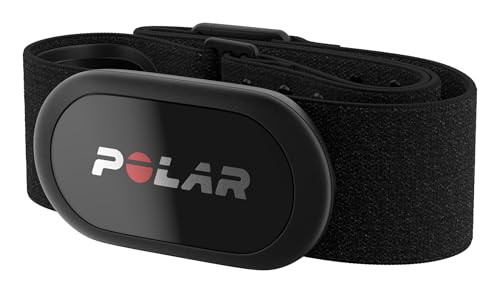
- High-precision chest strap sensor
- Bluetooth, ANT+, and 5 kHz support
- Waterproof with internal memory
Best For: Runners who want a highly accurate chest strap with broad compatibility
Advanced Performance Pick

- Real-time heart rate and HRV data
- Running dynamics for form analysis
- Rechargeable battery up to 2 months
Best For: Data-focused runners who use Garmin gear and want advanced metrics
Value Choice
Reliable Everyday Heart Rate Monitor
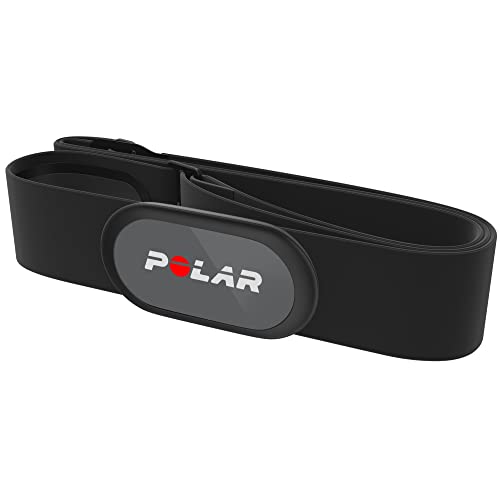
- Accurate chest-strap heart rate tracking
- Broad compatibility with HRM equipment
- Up to 400-hour battery life
Best For: Runners who want an affordable, dependable chest strap for daily training
Durability Pick

- Real-time heart rate and HRV data
- Up to 1 year battery life
- Machine-washable strap with 3 ATM rating
Best For: Runners who want a durable Garmin strap with easy upkeep and long battery life
Chest Strap Precision
GEOID HS500 Heart Rate Monitor

- ANT+ and Bluetooth support
- 800-hour battery life
- IP67 waterproof for training
Best For: Runners who want a chest strap with wide device compatibility
Garmin-Compatible Accuracy

- Accurate real-time HR and HRV
- Up to 1 year battery life
- Machine washable strap
Best For: Garmin runners who want durable, accurate chest strap tracking
Comfortable Arm Band

- Soft breathable arm band
- Auto-wear detection
- Bluetooth connection for up to 3 devices
Best For: Runners who want a comfortable arm band for workout tracking
Precision Training Pick

- Real-time heart rate data for runs and interval work
- Bluetooth and ANT+ support for broad device compatibility
- Soft adjustable strap with IP67 sweat and rain resistance
Best For: Runners who want app-friendly chest-strap tracking
Long-Haul Comfort Pick
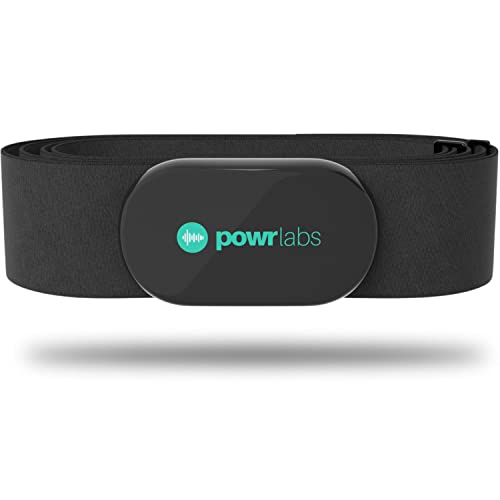
- Dual ANT+ and Bluetooth connectivity for wide compatibility
- Soft seamless fabric aims to reduce chafe on long runs
- 400+ hour battery life with sweat and rain resistance
Best For: Runners who prioritize comfort and long battery life
Budget-Friendly Sensor Pick
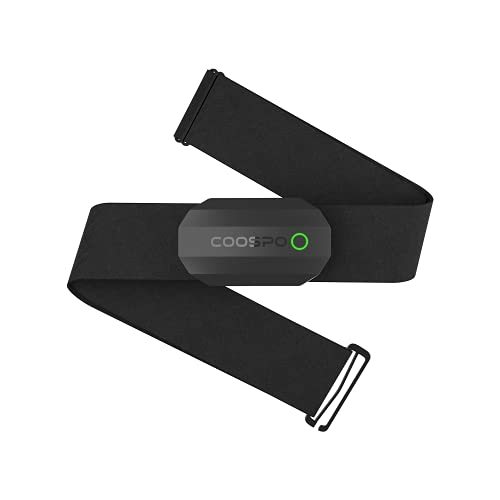
- ±1 BPM accuracy claim for real-time workout tracking
- Bluetooth 4.0 and ANT+ compatibility with popular apps
- IP67 waterproofing plus 300-hour battery life
Best For: Runners who want an affordable, compact chest strap
Accuracy Leader – Most Accurate Chest Strap for Training
If you want a heart rate monitor for running that prioritizes precision, the Polar H10 is built around accurate chest-strap tracking and broad device compatibility. It supports Bluetooth, ANT+, and 5 kHz connections, making it easy to pair with a wide range of watches, phones, and fitness equipment.
Best For: Runners who want a highly accurate chest strap with flexible connectivity and strong compatibility.
Pros:
- Widely recognized for top precision in Polar’s heart rate sensor lineup.
- Bluetooth, ANT+, and 5 kHz support offers flexible pairing options.
- Waterproof design and internal memory add versatility for varied workouts.
- Comfort-focused pro strap includes improved electrodes and silicone dots.
Cons:
- Requires a chest strap setup rather than a wrist-based monitor.
- Uses a CR2025 battery instead of a rechargeable design.
For runners who value proven accuracy and broad compatibility, the H10 is a strong, straightforward pick. Its extra connection options and workout memory make it especially useful if you train across multiple devices or environments.
Advanced Performance Pick – Data-Rich Running Strap
The Garmin HRM 600 is a feature-heavy heart rate monitor for running if you want more than basic pulse tracking. It sends real-time heart rate and HRV data to compatible Garmin devices and adds running dynamics like step speed loss, stride length, vertical oscillation, and ground contact time balance.
Best For: Data-focused runners who use Garmin gear and want advanced running metrics.
Pros:
- Delivers real-time heart rate and HRV data to compatible Garmin devices.
- Includes running dynamics such as stride length and ground contact time balance.
- Can record workouts without a watch and sync them to the Garmin Connect app.
- Rechargeable battery lasts up to 2 months and the strap is machine washable.
Cons:
- Advanced running dynamics require a compatible smartwatch.
- Designed around the Garmin ecosystem rather than universal use.
This is a strong choice if your runs are about analysis and improvement, not just logging heart rate. Its extra metrics and app syncing make it a better fit for runners who like detailed performance feedback.
Value Choice – Reliable Everyday Heart Rate Monitor
Polar H9 Heart Rate Sensor – ANT + / Bluetooth - Waterproof HR Monitor with Soft Chest Strap, M-XXL
Check Price On AmazonThe Polar H9 is a practical heart rate monitor for running if you want reliable chest-strap tracking without paying for extra features you may not need. It is designed to work with all HRM-compatible equipment and can connect with popular smartphone apps for flexible training use.
Best For: Runners who want an affordable, dependable chest strap for everyday training.
Pros:
- High-accuracy heart rate sensing backed by Polar’s long track record.
- Works with all HRM-compatible equipment for broad compatibility.
- 400-hour battery life is excellent for frequent training.
- Includes a soft strap and two size options for fit flexibility.
Cons:
- Does not add the advanced running metrics found on higher-end models.
- Uses a replaceable CR2025 battery instead of a rechargeable pack.
If you mainly want accurate heart rate tracking for runs and cross-training, the H9 keeps things simple and effective. It stands out as a strong value option for runners who care more about dependable data than extra analytics.
Durability Pick – Durable Heart Rate Tracker
The Garmin HRM 200 is a no-nonsense heart rate monitor for running that focuses on accurate real-time heart rate and HRV data. It works with compatible Garmin smartwatches, cycling computers, fitness equipment, apps, and smartphones, while keeping maintenance simple with a user-replaceable battery and machine-washable strap.
Best For: Runners who want a durable Garmin strap with simple upkeep and long battery life.
Pros:
- Transmits real-time heart rate and HRV data to compatible Garmin devices and apps.
- Up to 1 year of battery life reduces how often you need to change batteries.
- Machine-washable strap makes post-run cleanup easy.
- 3 ATM water rating adds everyday durability.
Cons:
- Does not list advanced running dynamics like Garmin’s higher-end strap.
- Best suited to users already in the Garmin ecosystem.
For runners who want dependable tracking and easy upkeep, the HRM 200 covers the essentials well. It is especially appealing if you prefer a durable strap with a long battery life instead of extra training analytics.
Chest Strap Precision – GEOID HS500 Heart Rate Monitor
If you want a heart rate monitor for running that prioritizes quick wake-up and broad compatibility, the GEOID HS500 is built for simple training use. Its chest strap design, ANT+ and Bluetooth support, and movement-resistant algorithms make it a practical pick for runners who want reliable workout data without a lot of setup friction.
Best For: Runners who want a chest strap monitor with wide app and device compatibility.
Pros:
- ANT+ and Bluetooth support for phones, watches, treadmills, and fitness apps
- LED light confirms connection and heart rate readiness
- 800-hour battery life with a replaceable CR2032 battery
- IP67 waterproof rating for sweaty training sessions
Cons:
- Swimming is not recommended
- Chest strap format may not suit runners who prefer an arm-based monitor
Overall, the HS500 is a straightforward option if you want long battery life and flexible connectivity in a running-focused heart rate strap. It leans more toward dependable workout tracking than premium extras, which keeps it easy to use.
Garmin-Compatible Accuracy – Garmin HRM 200
The Garmin HRM 200 is a heart rate monitor for running if you want accurate real-time heart rate and HRV data in a durable chest strap package. It is designed to pair with compatible Garmin smartwatches, cycling computers, fitness equipment, apps, and smartphones, making it a strong fit for runners already in the Garmin ecosystem.
Best For: Garmin users who want a durable chest strap with real-time heart rate and HRV data.
Pros:
- Transmits accurate real-time heart rate and heart rate variability data
- Compatible with Garmin smartwatches, cycling computers, fitness equipment, apps, and smartphones
- Up to 1 year of battery life with a user-replaceable battery
- Machine washable strap for easier cleaning
Cons:
- Compatibility is centered on Garmin devices and supported apps
- Chest strap design may not be as comfortable for users who prefer arm-based sensors
For runners who want a sturdy, low-maintenance monitor, the HRM 200 focuses on practical performance rather than extras. Its washable strap and long battery life make it especially appealing for frequent training.
Comfortable Arm Band – COROS Heart Rate Monitor
If you are shopping for a heart rate monitor for running and prefer an arm-based option, the COROS Heart Rate Monitor offers a soft, breathable band with auto-wear detection. It is designed for sports and workouts, connects via Bluetooth only, and can pair with up to three devices, which makes it useful for runners who train with multiple gadgets.
Best For: Runners who want an easy-to-wear arm band monitor with Bluetooth connectivity.
Pros:
- Soft, breathable arm band is more comfortable than a chest strap for many users
- Auto-wear detection powers the monitor on and off when worn
- Can pair with up to three devices at once
- 38 hours of full operation with a quick 2-hour recharge
Cons:
- Bluetooth only, with no ANT+ support
- Not intended for daily heart rate tracking
- USB charging cable is included, but no Type-C adapter is provided
The COROS monitor stands out for comfort and simple wear detection, which can be a nice upgrade if chest straps bother you on runs. It is best suited to workout tracking rather than all-day health monitoring.
Precision Training Pick – COOSPO H6M Chest Strap
If you want a heart rate monitor for running that gives real-time effort data, the COOSPO H6M is built for steady runs, intervals, and gym work. Its Bluetooth and ANT+ support make it easy to pair with compatible phones, GPS watches, bike computers, and fitness apps that accept external sensors.
Best For: Runners who want a chest strap they can use with apps, watches, and indoor training gear.
Pros:
- Real-time heart rate tracking helps you manage zones and recovery during runs.
- Bluetooth and ANT+ widen compatibility with smartphones, watches, and fitness equipment.
- Soft, adjustable chest strap is made for comfortable daily training and longer sessions.
- IP67 resistance handles sweaty workouts and rainy outdoor runs.
Cons:
- Requires a compatible app or device to view the data.
- Not intended for swimming or prolonged soaking.
- Chest strap fit may take a little setup before first use.
This is a practical choice if you want a simple, app-friendly running monitor with broad wireless support and a focus on training feedback. The 300-hour battery life also makes it easy to keep in rotation without frequent charging.
Long-Haul Comfort Pick – POWR LABS Dual-Band Strap
The POWR LABS chest strap is a strong heart rate monitor for running if you want dual-band connectivity and a comfort-first design. It works with Bluetooth and ANT+ devices, including many Garmin, Wahoo, Polar, and Peloton setups, making it easy to add heart rate tracking to training runs and cross-training sessions.
Best For: Runners who want a comfortable chest strap with wide app and device support.
Pros:
- Dual ANT+ and Bluetooth support works with 400+ fitness apps and many major training devices.
- Soft, seamless fabric is designed to reduce chafing and slipping on long sessions.
- 400+ hour battery life means months of training without a recharge.
- IPX67 resistance helps it stand up to sweat, rain, and tough workouts.
Cons:
- To pair correctly, the strap must be worn before pairing.
- It still depends on a compatible app or device to display readings.
- Chest straps are not ideal for runners who prefer a wrist-based sensor.
Overall, this is a well-rounded option for runners who value comfort and long battery life as much as connectivity. The combination of broad compatibility and sweatproof construction makes it easy to use for everyday training.
Budget-Friendly Sensor Pick – COOSPO H808S Chest Monitor
If you’re looking for a straightforward heart rate monitor for running, the COOSPO H808S gives you dual-mode Bluetooth 4.0 and ANT+ connectivity in a compact chest strap setup. It is designed to work with compatible fitness watches, bike computers, and third-party apps, so you can track your effort during runs without a complicated setup.
Best For: Runners who want an affordable chest strap with basic real-time heart rate tracking.
Pros:
- ±1 BPM accuracy claim for real-time training feedback.
- Bluetooth and ANT+ support expands compatibility with apps and devices.
- IP67 waterproof rating and 300-hour battery life support regular training use.
- LED light and beep reminder make it easier to check the sensor status.
Cons:
- Bluetooth pairing is meant to be done through the app, not directly from phone settings.
- Needs the strap electrodes moistened before use.
- The strap may need replacement over time with heavy washing or frequent use.
This model is best if you want a simple, no-frills running monitor that covers the basics well. Its compact design and broad app support make it a practical entry point for heart rate tracking.
How We Picked the Best Heart Rate Monitor for Running
We focused on models that runners are most likely to use consistently: chest straps and sensors with strong signal stability, broad compatibility, solid battery life, and weather resistance. We also looked for practical features like dual Bluetooth and ANT+ support, easy pairing with watches and apps, and designs that stay secure during faster workouts.
Quick Comparison
In general, premium models from Garmin and Polar tend to emphasize advanced training ecosystems, while value-oriented options from brands like COOSPO, GEOID, and POWR LABS aim to deliver dependable core performance at a lower price. If you want the most polished experience, look at the higher-end sensors first; if you want simple run data at a better value, the budget picks can be a smart fit.
Key Buying Factors for a Heart Rate Monitor for Running
Accuracy and Signal Stability
For running, chest straps usually provide the most consistent readings, especially during intervals, hills, and cold-weather starts. If accuracy matters more than convenience, prioritize a strap-based design with a proven sensor.
Connectivity and Compatibility
Make sure the monitor supports the devices you use most. ANT+ is useful for many watches and gym equipment, while Bluetooth helps with phones, tablets, and popular training apps. Dual-protocol support gives you more flexibility.
Comfort and Fit
A good fit matters because a slipping strap can cause noisy readings. Look for adjustable straps, soft contact points, and a design that stays secure without feeling restrictive over longer runs.
Battery Life and Durability
If you train frequently, battery life becomes a real advantage. Also check water resistance and sweat resistance so your monitor can handle rain, humidity, and regular cleanup.
App and Watch Ecosystem
Some runners want a monitor that simply transmits heart rate. Others want deeper training metrics through a specific ecosystem. Choose based on whether you care most about basic live heart rate or more advanced performance analysis.
Who Should Buy Which Heart Rate Monitor for Running?
If you want the most dependable all-around Heart Rate Monitor for Running, start with a premium chest strap from Garmin or Polar. If you’re cost-conscious, value picks from COOSPO, GEOID, or POWR LABS can cover the essentials well. COROS may appeal to runners already using its ecosystem, while dual-connectivity models are best for athletes who switch between watches, phones, and indoor training apps.
The best choice is the one you’ll wear often, pair quickly, and trust in workouts that matter. For most runners, that means balancing accuracy first, then comfort, then features and price.