Commercial glute ham developers can make posterior-chain training more consistent by supporting controlled glute-ham raises, back extensions, hip extensions, and related movements. The right machine should feel stable under load, adjust to different users, and fit your facility’s available space.
This roundup compares 10 options across dedicated GHD machines, hyperextension benches, combination lower-body units, and hip-thrust equipment. Use the guide below to match construction, adjustability, footprint, and exercise versatility to your training needs.
Best 10 Commercial Glute Ham Developers Picks for 2026
Adjustable Commercial Pick
Titan Fitness Glute and Ham Developer

- 10 adjustment settings for varied user heights
- Supports posterior-chain and abdominal exercises
- 350-lb capacity with wheels and wide base
Best For: Adjustable GHD training in commercial or home gyms
Heavy-Duty Lower-Body Station
Body-Solid GLPH1100 Leg Press & Hack Squat
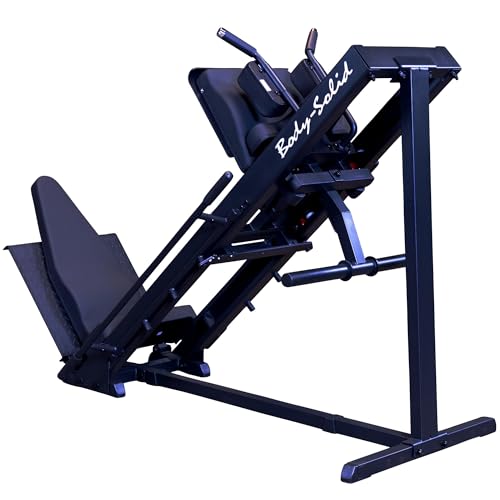
- Combines leg press and hack squat exercises
- Supports up to 1,000 pounds
- Commercial 11-gauge steel frame
Best For: High-capacity lower-body training facilities
Most Versatile GHD
Valor Fitness Adjustable Glute Ham Developer
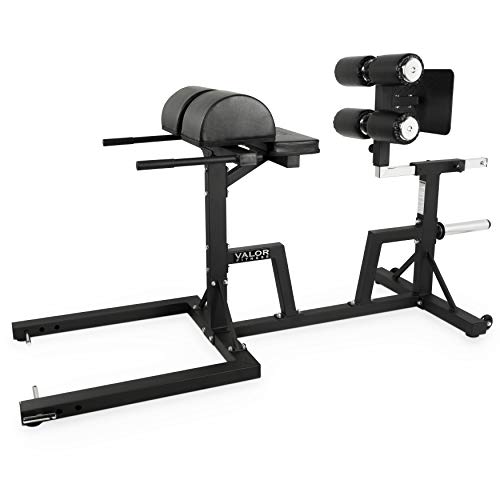
- Multiple positions support varied exercises
- 400-lb capacity with 12-gauge steel frame
- Includes band pegs, plate storage, and wheels
Best For: Versatile athletic training and posterior-chain work
Compact Hyperextension Option
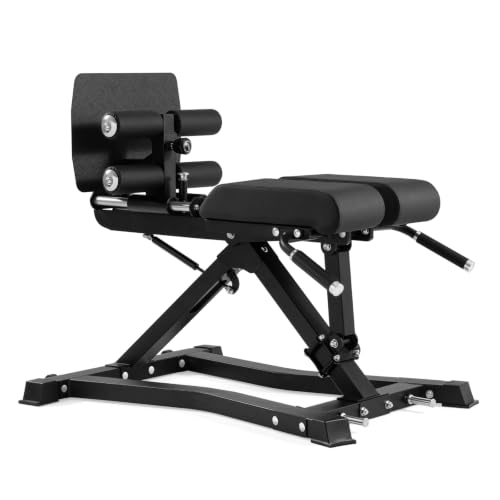
- 661-lb capacity with commercial-grade steel tubing
- 12 adjustment levels for varied user heights
- Compact footprint with transport wheels
Best For: Space-conscious back, glute, and core training
Best Adjustable Floor GHD

- Four ankle and ten leg positions
- Supports GHD and posterior-chain exercises
- Wheels and upright storage save space
Best For: Versatile floor-based glute ham and core training
Best Roman Chair Alternative
Body-Solid Back Hyperextension
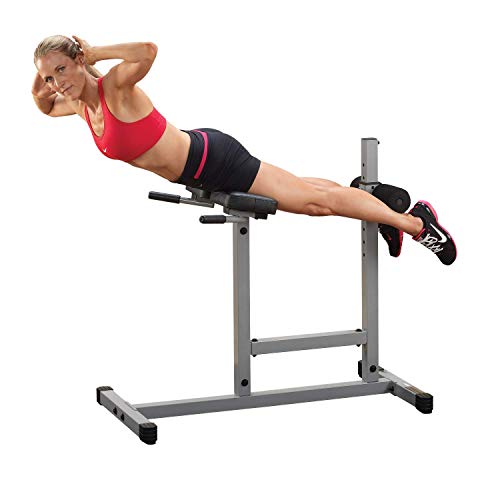
- Adjustable vertical and horizontal supports
- Handles back, glute, hamstring, and ab work
- Heavy-gauge steel with thick padding
Best For: Versatile lower-back and core training
Best Plate-Loaded Hip Thrust Machine

- Dedicated hip thrust training station
- 360-pound maximum weight capacity
- Heavy 252-pound alloy-steel frame
Best For: Commercial glute-focused hip thrust training
Best Adjustable Hyperextension
Multi-Angle Hyperextension Bench

- Nine training angles from 45° to 75°
- 10-position pad height and adjustable ankle support
- Band- and cable-compatible resistance options
Best For: Customizable lower-back, glute, hamstring, and core training
Best Power Rack Attachment

- Fits compatible 3" x 3" power cages
- 14 adjustment settings for different users
- Large layered pads and 800-pound stated capacity
Best For: Rack owners adding GHD and posterior-chain exercises
Best Lower-Body Combo
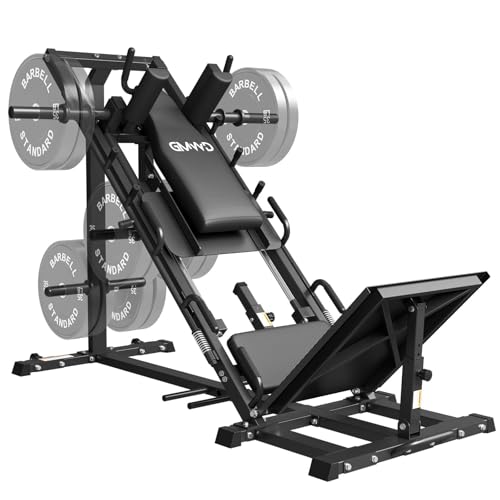
- Combines 45-degree leg press and hack squat
- Linear-bearing sled and adjustable safety system
- Heavy 385-pound frame with 1,500-pound stated capacity
Best For: Heavy compound lower-body training in spacious home gyms
Adjustable Commercial Pick – Titan Fitness Glute and Ham Developer
For buyers comparing commercial glute ham developers, the Titan Fitness GHD offers a sturdy steel frame, broad adjustability, and a 350-pound capacity. It supports glute ham work as well as abdominal training, while built-in wheels make storage more manageable.
Best For: Athletes and gyms wanting an adjustable GHD for posterior-chain and core exercises.
Pros:
- Ten adjustment settings accommodate different athletes.
- Supports glute, hamstring, lower-back, and high-range abdominal exercises.
- Large padding, padded ankle rollers, and a wide base improve comfort and stability.
- Powder-coated steel construction includes wheels for easier repositioning.
Cons:
- Its 350-pound capacity is lower than some heavy-duty alternatives.
- The 190-pound machine requires substantial floor space and handling during setup.
The Titan is a practical all-around choice when adjustability and exercise versatility matter more than maximum load capacity.
Heavy-Duty Lower-Body Station – Body-Solid GLPH1100 Leg Press & Hack Squat
Although it is not a dedicated commercial glute ham developer, the Body-Solid GLPH1100 is a substantial lower-body machine for facilities prioritizing leg presses and hack squats. Its commercial-grade frame and 1,000-pound capacity suit heavy lower-body programming.
Best For: Commercial gyms needing a high-capacity leg press and hack squat combination.
Pros:
- Quick flip-and-lock mechanism switches between leg press and hack squat modes.
- 1,000-pound capacity supports heavy lower-body training.
- Heavy-duty 2-by-4-inch, 11-gauge steel mainframe provides stability.
- DuraFirm padding and a quad-track roller system support comfort and smooth movement.
Cons:
- It does not provide the dedicated glute ham raise and back-extension setup of a GHD.
- Weight plates are sold separately.
- Its 96-inch length requires considerable floor space.
Choose this Body-Solid model when your priority is heavy, versatile leg training rather than dedicated hamstring-focused GHD work.
Most Versatile GHD – Valor Fitness Adjustable Glute Ham Developer
The Valor Fitness GHD is a strong contender among commercial glute ham developers for facilities that want broad exercise coverage and useful storage features. Its adjustable frame supports glute ham raises, extensions, sit-ups, reverse hypers, and core work.
Best For: Athletic training spaces needing a versatile, adjustable GHD with band and plate-storage features.
Pros:
- Supports glute ham raises, back and hip extensions, GHD sit-ups, reverse hypers, and core exercises.
- Six horizontal and four vertical adjustments help customize positioning.
- 400-pound capacity and reinforced 12-gauge steel construction support demanding workouts.
- Includes Olympic plate storage, resistance-band pegs, and transport wheels.
Cons:
- Its 122-pound weight may provide less heft than some larger commercial machines.
- The 82-inch depth still requires a dedicated training area.
With more adjustment points and integrated training accessories than many basic GHDs, the Valor is especially useful for varied conditioning programs.
Compact Hyperextension Option – RitFit Back Extension Machine
The RitFit Back Extension Machine is a compact alternative for buyers seeking commercial-style construction without the footprint of a larger GHD. It focuses on back extensions, hyperextensions, glute work, and core training, with extensive adjustment options for different users.
Best For: Home or garage gyms needing a space-conscious back-extension and glute-training bench.
Pros:
- Commercial-grade 2-by-3-inch steel tubing supports up to 661 pounds.
- Twelve adjustment levels accommodate users from 4 feet 7 inches to 6 feet 3 inches.
- Thick split padding is designed to follow the spine’s natural curve.
- Transport wheels and a compact 32.3-by-44.8-inch footprint simplify storage.
Cons:
- It is primarily a back-extension and hyperextension bench rather than a full GHD station.
- The listed warranty is one year.
- It may offer less exercise versatility than dedicated commercial glute ham developers.
RitFit makes sense when footprint and user adjustability are more important than a full range of dedicated GHD movements.
Best Adjustable Floor GHD – Titan Fitness Floor GHD
For gyms comparing commercial glute ham developers, the Titan Fitness Floor GHD offers a versatile platform for posterior-chain and core training. It supports back extensions, hip extensions, GHD sit-ups, and glute-ham raises, with multiple adjustment points for a more customized fit.
Best For: Lifters and facilities seeking an adjustable, space-conscious floor GHD for varied glute, hamstring, back, and core exercises.
Pros:
- Supports back extensions, hip extensions, GHD sit-ups, and glute-ham raises.
- Four ankle positions and ten leg positions accommodate different body types.
- Heavy-duty steel construction, a wide base, wheels, and built-in hand grips support stability and repositioning.
- Stores upright to help minimize its footprint.
Cons:
- Its maximum recommended load is 260 pounds.
- The listed dimensions extend 75 inches in depth during setup.
With broad adjustability and upright storage, this is a practical choice when a commercial-style GHD needs to handle multiple movements without permanently dominating the floor.
Best Roman Chair Alternative – Body-Solid Back Hyperextension
Among commercial glute ham developers and related posterior-chain equipment, the Body-Solid Back Hyperextension Machine is a Roman chair designed for back extensions, reverse hyperextensions, ab crunches, and core exercises. Its adjustable supports and heavy-gauge steel frame make it adaptable for shared-use training spaces.
Best For: Home or commercial gyms prioritizing lower-back, glute, hamstring, and abdominal work on a compact Roman chair.
Pros:
- Supports back extensions, reverse hyperextensions, ab crunches, and Roman chair exercises.
- Vertical and horizontal pop-pin adjustments accommodate different users.
- Thick DuraFirm pads and oversized foam rollers provide padded support.
- Commercial 2-by-3-inch heavy-gauge steel frame is designed to reduce rocking.
Cons:
- It is a Roman chair rather than a dedicated glute-ham developer.
- Its maximum recommended load is 120 kilograms.
- At 40 pounds, it may provide less overall mass than heavier commercial machines.
This model makes sense when exercise versatility and user adjustability matter more than having a dedicated GHD profile, especially for gyms that also need a capable abdominal station.
Best Plate-Loaded Hip Thrust Machine – Nautilus GLUTE DRIVE
For facilities evaluating commercial glute ham developers alongside dedicated hip-training equipment, the Nautilus GLUTE DRIVE focuses on plate-loaded hip thrusts. Its alloy-steel frame supports up to 360 pounds, while the integrated design is built specifically around glute-focused thrust training.
Best For: Commercial gyms wanting a dedicated, plate-loaded hip thrust station for glute training.
Pros:
- Purpose-built for hip thrust training.
- Supports a maximum weight capacity of 360 pounds.
- Alloy-steel construction provides a substantial 252-pound machine weight.
- Includes a compact 62-by-60-by-35-inch footprint for a dedicated station.
Cons:
- Weight plates and storage are sold separately.
- It is focused on hip thrusts rather than the broader exercise range of a GHD.
- The 60-inch width may require careful floor planning.
This is the clearest choice for a gym that wants specialized glute-drive capacity rather than a multifunctional GHD, provided separate plates and storage are already available or planned.
Best Adjustable Hyperextension – Multi-Angle Hyperextension Bench
For shoppers comparing commercial glute ham developers, the GearForFit Multi-Angle Hyperextension Bench stands out for its broad angle and pad adjustability. It supports controlled work for the lower back, glutes, hamstrings, and core, with options to add bands or compatible cable resistance.
Best For: Users who want a highly adjustable posterior-chain bench for bodyweight and progressive-resistance training.
Pros:
- Offers nine training angles from 45° to 75°.
- Includes 10 pad-height positions and adjustable ankle support.
- Uses a heavy-duty 3″ x 3″ steel frame with a 300-pound capacity.
- Supports resistance bands and compatible cable equipment.
Cons:
- Resistance bands are sold separately.
- Its hyperextension-focused design may not replace a dedicated full GHD for every exercise.
This is a versatile choice when setup customization matters most. Its compact commercial-style footprint and multiple resistance options make it practical for varied posterior-chain routines.
Best Power Rack Attachment – Adjustable GHD Machine
Among commercial glute ham developers, this FAGUS H attachment is designed to add GHD training to a compatible 3″ x 3″ power cage. Its 14 adjustment settings, large pads, and 800-pound stated capacity support back extensions, hip extensions, GHD sit-ups, Russian twists, and related movements.
Best For: Power-rack owners who want a space-conscious GHD attachment with extensive adjustment range.
Pros:
- Built for 3″ x 3″ power cages with heavy-duty steel construction.
- Provides 14 adjustment settings for different users.
- Supports multiple posterior-chain and core exercises.
- Includes large dual-layer padding, an 8″ thigh cushion, and a 2″ knee platform.
Cons:
- Requires a compatible power cage for installation.
- Its red finish may not suit every gym setup.
This attachment makes the most sense if you already own a matching rack and want to expand its capabilities without adding a separate full-size machine. The adjustment range and padding are useful for shared home-gym use.
Best Lower-Body Combo – Leg Press Hack Squat Machine
While not a dedicated GHD, this GMWD machine is a substantial lower-body alternative to consider alongside commercial glute ham developers. Its 45-degree leg press and hack squat functions target the quads, hamstrings, glutes, and calves, with linear bearings, safety stops, and integrated weight storage.
Best For: Home gyms prioritizing heavy compound lower-body training over dedicated GHD movements.
Pros:
- Combines leg press and hack squat functions in one machine.
- Uses a linear-bearing sled system for smooth movement.
- Includes adjustable safety rails, lockout positions, and a five-level safety limiter.
- Heavy 385-pound construction supports a stated maximum load of 1,500 pounds.
Cons:
- It is not a dedicated glute ham developer for GHD sit-ups or hip extensions.
- The 84″ x 47″ x 56″ footprint requires substantial floor space.
- Its 385-pound unit weight can make setup and repositioning difficult.
Choose this model when your priority is machine-based leg pressing and hack squatting with commercial-style stability. For direct hamstring-curl, hip-extension, or GHD work, pair it with a dedicated posterior-chain station.
How We Picked the Best Commercial Glute Ham Developers
We evaluated these machines by focusing on the features that matter most in a busy gym: frame stability, pad and footplate adjustability, user positioning, weight capacity, finish quality, storage, mobility, and exercise range. We also considered whether each design is best suited to glute-ham raises, back extensions, hip extensions, reverse hypers, hip thrusts, or broader lower-body training.
Because the selection includes both dedicated GHDs and adjacent machines, compare each product by its primary movement rather than assuming every model performs the same exercises. A compact Roman chair may suit basic back extensions, while a full-size GHD is generally better for demanding glute-ham raises and repeated commercial use.
Quick Comparison
- Dedicated GHD training: Choose an adjustable glute ham developer when glute-ham raises and posterior-chain work are the priority.
- Back extensions and core work: Roman chairs and hyperextension benches typically require less floor space and offer simpler setup.
- Hip thrust emphasis: A plate-loaded hip thrust machine provides a more specialized path and setup than a traditional GHD.
- Lower-body versatility: Leg press and hack squat combinations can add substantial exercise variety but usually require more room and budget.
- Space-conscious facilities: Floor GHDs, wheeled units, and adjustable benches may be easier to position and store.
Key Buying Factors for Commercial Glute Ham Developers
Stability and Construction
Look for a rigid steel frame, wide base, secure welds, and non-slip contact points. A machine that shifts during eccentric work can reduce confidence and compromise technique. Check the stated weight capacity and remember that dynamic training can place greater demands on the frame than slow, unloaded repetitions.
Adjustability and Fit
Adjustable hip pads, foot rollers, ankle supports, and range-of-motion settings help accommodate different heights and exercise preferences. Confirm that adjustment points lock firmly and can be changed quickly between users.
Comfort and Positioning
Dense, supportive padding should distribute pressure without allowing excessive sinking. Foot and ankle supports should hold the user securely during glute-ham raises, while pad dimensions should leave enough room for controlled hip movement.
Footprint and Facility Logistics
Measure ceiling height, floor depth, walkways, and storage clearance before buying. Wheels, plate storage, and a manageable frame can simplify repositioning, but they should not replace a stable base during use.
Exercise Selection and Maintenance
Decide whether you need a dedicated GHD or a multi-use station. Inspect hardware, upholstery, bearings, adjustment pins, and replacement-part availability. In commercial environments, straightforward maintenance and durable upholstery can matter as much as the initial price.
Who Should Buy Which Commercial Glute Ham Developers?
Choose a dedicated adjustable GHD if your facility programs glute-ham raises, back extensions, and hip extensions regularly. Choose a floor GHD when you want similar training in a lower-profile format or need easier storage. Choose a Roman chair or hyperextension bench for compact back, glute, hamstring, and abdominal training with simpler user setup.
Choose a hip thrust machine when loaded hip thrusts are the main requirement. Choose a leg press and hack squat combination if you need a broader lower-body station and have sufficient floor space. For most Commercial Glute Ham Developers, prioritize stability and fit first, then select the exercise range and storage features that best match your members and programming.