Commercial curved treadmills offer a self-powered running experience that can encourage a more natural stride while reducing reliance on motors, preset speeds, and electrical controls. The ten models in this roundup span light-commercial, home, foldable, and higher-resistance designs.
Use the comparison and buying advice below to match the treadmill’s construction, belt feel, resistance range, display, and footprint to your training goals and available space.
Best 10 Commercial Curved Treadmills Picks for 2026
Commercial Workhorse
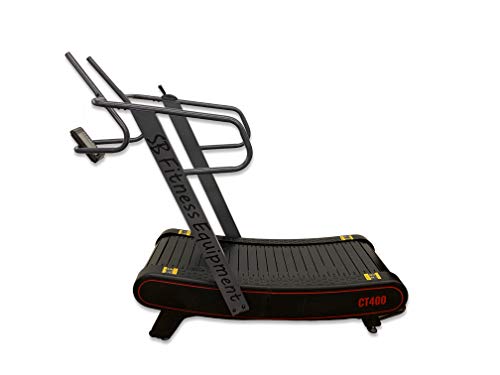
- Self-generated curved design with no maximum speed
- Three resistance levels for running and HIIT
- 375-pound capacity with digital workout metrics
Best For: Gyms and users seeking adjustable resistance for varied training
Space-Saving Runner
Foldable Manual Curved Treadmill

- Foldable handrails and transport wheels support easy storage
- Self-propelled belt has no speed limit
- 350-pound capacity with non-slip rubber track
Best For: Home and office users with limited floor space
Connected Conditioning Pick
Sunny Health Smart Curved Treadmill

- Eight magnetic resistance levels with tension-lever adjustment
- Bluetooth access to the free SunnyFit app
- 59-inch anti-slip deck and 330-pound capacity
Best For: Home training with guided workouts and adjustable resistance
Heavy-Duty Facility Choice
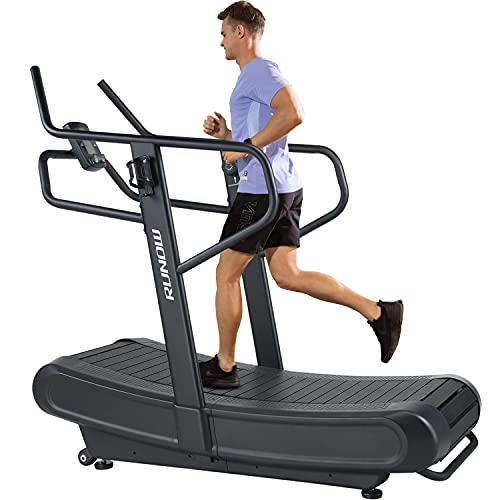
- Commercial-grade model rated for up to 450 pounds
- Four manual resistance levels for varied conditioning
- LCD tracks pace, watts, resistance, and core workout metrics
Best For: Gyms and athletic facilities needing high user capacity
Heavy-Duty Versatility
8-Resistance-Level Curved Manual Treadmill

- Eight adjustable resistance levels for walking, running, and HIIT
- Heavy-duty steel frame with a 400-pound weight recommendation
- LED metrics, phone holder, rubber belt, and transport wheels
Best For: Users seeking a sturdy, outlet-free treadmill with customizable resistance
Light-Commercial Value
SB Fitness CT550 Curved Treadmill

- Eight magnetic resistance levels for customizable workouts
- Backlit LCD tracks key workout metrics and heart rate
- 20-inch deck, bottle holder, and five-year manufacturer warranty
Best For: Home gyms and light-commercial spaces needing adjustable self-generated training
High-Capacity Training
DELAVIN Curved Manual Treadmill

- 440-pound capacity with a wide 62.9-by-18.9-inch running belt
- Four resistance levels for walking, running, sprinting, and HIIT
- LED workout display, shock absorbers, and transport pulleys
Best For: Facilities and home gyms prioritizing capacity and a wide manual running surface
Wide-Belt Value Pick
8-Level Curved Manual Treadmill

- 63-by-19-inch running belt
- Eight resistance levels
- LCD tracking and transport wheels
Best For: Home gyms needing a wide, power-free training surface
Heavy-Duty Training Choice
6-Level Self-Powered Treadmill

- 400-pound stated capacity
- 5-layer shock-absorbing belt
- Tracks pulse and wattage
Best For: Serious training and light-commercial use
High-Capacity Comfort Pick
8-Level Manual Curved Treadmill

- 66.5-by-27.1-inch wide belt
- 440-pound stated capacity
- LED heart-rate tracking
Best For: Users wanting a roomy, stable treadmill for varied training
Commercial Workhorse – SB Fitness CT400
The SB Fitness CT400 is a practical choice among commercial curved treadmills for facilities that need self-generated operation, flexible training options, and adjustable resistance. Its curved, non-motorized design supports walking, running, sport-specific drills, and HIIT without a maximum speed setting.
Best For: Gyms, training spaces, and users who want a durable-feeling curved treadmill with multiple resistance levels and workout tracking.
Pros:
- Self-generated power eliminates the need for a motorized drive system.
- Three resistance levels support progressive strength and conditioning work.
- Flexible slats provide shock absorption, while the display tracks time, distance, speed, calories, and total miles.
- 375-pound recommended user capacity and included transport wheels improve practicality.
Cons:
- The 18-inch deck is narrower than some larger running surfaces.
- At 145 pounds, it may feel less substantial than heavier commercial-grade models.
- The listing identifies the product grade as open box.
The CT400 stands out for combining no-speed-limit manual operation with three resistance settings and useful performance metrics. Its long frame warranty adds reassurance, though buyers should confirm the open-box condition and available space before purchasing.
Space-Saving Runner – Foldable Manual Curved Treadmill
This foldable manual model is a space-conscious option among commercial curved treadmills, especially for home offices or compact training areas. Its self-propelled belt lets users control pace naturally, while the raised-and-lowered handrails and transport wheels make storage and repositioning easier.
Best For: Home users who want a manually powered curved treadmill with a foldable design, non-slip rubber track, and 350-pound capacity.
Pros:
- No speed limit gives users direct control over walking, jogging, or sprinting pace.
- Foldable handrails and a compact folded size help conserve space.
- Anti-slip rubber tracks include raised particles for added traction.
- LED display shows time, calories, speed, and distance.
Cons:
- It is marketed primarily for daily home use rather than a formal commercial facility.
- The 15.75-inch track width is relatively compact.
- It provides a two-year manufacturer’s warranty, shorter than some competing frame warranties.
For buyers prioritizing storage flexibility, this treadmill offers a useful combination of manual pacing, folding functionality, and a 350-pound weight recommendation. Its compact running surface and home-use positioning are worth weighing against the available room and intended workout intensity.
Connected Conditioning Pick – Sunny Health Smart Curved Treadmill
The Sunny Health & Fitness Smart model is a versatile option among commercial curved treadmills for users who want manual running with app connectivity. It combines eight magnetic resistance levels, a spacious anti-slip deck, shock absorption, and Bluetooth access to the SunnyFit app.
Best For: Home users, runners, and rehabilitation-focused workouts that benefit from adjustable resistance, guided app content, and a broad range of pace options.
Pros:
- Eight magnetic resistance levels offer more adjustment than many basic manual treadmills.
- Bluetooth enables free access to SunnyFit workouts and virtual scenic tours.
- The 59-by-17.7-inch anti-slip surface supports walking, jogging, and sprinting.
- LED monitoring includes time, calories, speed, distance, pace, and pulse compatibility.
Cons:
- It is listed as a home-use product rather than a commercial-grade treadmill.
- The heart-rate feature requires the separately sold HR200 accessory.
- Its 330-pound capacity is lower than some models in this roundup.
This treadmill is a strong fit when digital features and resistance control matter as much as the curved running feel. The free app access adds training variety, while the home-use grade and 330-pound limit should guide placement and buyer expectations.
Heavy-Duty Facility Choice – RUNOW 6310CB Curved Treadmill
The RUNOW 6310CB is the most facility-oriented option here, making it a compelling choice among commercial curved treadmills. Its non-electric operation, four manual resistance levels, commercial product grade, and 450-pound recommended capacity suit demanding running, walking, sport-specific, and HIIT environments.
Best For: Commercial gyms, athletic training spaces, and heavier users who need a high-capacity curved treadmill with manual resistance control.
Pros:
- Commercial-grade construction supports a recommended user weight of up to 450 pounds.
- Four manual resistance settings accommodate varied training plans.
- The 5-inch LCD tracks time, distance, calories, watt output, speed, pace, and resistance.
- Transport wheels, a cup holder, and no-electricity operation add practical convenience.
Cons:
- At 287 pounds, it is considerably heavier and less portable than lighter models.
- The listed 48-inch deck length is shorter than some competing running surfaces.
- Its larger 67-by-32-inch footprint requires substantial floor space.
The 6310CB is the clearest match for buyers specifically seeking a commercial-grade curved treadmill with a high weight capacity and straightforward manual controls. Its heavy frame favors stability, but facilities should plan for delivery, placement, and the machine’s substantial footprint.
Heavy-Duty Versatility – 8-Resistance-Level Curved Manual Treadmill
For shoppers comparing commercial curved treadmills, this self-powered model stands out for its sturdy alloy-steel construction, spacious 51.2-by-16.5-inch running surface, and eight resistance levels. It supports walking, running, and HIIT without requiring an electrical outlet.
Best For: Home gyms and users who want adjustable resistance, a high 400-pound weight recommendation, and a durable manual treadmill.
Pros:
- Eight resistance levels can be adjusted with the side-mounted tension knob.
- Heavy-duty frame and reinforced base support stability during intense workouts.
- LED display tracks time, distance, speed, and calories, with a phone holder for added convenience.
- Curved rubber belt and self-powered operation support lower-impact, energy-free training.
Cons:
- Heart-rate tracking requires a compatible chest strap or fitness watch, sold separately.
- At 418.5 pounds, it is substantial despite its transport wheels.
- Periodic bolt checks and belt cleaning are recommended for maintenance.
This is a strong option when stability and resistance variety matter more than powered convenience. Its large frame and high capacity make it suitable for demanding training, while the manual design allows flexible placement.
Light-Commercial Value – SB Fitness CT550 Curved Treadmill
Among commercial curved treadmills, the SB Fitness CT550 is positioned for home or light commercial use. Its self-generated design, eight magnetic resistance levels, and backlit LCD display provide a practical setup for walking, jogging, running, HIIT, and interval training.
Best For: Home users and light-commercial facilities that want a self-generated curved treadmill with heart-rate and workout tracking.
Pros:
- Eight magnetic resistance levels allow users to adjust workout intensity.
- Backlit LCD display tracks time, speed, distance, calories, and heart rate.
- 20-inch-wide running surface and 11-inch step-up height support straightforward use.
- Built-in water-bottle holder keeps hydration nearby during exercise.
Cons:
- It is rated for light commercial use rather than heavy commercial use.
- The supplied notes list a maximum weight recommendation of 350 pounds, lower than some alternatives.
- As a self-generated treadmill, it does not provide motorized belt assistance.
The CT550 balances useful tracking features with adjustable magnetic resistance and a light-commercial product grade. It is a sensible fit for facilities or home gyms that need more than basic manual operation without moving into a heavier commercial specification.
High-Capacity Training – DELAVIN Curved Manual Treadmill
For buyers evaluating commercial curved treadmills for varied training, the DELAVIN combines a wide 62.9-by-18.9-inch belt with four resistance levels and a 440-pound weight recommendation. Its motorless design responds to the user’s position and supports walking, jogging, sprinting, and HIIT.
Best For: Home gyms, gyms, hotels, and rehabilitation settings seeking a high-capacity manual treadmill with a wide running belt.
Pros:
- 440-pound weight recommendation and alloy-steel construction support demanding use.
- Wide curved belt with soft shock absorbers is designed to improve running comfort.
- Four resistance levels and position-based speed changes support quick transitions.
- LED display shows time, speed, distance, and calories, while transport pulleys aid repositioning.
Cons:
- Four resistance levels provide less adjustment than some competing models.
- The manual belt requires users to control speed through their stride and position.
- Its 286-pound frame may still require effort to move despite the pulleys.
The DELAVIN is compelling when belt width, user capacity, and straightforward manual control are priorities. Its feature set suits varied training environments, though shoppers wanting finer resistance adjustment may prefer an eight-level model.
Wide-Belt Value Pick – 8-Level Curved Manual Treadmill
If you want commercial curved treadmills without adding a power connection, this motorless model offers a spacious 63-by-19-inch belt, adjustable resistance, and a straightforward self-powered design. Its LCD tracks core workout metrics, while transport wheels make repositioning easier.
Best For: Home gyms and users who want a wide running surface with adjustable resistance for walking, jogging, and sprint training.
Pros:
- Wide 63-by-19-inch curved running belt provides generous stride space.
- Eight resistance levels support varied workout intensities.
- Manual operation requires no electricity, and built-in wheels aid mobility.
- LCD display tracks time, speed, steps, and calories.
Cons:
- The supplied specifications list an unusual maximum speed value of 1 rpm, so verify performance details before buying.
- The notes contain conflicting resistance counts, mentioning both six and eight levels.
- The product details list a 16-ounce maximum weight recommendation, which appears inconsistent with the commercial-grade positioning.
This is a practical option when belt width, power-free operation, and simple intensity adjustment matter most. Double-check the published specifications and weight rating before placing it in a higher-use gym setting.
Heavy-Duty Training Choice – 6-Level Self-Powered Treadmill
Among commercial curved treadmills, this model emphasizes a heavy steel frame, a 5-layer shock-absorbing belt, and self-powered speed control. It is designed for users who want a substantial platform for walking, HIIT, interval work, and sprint training without motorized assistance.
Best For: Serious home users and light-commercial spaces prioritizing a high stated weight capacity, cushioning, and quiet manual operation.
Pros:
- Commercial-grade steel frame has a stated 400-pound weight capacity.
- Five-layer belt is designed to absorb impact and provide a non-slip surface.
- Six-level metal resistance knob enables quick intensity changes.
- Digital monitor tracks speed, time, distance, calories, pulse, and wattage.
Cons:
- At 316 pounds, the treadmill is substantial despite its transport wheels and rear handle.
- The supplied details list a maximum speed of 1 rpm, which should be clarified before purchase.
- The 16.5-inch belt is narrower than the widest options in this roundup.
This model stands out for a sturdy, gym-oriented build and detailed workout monitoring. Its weight and narrower belt may matter in compact spaces, but the cushioning and 400-pound rating make it a compelling light-commercial candidate.
High-Capacity Comfort Pick – 8-Level Manual Curved Treadmill
This manual curved treadmill is a strong contender for commercial curved treadmills when stability and a roomy belt are priorities. Its 66.5-by-27.1-inch running surface, eight resistance levels, cushioning system, and handlebar setup support a broad range of cardio and anaerobic workouts.
Best For: Home or office gyms seeking a wide, high-capacity treadmill for walking, jogging, interval training, and sprint sessions.
Pros:
- Extra-wide 66.5-by-27.1-inch curved belt offers ample movement space.
- Eight resistance levels accommodate varied training goals.
- Reinforced alloy-steel frame has a stated 440-pound maximum capacity.
- LED display tracks time, distance, speed, calories, and heart rate.
Cons:
- The supplied specifications list a maximum weight recommendation of 16 ounces, conflicting with the stated 440-pound capacity.
- The details report a maximum speed of 1 degree per second, so speed specifications should be confirmed.
- Its roughly 77-by-35-inch footprint requires dedicated floor space.
With the widest listed belt and highest stated capacity of these three options, this treadmill is appealing for users who value room to move and a stable frame. Verify the conflicting specifications before relying on the capacity or speed claims.
How We Picked These Commercial Curved Treadmills
We selected models based on the features that matter most when comparing self-powered treadmills: frame stability, stated user capacity, belt construction, resistance adjustment, display functionality, portability, and suitability for home or commercial environments. We also considered whether each treadmill’s design supports interval training, walking, sprinting, or general conditioning.
Product descriptions vary widely, so verify dimensions, maximum user weight, warranty coverage, assembly requirements, and commercial-use terms before ordering. A treadmill labeled “commercial-grade” is not automatically equivalent to a unit designed for continuous use in a busy gym.
Quick Comparison
| Feature | What to Look For | Why It Matters |
|---|---|---|
| Power source | Self-powered, non-electric operation | Reduces energy use and allows users to control pace directly. |
| Resistance | Multiple levels or adjustable drag | Helps tailor workouts for walking, intervals, hills, and conditioning. |
| Construction | Stable frame, durable belt, reinforced rails | Improves confidence and longevity under repeated use. |
| Tracking | LCD or digital display | Provides basic feedback such as time, speed, distance, or calories. |
| Footprint | Fixed or foldable frame | Determines whether the treadmill suits a dedicated gym or multipurpose room. |
Key Buying Factors for Commercial Curved Treadmills
Frame, Belt, and User Capacity
Prioritize a rigid frame and a smooth, well-supported running surface. Check the published weight limit against the heaviest intended user, leaving a safety margin for sprinting and high-impact workouts. A heavier machine is often more stable, but it may be difficult to move or reposition.
Resistance and Running Feel
Resistance settings change how much effort is required to move the belt. More levels offer finer control, while simpler designs may be easier to operate. If multiple people will use the treadmill, choose controls that are clearly marked and easy to adjust during a workout.
Display and Workout Feedback
Most manual treadmills provide basic metrics rather than advanced connected training. Decide whether time, distance, speed, and calories are sufficient, and check whether the display is readable during running. Do not assume a digital monitor includes heart-rate tracking, app compatibility, or workout programming.
Space, Noise, and Maintenance
Measure the treadmill’s assembled footprint and allow clearance around the sides and rear. Foldable options can help in home gyms, while fixed commercial-style frames generally favor stability. Keep the belt and moving components clean, follow lubrication guidance, and inspect fasteners regularly.
Who Should Buy Which Commercial Curved Treadmills?
Choose a sturdier, higher-capacity model for a dedicated gym, frequent interval training, or multiple users. A treadmill with several resistance levels is useful for athletes who want to vary intensity without relying on motorized speed controls. For walking, moderate jogging, or occasional home workouts, a simpler non-electric model may provide better value.
Foldable designs are the most practical choice when storage space is limited, but confirm that the folding mechanism does not compromise stability. Models with front displays suit buyers who want straightforward workout feedback, while shoppers focused on sprint training should give priority to belt responsiveness, frame rigidity, and handrail placement. Before purchasing, compare the warranty and intended-use language carefully, especially if the treadmill will be placed in a studio, hotel, school, or other commercial setting.