Choosing the right indoor trainer can make a real difference in triathlon training, especially when you need consistent power, structured workouts, and dependable race prep year-round.
This roundup of the best bike trainers for triathlons in 2026 focuses on smart connectivity, ride feel, stability, noise levels, and the setup that best matches your goals and budget.
Best 10 Bike Trainers for Triathlons Picks for 2026
Premium Pick
Garmin TacX Neo 2T Smart Trainer

- Direct-drive magnetic resistance
- ANT+ and Bluetooth compatibility
- Includes multiple axle adapters
Best For: Triathletes wanting a premium, realistic indoor training platform
Best for Zwift Training
Wahoo KICKR CORE 2 Zwift COG and Click

- Integrated WiFi and automatic updates
- Zwift Click and Cog included
- Stable ride for structured efforts
Best For: Triathletes using Zwift who want simple setup and connected training
High-Power Simulator
ThinkRider XXPRO Smart Bike Trainer

- 2500W max power and 25% gradient
- Self-powered direct motor drive
- Bluetooth, ANT+, and Zwift support
Best For: Triathletes seeking intense workouts and realistic virtual hill simulation
Bundle Value
Wahoo KICKR CORE 2 11 Speed Cassette

- 11-speed cassette included
- Magnetic resistance with 20 settings
- WiFi-enabled KICKR CORE platform
Best For: Triathletes who want an easy-start setup with a cassette included
Travel-Ready Pick
FEEDBACK SPORTS Omnium Lightweight Portable Trainer

- Only 14 lb and includes a travel bag.
- Fork-mount design fits 16" to 29" wheels.
- Progressive resistance aims for a natural ride feel.
Best For: Triathletes who need a lightweight trainer for travel and warmups.
Premium Smart Trainer
Wahoo KICKR V6 Smart Indoor Trainer
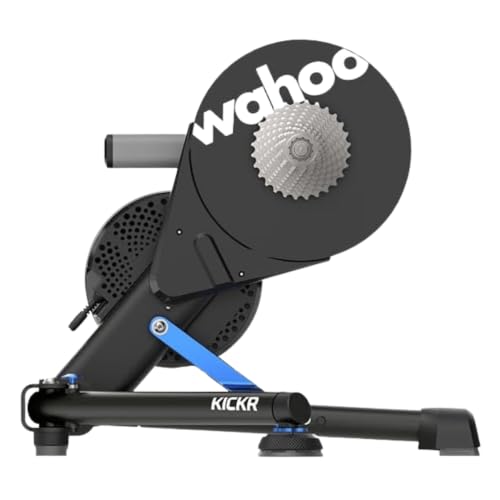
- WiFi connectivity for stable data transfer.
- Power accuracy within +/- 1% with over 2,200 watts of resistance.
- AXIS feet add side-to-side movement and a more realistic feel.
Best For: Triathletes who want accurate, connected indoor training.
Quiet Fluid Stand
Alpcour Fluid Bike Trainer Stand

- Fluid resistance increases as you pedal faster.
- Foldable stainless steel frame includes a carrying bag.
- Noise-reduction design is built for quieter indoor riding.
Best For: Triathletes who want a quiet, foldable trainer for steady indoor workouts.
Fluid-Resistance Pick
Saris Fluid2 Indoor Bike Trainer
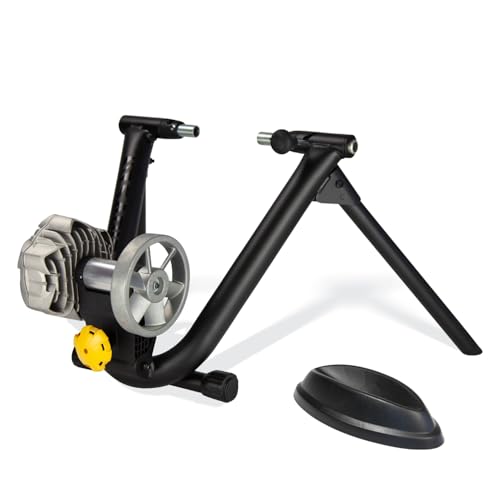
- Progressive fluid resistance for road-like effort
- Quiet, smooth ride with a balanced flywheel
- Foldable frame and app compatibility with a sensor
Best For: Triathletes seeking quiet, steady indoor training
Budget Adjustable Pick
Yellow 6-Level Magnetic Bike Trainer
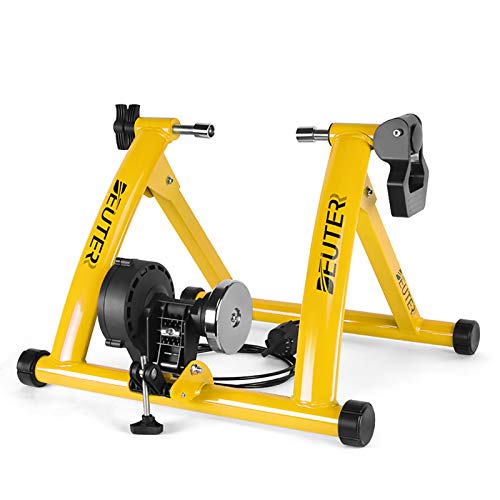
- Six adjustable resistance levels
- Folding frame with handlebar resistance control
- Supports up to 330 pounds
Best For: Triathletes wanting an affordable, basic trainer
Compact Magnetic Pick
5-Level Magnetic Bike Trainer Stand
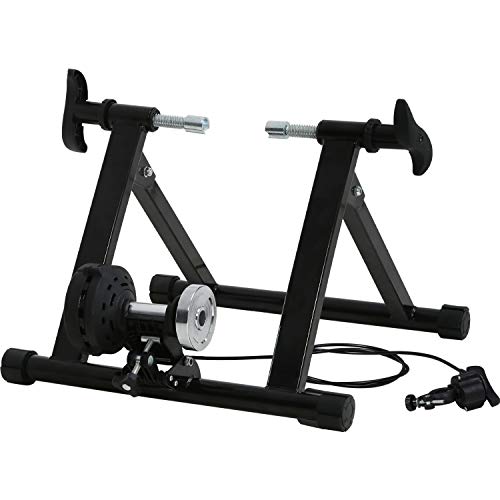
- Five resistance settings for basic workouts
- Folds for storage and transport
- Carbon steel frame supports up to 300 pounds
Best For: Triathletes needing a compact, basic indoor trainer
Premium Pick – Garmin TacX Neo 2T Smart Trainer
If you want one of the most advanced bike trainers for triathlons, the Garmin TacX Neo 2T Smart Trainer is built for realistic ride feel and serious indoor workload. Its direct-drive design, magnetic resistance, and broad connectivity make it a strong option for structured swim-bike-run training blocks where consistency matters.
Best For: Triathletes who want a premium, highly realistic direct-drive trainer with wide device compatibility.
Pros:
- Direct-drive magnetic resistance with a high load capacity up to 2200 watts
- ANT+ and Bluetooth support for iOS, Android, macOS, and Windows
- Includes multiple axle adapters plus front wheel block and quick-release skewer
- Foldable design can help with storage between workouts
Cons:
- Heavy at 47.4 pounds, so it is not the easiest trainer to move often
- More features than a basic setup may need for casual indoor riders
- Designed as a premium unit, so it may be overkill for simple warm-up sessions
The Neo 2T stands out when you care about ride quality, compatibility, and a trainer that can handle hard intervals. For triathletes building a reliable indoor training setup, it brings a strong mix of realism and versatility.
Best for Zwift Training – Wahoo KICKR CORE 2 Zwift COG and Click
Among bike trainers for triathlons, the Wahoo Fitness KICKR CORE 2 is a practical pick if you want a stable, connected indoor setup that is easy to get running. The updated design adds faster pairing, automatic updates with WiFi, and Zwift COG and Click hardware for a more streamlined start to indoor training.
Best For: Triathletes who train with Zwift and want a stable, easy-setup smart trainer.
Pros:
- Integrated WiFi for faster pairing and automatic updates
- Built for hard efforts and structured training with a smooth road-like feel
- Includes Zwift Click and Cog plus adapters for common axle standards
- Stable ride and a 2-year manufacturer warranty
Cons:
- Heavier 13.6 kg unit may be less convenient to move around
- Requires an active WiFi network to use the connectivity benefits
- Best value is tied to riders who use Zwift or similar smart-training platforms
This version of the KICKR CORE focuses on convenience without giving up the solid ride feel that matters for interval work. It is a sensible choice if you want indoor sessions to feel organized, connected, and repeatable.
High-Power Simulator – ThinkRider XXPRO Smart Bike Trainer
If your triathlon training includes demanding intervals and immersive virtual routes, the ThinkRider XXPRO Smart Bike Trainer is built to deliver a very high ceiling for power and slope simulation. Its direct motor drive, self-power generation capability, and compatibility with Bluetooth, ANT+, and Zwift make it a feature-rich indoor option.
Best For: Triathletes who want high-power training with uphill and downhill simulation.
Pros:
- Maximum power output of 2500W with up to 25% simulated gradient
- Direct motor drive with claimed ±1% data accuracy and no calibration required
- Self-power generation means it can run without a power adapter
- Supports Bluetooth, ANT+, PC, bike GPS, and Zwift app connectivity
Cons:
- Load capacity is listed at 242 pounds, so fit and setup matter
- Road-bike orientation may make it less versatile for other bike types
- Feature set is complex enough that simple indoor riders may not need it all
The XXPRO is aimed at riders who want more than basic resistance and are interested in realistic terrain simulation. For triathletes chasing hard indoor sessions, it offers a lot of capability in one trainer.
Bundle Value – Wahoo KICKR CORE 2 11 Speed Cassette
For triathletes looking at bike trainers for triathlons, the Wahoo Fitness KICKR CORE 2 11 Speed Cassette version is a straightforward indoor setup with the same emphasis on stable training and smooth resistance. It adds the cassette in the box, which can simplify getting a compatible bike ready for regular workouts.
Best For: Triathletes who want a KICKR CORE setup with an 11-speed cassette included.
Pros:
- Includes an 11-speed cassette and 1.8mm cassette spacer
- Uses magnetic resistance with 20 settings for structured indoor work
- Built with a stable alloy steel frame and a 250-pound load capacity
- Same updated KICKR CORE platform with easier setup and WiFi connectivity
Cons:
- Heavier unit at 13.6 kg, so it is not especially portable
- 1-year manufacturer warranty is shorter than some competing options
- Bike type listing is hybrid and mountain bike, so compatibility should be checked carefully
This bundle makes sense if you want the CORE platform and prefer having the cassette included from the start. It is a practical, no-fuss indoor trainer choice for consistent triathlon base work and interval sessions.
Travel-Ready Pick – FEEDBACK SPORTS Omnium Lightweight Portable Trainer
If you want bike trainers for triathlons that are easy to pack and deliver a realistic ride feel, the Feedback Sports Omnium stands out. Its fork-mount design, progressive internal resistance, and compact 14 lb frame make it a practical option for warmups, travel, and indoor sessions where portability matters.
Best For: Triathletes who need a lightweight, travel-friendly trainer for warmups and race-week use.
Pros:
- Weighs only 14 lb and includes a heavy-duty travel bag.
- Progressive eddy-current resistance is designed to feel more like outdoor riding.
- Fits 16″ to 29″ wheels and supports thru-axle and quick-release systems.
- Machined aluminum rollers are built for smooth, quiet operation.
Cons:
- Fork-mount setup is less convenient than a simple rear-wheel trainer.
- Not the heaviest-duty option for riders who want maximum load capacity.
Overall, this is a strong pick if portability and a realistic-feeling warmup matter more than bulk and setup simplicity. It is especially appealing for athletes who travel to races and want a compact trainer they can carry easily.
Premium Smart Trainer – Wahoo KICKR V6 Smart Indoor Trainer
For athletes comparing bike trainers for triathlons, the Wahoo KICKR V6 is the premium smart-trainer choice in this group. It adds WiFi connectivity, high-inertia ride feel, and very accurate power delivery, making it well suited to structured indoor training when data quality matters.
Best For: Triathletes who want a high-end smart trainer for accurate, connected indoor workouts.
Pros:
- WiFi connection can transfer ride data quickly and stably.
- Power is accurate to within +/- 1% and supports over 2,200 watts.
- KICKR AXIS feet add side-to-side movement for a more outdoor-like feel.
- Calibration-free operation helps keep power readings consistent.
Cons:
- Heavier and less portable than compact travel trainers.
- Premium feature set likely makes it a bigger investment than basic stands.
In practice, this trainer makes the most sense for triathletes who train indoors often and care about repeatable, precise workouts. It is built for riders who want a connected smart platform rather than a simple resistance stand.
Quiet Fluid Stand – Alpcour Fluid Bike Trainer Stand
If you need bike trainers for triathlons that turn a regular road or mountain bike into a stationary setup, the Alpcour Fluid Trainer is a straightforward option. Its fluid resistance, foldable frame, and noise-reduction design make it a practical choice for consistent indoor conditioning without a complicated setup.
Best For: Triathletes who want a foldable, quiet fluid trainer for regular indoor sessions.
Pros:
- Fluid technology provides progressive resistance that increases as you pedal faster.
- Built-in noise reduction is designed to keep operation near silent.
- Foldable stainless steel frame comes with a carrying bag for travel and storage.
- Includes a front wheel riser block and anti-slip pads for added stability.
Cons:
- Rear-wheel stand format is less advanced than a direct-drive smart trainer.
- Compatible wheel range is specific, so fit should be checked before buying.
This is a practical mid-tier choice for athletes who want simple, quiet indoor training and portable storage. It focuses on stability and realistic fluid resistance rather than smart connectivity or advanced training features.
Fluid-Resistance Pick – Saris Fluid2 Indoor Bike Trainer
If you want bike trainers for triathlons that feel close to outdoor riding, the Saris Fluid2 is a practical choice. Its precision fluid resistance increases as you pedal harder, which is useful for steady aerobic work, tempo sets, and long indoor sessions when you want a smooth, road-like feel.
Best For: Triathletes who want a quiet, consistent wheel-on trainer for base miles and structured indoor workouts.
Pros:
- Progressive fluid resistance mimics outdoor cycling effort.
- Large precision-balanced flywheel helps keep the ride quiet and smooth.
- Foldable frame makes storage easier between sessions.
- Compatible with Zwift and Rouvy when paired with a speed or cadence sensor.
Cons:
- Requires a separate speed or cadence sensor for app use.
- Wheel-on design is less advanced than direct-drive trainers.
Overall, this is a strong all-around trainer for triathlon athletes who value reliability, low noise, and a natural resistance curve over extra smart-trainer features.
Budget Adjustable Pick – Yellow 6-Level Magnetic Bike Trainer
For riders comparing bike trainers for triathlons on a budget, this magnetic trainer covers the basics well. It offers six resistance levels, a folding frame, and handlebar-mounted resistance control, making it a straightforward option for indoor riding when weather or traffic keeps you off the road.
Best For: Budget-minded triathletes who want simple adjustable resistance and easy storage.
Pros:
- Six resistance levels give you some room to vary workout intensity.
- Folding design makes it easier to store and transport.
- Strong pyramid-style frame supports up to 330 pounds.
- Handlebar control lets you change resistance without stopping.
Cons:
- Can be loud with MTB tires, especially on rough treads.
- Best results depend on using smooth tires.
This is a simple, no-frills trainer for athletes who mainly want a stable indoor setup and basic resistance control rather than advanced ride feel or smart features.
Compact Magnetic Pick – 5-Level Magnetic Bike Trainer Stand
If you need bike trainers for triathlons and want a straightforward indoor option, this magnetic trainer keeps things simple. It offers five resistance settings, a foldable design, and a compact footprint, so it works as a practical pick for regular indoor workouts without much setup fuss.
Best For: Triathletes who want a compact, easy-to-store magnetic trainer for basic indoor riding.
Pros:
- Five resistance settings provide a basic range for indoor sessions.
- Folds for easier storage and transport.
- Reported easy assembly with a small number of parts.
- Carbon steel construction supports up to 300 pounds.
Cons:
- Only one listed setting level count in the details, so the setup may be less feature-rich than it sounds.
- Best suited to road bikes rather than a broader bike range.
- Noise can still increase as resistance gets higher.
As a basic indoor trainer, it makes sense for athletes who care more about getting consistent sessions done than chasing premium resistance feel or advanced connectivity.
How We Picked the Best Bike Trainers for Triathlons
We focused on trainers that support realistic triathlon training demands: stable high-intensity intervals, accurate resistance control, straightforward pairing with training apps, and a ride feel that encourages long indoor sessions. For Bike Trainers for Triathlons, consistency matters as much as raw resistance, so we favored models that are reliable, easy to use, and suitable for repeated workouts.
Quick Comparison
Smart direct-drive trainers are the best fit for athletes who want precise power targets, Zwift compatibility, and a quieter ride. Wheel-on fluid and magnetic trainers are better for riders who want a lower entry price or a more portable setup. Portable trainers can also be useful if you travel frequently or need a compact option for race-week prep.
Key Buying Factors for Bike Trainers for Triathlons
Resistance Type and Workout Control
Direct-drive smart trainers offer the most accurate and immersive training experience, especially for interval work and race-specific pacing. Wheel-on fluid trainers are simpler and often quieter than magnetic models, while magnetic trainers usually appeal to budget-minded buyers who mainly want basic indoor riding.
Noise, Stability, and Ride Feel
If you train early, live in an apartment, or share space, quieter models are worth prioritizing. Stability is equally important during threshold and sprint sets, since a trainer that feels solid lets you focus on cadence and power instead of bike movement.
Compatibility and Setup
Check axle, wheel-size, cassette, and drivetrain compatibility before buying. Some trainers include smart features and app support out of the box, while others may require an added cassette or accessories. The best choice is the one that fits your current bike with the least friction.
Portability and Storage
Traveling triathletes and athletes with limited space may prefer foldable or lightweight trainers. If portability is secondary, a heavier direct-drive unit usually delivers better realism and long-term training value.
Who Should Buy Which Bike Trainers for Triathlons?
Choose a premium smart direct-drive trainer if you want the most realistic and data-driven setup for structured triathlon training. Pick a midrange fluid trainer if you want dependable indoor workouts without paying for advanced connectivity. Go with a magnetic or portable trainer if you need an affordable, compact solution for steady base miles, warm-ups, or occasional use.
For most serious athletes, the best Bike Trainers for Triathlons are the ones that balance quiet operation, app compatibility, and stable resistance with the kind of setup you’ll actually use several times a week.