Bike rollers can make warm-ups, cadence drills, and indoor endurance sessions more convenient before race day. The right model should balance stability, portability, setup time, and the riding feel you prefer.
We compare 10 options ranging from compact travel trainers to traditional three-drum rollers, helping triathletes choose equipment that fits their training space, bike, and goals.
Best 10 Bike Rollers for Triathlons Picks for 2026
Best Overall
Elite Quick-Motion Roller Trainer

- Floating system supports balance and stability
- Three magnetic resistance levels
- Folds flat and supports Kinomap and Rouvy
Best For: Realistic indoor training and triathlon warm-ups
Best for Race-Day Warm-Ups
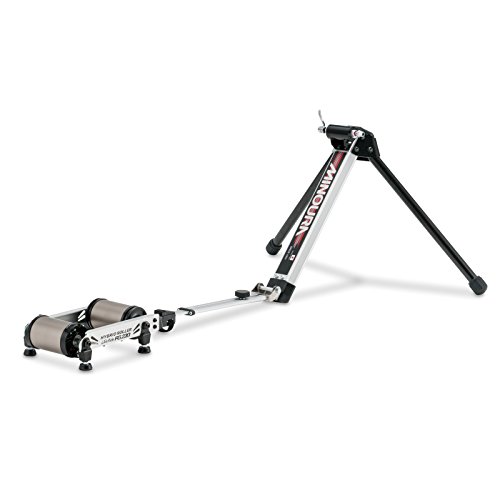
- Front-fork mounting for compatible bikes
- Folds with an included transport bag
- Two simple resistance levels
Best For: Portable pre-race warm-ups and cooldowns
Best for High-Output Sessions
Elite Arion Mag Parabolic Rollers

- Three manual magnetic resistance levels
- Rated up to 520 watts at 40 km/h
- Folds and supports Rouvy and Kinomap
Best For: Intervals, power work, and structured indoor training
Best for Natural Ride Feel

- Tapered rollers help center the bike
- Swing system absorbs acceleration changes
- Folds and needs no power
Best For: Stable, maintenance-free indoor riding
Classic Balance Trainer

- Tapered rollers help center the wheels
- No power required or routine maintenance
- Folds down and fits 26–29-inch wheels
Best For: Simple cadence, balance, and warm-up sessions
Travel Warm-Up Pick
Feedback Sports Omnium Portable Trainer

- Zero-resistance design suits fast spinning
- Folds with a travel bag included
- Supports 16–29-inch wheels and multiple axle setups
Best For: Portable race-day warm-ups and recovery rides
Adjustable Magnetic Option

- Magnetic resistance with five settings
- Carbon-steel construction
- 250-pound stated load capacity
Best For: Stationary indoor sessions requiring adjustable resistance
Adjustable Road-Ready Roller

- Fits 24-inch to 700C wheels
- Aluminum frame with 250–300 lb capacity
- No built-in resistance mechanism
Best For: Adjustable indoor cadence and balance practice
Precision Premium Roller

- CNC-machined 6061 alloy drums
- Sealed cartridge bearings for smooth rotation
- Folding frame with tool-free adjustment
Best For: Premium training and race-day warmups
Portable Stability Roller
ROCKBROS Adjustable Bike Roller

- Parabolic rollers support added stability
- Folds flat and weighs about 6.5 kg
- Magnetic resistance and 16–29-inch compatibility
Best For: Portable training across road, MTB, and folding bikes
Best Overall – Elite Quick-Motion Roller Trainer
For triathletes comparing bike rollers for triathlons, the Elite Quick-Motion stands out for its floating ride feel, adjustable magnetic resistance, and convenient fold-flat design. It supports focused indoor sessions while remaining practical to store or transport.
Best For: Triathletes who want a realistic, app-compatible roller for balance practice, warm-ups, and structured indoor workouts.
Pros:
- Patented floating system promotes stability and balance.
- Three magnetic resistance levels accommodate warm-ups and harder sessions.
- Elastomer-coated rollers help reduce noise and vibration.
- Folds flat and works with Kinomap and Rouvy.
Cons:
- At 10 kg, it is less lightweight than some portable roller options.
- Resistance adjustment is manual rather than electronically controlled.
The Quick-Motion is a versatile choice when ride realism, storage convenience, and training-app compatibility matter more than minimum weight.
Best for Race-Day Warm-Ups – MINOURA FG220 Hybrid Roller
The MINOURA FG220 is a compact option for athletes seeking bike rollers for triathlons, especially when a simple setup is useful at home or near a race. Its front-fork mounting design, included bag, and two resistance levels emphasize portability and convenience.
Best For: Triathletes who need a portable roller for pre-race warm-ups, cooldowns, and straightforward home training.
Pros:
- Mounts to the front fork of almost any compatible road, CX, or MTB bike.
- Folds easily and includes a transport bag.
- Two simple resistance levels are suitable for warm-up and cooldown use.
- Thick 79 mm roller is designed for long life.
Cons:
- Offers only two resistance settings.
- Its wheelbase compatibility is limited to 930–1,200 mm.
- The design is oriented toward basic resistance rather than app-based training.
With a listed weight of 1 kg and a carry bag, the FG220 is particularly appealing when easy transport and uncomplicated race-day setup are priorities.
Best for High-Output Sessions – Elite Arion Mag Parabolic Rollers
The Elite Arion Mag is a strong contender for athletes evaluating bike rollers for triathlons who want manual resistance control for endurance, interval, and power work. Its folding frame and compatibility with Rouvy and Kinomap add flexibility for home training.
Best For: Triathletes who want higher-output roller workouts with three resistance levels and interactive training-app support.
Pros:
- Three magnetic levels support endurance, interval, and power sessions.
- Produces up to 220 watts at 20 km/h and 520 watts at 40 km/h, according to the supplied specifications.
- Central selector enables manual resistance changes while riding.
- Folds for compact storage and supports Rouvy and Kinomap.
Cons:
- Resistance changes are manual rather than automatic.
- Its composite and plastic construction may appeal less to riders seeking an alloy frame.
The Arion Mag offers a useful balance of adjustable workload, folding storage, and virtual-training compatibility for structured indoor triathlon preparation.
Best for Natural Ride Feel – Tacx Galaxia Swing Roller
The Tacx Galaxia is worth considering when shopping for bike rollers for triathlons and prioritizing balance, wheel tracking, and a natural-feeling ride. Its tapered rollers help center the bike, while the patented swing system responds to acceleration and deceleration.
Best For: Triathletes who want a maintenance-free roller with stability features for steady indoor riding and race preparation.
Pros:
- Tapered rollers help keep the wheels centered.
- Swing system rocks with acceleration and deceleration.
- Folds to a compact 800 × 500 × 135 mm size.
- Requires no power and is described as maintenance-free.
Cons:
- Provides one listed setting and no adjustable resistance mechanism.
- Does not include the app connectivity listed for some competing models.
- Its stated load capacity is 90.7 kg.
The Galaxia is a practical pick for riders who value centered tracking and motion-responsive stability over adjustable resistance or connected features.
Classic Balance Trainer – Garmin TacX Antares
The Garmin TacX Antares is a straightforward choice among bike rollers for triathlons, especially for athletes who want maintenance-free indoor spinning without a power connection. Its tapered rollers help keep the wheels centered, while the folding frame makes storage easier after training.
Best For: Triathletes seeking simple, no-power roller sessions for cadence and balance work.
Pros:
- Tapered rollers help keep the wheels centered for added stability.
- Requires no power and is designed to be maintenance free.
- Fits bikes with 26-inch to 29-inch wheels.
- Folds down for more compact storage.
Cons:
- Does not provide a specified electronic training experience despite the listed resistance-mechanism detail.
- Its maximum footprint can reach 53 by 18.5 inches when extended.
The Antares focuses on uncomplicated riding practice rather than connected metrics. It is a practical fit for warm-ups, balance training, and regular spinning when portability and low maintenance matter most.
Travel Warm-Up Pick – Feedback Sports Omnium Portable Trainer
The Feedback Sports Omnium is a portable option for athletes comparing bike rollers for triathlons and race-day warm-ups. Its zero-resistance design supports high-speed spinning and track-style work, while the folding aluminum platform and included travel bag make transport convenient.
Best For: Traveling triathletes who need a compact trainer for warm-ups, recovery, and cadence-focused sessions.
Pros:
- Zero-resistance setup is designed for high-speed spinning and track cycling.
- Folds compactly and includes a heavy-duty travel bag.
- Fits most 16-inch to 29-inch wheels with included fork adapters.
- Maintenance-free resistance unit and roller bearings support easy ownership.
Cons:
- The resistance curve maxes out at approximately 150 watts.
- The fork-mount design may require selecting the correct adapter for the bike.
With its 14-pound aluminum construction and travel-focused design, the Omnium is particularly useful when space and setup speed matter. Its low resistance favors spinning and warming up rather than high-load power workouts.
Adjustable Magnetic Option – Wahoo KICKR ROLLR
The Wahoo KICKR ROLLR offers an adjustable indoor setup for athletes evaluating bike rollers for triathlons. Its magnetic resistance mechanism, five settings, and carbon-steel construction provide a more configurable platform for indoor riding, with a stated load capacity of 250 pounds.
Best For: Triathletes who want adjustable magnetic resistance and a sturdy indoor trainer platform.
Pros:
- Magnetic resistance provides adjustable training control.
- Offers five settings for changing the ride feel.
- Carbon-steel frame is built around a sturdy construction.
- Supports a stated load capacity of 250 pounds.
Cons:
- At 25 kg, it is substantially heavier than the listed portable trainer option.
- The supplied details do not specify wheel-size compatibility or a travel bag.
- It requires AC power through the included power adapter.
The KICKR ROLLR is the more substantial choice of these three when adjustable resistance is a priority. Its weight and power requirement make it better suited to a dedicated indoor training space than frequent travel.
Adjustable Road-Ready Roller – Minoura LiveRoll R730
R730 LiveRoll 3 Roller | Minoura Live Roll R730 Adjustable Bicycle Trainer for 24"-700C Wheels
Check Price On AmazonThe Minoura LiveRoll R730 is a practical choice for riders comparing bike rollers for triathlons. Its adjustable design fits 24-inch through 700C wheels, while the aluminum frame and included foot step support a straightforward indoor setup.
Best For: Road and mountain-bike riders who need adjustable wheel compatibility and a sturdy, non-resistance roller setup.
Pros:
- Compatible with 24-inch to 700C wheels and 950–1180 mm wheelbases.
- Aluminum frame with a stated load capacity of 250–300 pounds.
- Stored length is listed at approximately 34.9 inches for easier storage.
Cons:
- No resistance mechanism is listed, so training intensity relies on gearing and cadence.
- At approximately 19.7 pounds, it is less lightweight than some foldable alternatives.
The R730 emphasizes broad compatibility and a substantial aluminum construction rather than built-in resistance. It is worth considering for balance and cadence practice when adjustability matters more than portability.
Precision Premium Roller – Kreitler Alloy Rollers
The Kreitler Alloy Rollers stand out among bike rollers for triathlons when smooth operation and long-term durability are priorities. CNC-machined 6061 alloy drums, sealed cartridge bearings, and a folding steel frame are designed for consistent training and transport.
Best For: Serious cyclists and competitive athletes seeking a premium roller for smooth pedaling practice and race-day warmups.
Pros:
- Aircraft-grade 6061 alloy drums are machined for precise balance.
- Sealed cartridge bearings are designed for effortless drum rotation and long service.
- Tool-free wheelbase adjustment and a folding steel frame improve versatility and portability.
Cons:
- The supplied notes do not specify a detailed wheel-size range.
- Its approximately 10-pound weight is heavier than the listed ROCKBROS model.
This model focuses on mechanical precision, a stable steel foundation, and convenient adjustment. It is a strong fit for athletes who value a smooth, quiet-feeling roller experience and equipment built for repeated use.
Portable Stability Roller – ROCKBROS Adjustable Bike Roller
The ROCKBROS adjustable roller is a portable option for riders shopping for bike rollers for triathlons. Parabolic rollers are intended to enhance stability, while the foldable aluminum frame, magnetic resistance, and broad 16–29-inch compatibility make it adaptable for indoor training.
Best For: Riders who want a lightweight, foldable roller for MTB, road, or folding bikes.
Pros:
- Parabolic roller design is intended to provide more stability than straight rollers.
- Folds into a compact, portable form and weighs approximately 6.5 kg.
- Fits 16–29-inch bicycles and includes magnetic resistance.
- Sealed bearings support smoother operation.
Cons:
- The supplied notes list one adjustment setting.
- Its stated load capacity is 250 pounds, below the upper range listed for the Minoura.
The ROCKBROS balances portability, compatibility, and stability-focused roller design. Its magnetic resistance gives riders more training control than a model with no resistance mechanism, while the folding frame suits limited storage space.
How We Picked the Best Bike Rollers for Triathlons
We evaluated these rollers around the demands of triathlon training: repeatable cadence work, controlled warm-ups, easy storage, and compatibility with common road and triathlon bikes. We also considered roller design, frame stability, portability, resistance options, wheel-size support, folding mechanisms, and whether a model is better suited to experienced riders or indoor-training newcomers.
Because roller trainers vary substantially, the best choice depends on how and where you train. A lightweight travel model may be ideal for race-week use, while a wider or resistance-equipped roller can be more useful for regular winter sessions.
Quick Comparison
- Best for portability: Choose a compact folding roller or lightweight trainer with a travel bag.
- Best for natural balance practice: Traditional three-drum rollers encourage smooth steering and cadence control.
- Best for added workout intensity: Select a magnetic or resistance-equipped design.
- Best for easier learning: Look for tapered drums, a parabolic profile, or a safety-oriented frame.
- Best for connected training: Check whether the trainer supports the apps, sensors, or ecosystem you already use.
Key Buying Factors for Bike Rollers for Triathlons
Stability and Learning Curve
Traditional rollers require balance, so beginners should prioritize a wider platform, tapered drums, a parabolic shape, or a swing system that helps the bike remain centered. A wall, doorway, or sturdy support nearby can make initial sessions more comfortable.
Resistance and Training Purpose
Basic rollers are excellent for warm-ups, technique, recovery, and high-cadence drills, but they may feel limited for hard strength intervals. Magnetic resistance or a hybrid design can provide more load, though it may add weight and complexity.
Portability and Storage
Triathletes who travel should check folded dimensions, carry weight, wheel-size compatibility, and whether a bag is included. A compact frame can be more valuable than advanced resistance if the trainer must fit in a car, hotel room, or transition-area support setup.
Bike and Wheel Compatibility
Confirm the roller supports your wheel size, tire width, axle setup, and bike type. Road bikes are commonly supported, but MTB tires and unusual axle standards may require additional clearance or adapters. Always verify the manufacturer’s specifications before buying.
Who Should Buy Which Bike Rollers for Triathlons?
Choose a traditional three-drum roller if you want to improve balance, smooth pedaling, and cadence control. Choose a resistance or hybrid roller if your indoor plan includes more demanding intervals. Choose a foldable portable model if you travel frequently or have limited storage. Choose a premium or connected trainer if convenient control, refined construction, or integration with your existing training setup matters most.
For most triathletes, the best purchase is the model that matches the sessions they will actually complete. Prioritize stability and compatibility first, then add resistance, portability, or smart features according to your training routine.