The best bike rollers for indoor training make it easier to ride consistently when weather, time, or road conditions get in the way. The right model can support warmups, cadence work, balance practice, or longer indoor sessions without taking over your space.
This roundup compares 10 options across roller, magnetic, fluid, hybrid, and wheel-on trainer designs, with attention to portability, resistance, compatibility, noise, and ease of storage.
Best 10 Bike Rollers for Indoor Training Picks for 2026
Best Balanced Ride
Elite Quick-Motion Roller Trainer

- Floating system supports balance and stability
- Three magnetic resistance levels
- Folds flat; compatible with Kinomap and Rouvy
Best For: Riders wanting a realistic, portable roller setup
Best Lightweight Warm-Up
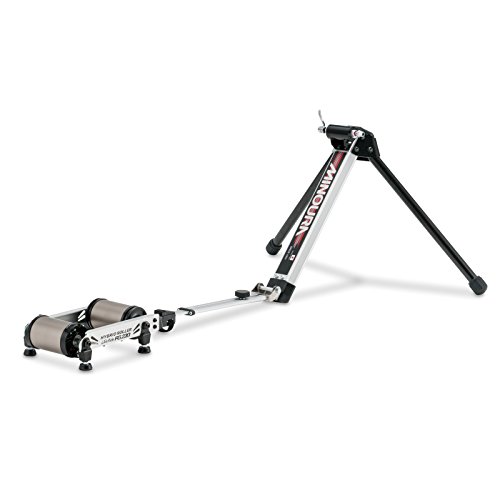
- 1 kg folding design with carrying bag
- Fits many road, CX, and MTB bikes
- Thick 79 mm roller for durability
Best For: Traveling riders and pre-race warm-ups
Best for Adjustable Power

- Three manual magnetic resistance levels
- Folds for compact storage
- Works with Rouvy and Kinomap
Best For: Structured endurance, interval, and power sessions
Best Heavy-Duty Option

- Carbon-steel construction
- Five magnetic resistance settings
- 250-pound load capacity
Best For: Riders prioritizing a sturdy, substantial trainer
Best Portable Pick

- Folding aluminum design with travel bag
- Fits 16- to 29-inch wheels
- Smooth, quiet, low-resistance ride
Best For: Travel, warmups, recovery, and high-cadence training
Best Premium Build

- CNC-machined 6061 alloy drums
- Folding powder-coated steel frame
- Tool-free wheelbase adjustment
Best For: Dedicated cyclists seeking precision and long-term durability
Best Adjustable Resistance

- Five magnetic resistance levels
- Folding aluminum travel-friendly frame
- Compatible with 16- to 29-inch wheels
Best For: Indoor workouts, warmups, and cooldowns with adjustable resistance
Best Fluid Trainer
Alpcour Portable Indoor Bike Trainer

- Progressive fluid resistance
- Foldable stainless-steel frame
- Fits 26–29-inch and 700c wheels
Best For: Year-round indoor rides with stable, increasing resistance
Best Adjustable Trainer
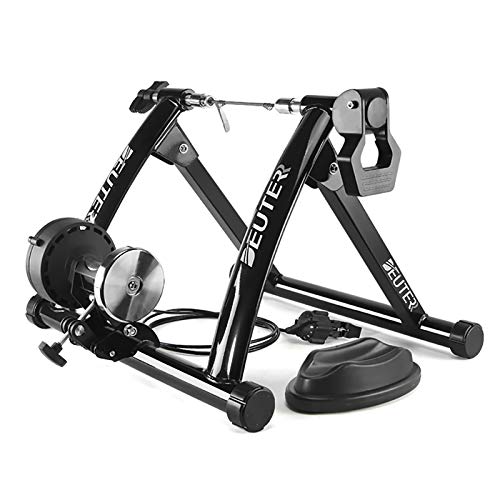
- Six handlebar-controlled resistance levels
- 330-pound stated load capacity
- Folds for tool-free storage
Best For: Flexible home workouts with adjustable magnetic resistance
Best True Rollers
ROCKBROS Adjustable Bike Rollers

- Parabolic design for added stability
- Lightweight 6.5 kg folding build
- Fits 16–29-inch bikes
Best For: Compact roller-based balance and indoor cycling practice
Best Balanced Ride – Elite Quick-Motion Roller Trainer
If you want bike rollers for indoor training that feel more natural than a fixed setup, the Elite Quick-Motion is built around a floating mechanism that supports balance and stability. It also adds three magnetic resistance levels, quiet elastomer-coated rollers, and a foldable frame.
Best For: Riders seeking a realistic-feeling, portable roller trainer for road bikes or mountain bikes.
Pros:
- Floating system is designed to improve stability and balance.
- Three manual magnetic resistance levels suit warm-ups and harder sessions.
- Folds flat and works with Kinomap and Rouvy.
Cons:
- At 10 kg, it is less lightweight than some compact roller options.
- Resistance adjustment is manual rather than automatic.
The Quick-Motion stands out for combining a more dynamic ride feel with practical storage and app compatibility. It is a strong all-around choice when quiet operation and portability matter.
Best Lightweight Warm-Up – MINOURA FG220 Hybrid Roller
The MINOURA FG220 is a compact option among bike rollers for indoor training, especially for warm-ups and cool-downs. Its front-fork mounting design fits many road, cyclocross, and mountain bikes, while the included bag makes transport easier.
Best For: Home users and racers who need a lightweight roller for quick warm-ups, cool-downs, or travel.
Pros:
- Mounts to the front fork of many road, CX, and MTB bikes with a 930–1,200 mm wheelbase.
- Weighs 1 kg and includes a carrying bag.
- Thick 79 mm roller is designed for extended service life.
Cons:
- Offers only two resistance settings.
- Fork mounting provides a different riding experience from free-rolling rollers.
With its low weight, folding design, and simple resistance control, the FG220 prioritizes convenience over extensive training adjustability. It makes the most sense for riders who value portability and straightforward setup.
Best for Adjustable Power – Elite Arion Mag Rollers
For riders comparing bike rollers for indoor training with a focus on adjustable effort, the Elite Arion Mag offers three manual magnetic resistance levels. Its parabolic roller layout, folding frame, and app compatibility make it suitable for structured home sessions.
Best For: Road and mountain-bike riders who want foldable rollers with selectable resistance for endurance, interval, and power work.
Pros:
- Three resistance levels can be adjusted from the central drum selector.
- Folding frame measures 500 × 1400 × 130 mm for space-conscious storage.
- Rated output reaches 220 watts at 20 km/h and 520 watts at 40 km/h.
- Compatible with Rouvy and Kinomap.
Cons:
- Manual resistance control is not automatic.
- The composite frame may feel less substantial than a metal-framed design.
The Arion Mag is a practical pick for riders who want more resistance flexibility than basic rollers provide without giving up foldability. Its stated power figures also make it appealing for more demanding sessions.
Best Heavy-Duty Option – Wahoo KICKR ROLLR
The Wahoo KICKR ROLLR is a substantial choice for cyclists evaluating bike rollers for indoor training. Its carbon-steel construction, magnetic resistance, five settings, and 250-pound load capacity make it geared toward riders who want a robust trainer platform.
Best For: Riders who prioritize a sturdy carbon-steel roller trainer with multiple resistance settings.
Pros:
- Carbon-steel frame is built for a durable, substantial setup.
- Five resistance settings offer more adjustment than the other listed options.
- Supports loads up to 250 pounds.
Cons:
- At 25 kg, it is the heaviest option in this roundup.
- The supplied notes do not specify app compatibility or folding storage features.
The KICKR ROLLR is best considered when stability and heavy-duty construction matter more than easy portability. Its five resistance settings provide useful control, but the high weight may limit room-to-room transport.
Best Portable Pick – Omnium Zero-Drive Trainer
If you need bike rollers for indoor training that can travel easily, the Feedback Sports Omnium Zero-Drive is built around portability. Its folding aluminum platform, included travel bag, fork-mount setup, and smooth rear rollers make it practical for warmups, recovery rides, and high-cadence sessions.
Best For: Cyclists who want a lightweight, travel-ready trainer for high-speed spinning, track work, race-day warmups, or recovery sessions.
Pros:
- Folds compactly and includes a heavy-duty travel bag.
- Fits 16-inch to 29-inch wheels with QR and compatible thru-axle setups.
- Precision-machined aluminum rollers provide a smooth, quiet ride.
- Zero-resistance design suits high-speed spinning and track cycling.
Cons:
- Resistance tops out at approximately 150 watts, limiting harder workouts.
- Some wheelbase configurations require the optional sled extension.
The Omnium is a strong choice when compact storage and transport matter more than substantial resistance. Its low-resistance design favors cadence and warmup work rather than power-focused training.
Best Premium Build – KREITLER Alloy Rollers
For riders comparing bike rollers for indoor training and prioritizing precision, the KREITLER Alloy Rollers offer a durable, mechanically refined design. CNC-machined 6061 alloy drums, sealed cartridge bearings, and a powder-coated steel frame are aimed at smooth operation and long-term use.
Best For: Serious cyclists and competitive athletes who want a premium roller system for pedaling fluidity, balance, and high-cadence training.
Pros:
- Precisely machined alloy drums are designed for smooth, quiet operation.
- Sealed cartridge bearings support effortless drum movement and longevity.
- Folding steel frame simplifies storage and transport.
- Tool-free wheelbase adjustment accommodates different bicycles.
Cons:
- Its premium construction may be more than casual riders need.
- The supplied notes do not indicate electronic or multiple adjustable resistance modes.
The KREITLER stands out as a durable, precision-focused option for riders who value natural roller feel and stable construction. It is best suited to dedicated training rather than occasional recreational use.
Best Adjustable Resistance – CXWXC GT-05 Trainer
The CXWXC GT-05 is a practical choice among bike rollers for indoor training when adjustable resistance and easy setup are priorities. Its magnetic resistance knob offers five levels, while the folding aluminum frame and adjustable fork mount support home use, travel, and race-day warmups.
Best For: Riders who want a compact magnetic trainer with manual resistance adjustment for indoor workouts, warmups, and cooldowns.
Pros:
- Five magnetic resistance levels allow simple workout adjustment.
- Fits 16-inch to 29-inch wheels and supports QR and listed thru-axle adapters.
- Folding aluminum construction is portable and space-conscious.
- Fork-mount design and included 9mm quick-release adapter simplify compatibility.
Cons:
- The manufacturer notes some front-end sway during use.
- Thru-axle installation requires careful, accurate adapter placement.
- Manual resistance adjustment is less automated than electronically controlled systems.
The GT-05 offers useful resistance flexibility in a compact package, making it more versatile than a zero-resistance warmup trainer. Consider it if you value portability and five manual resistance settings, but review the stability note before buying.
Best Fluid Trainer – Alpcour Portable Indoor Bike Trainer
If you want bike rollers for indoor training but prefer a supported rear-wheel setup, the Alpcour Fluid Bike Trainer converts a compatible road or mountain bike into a stationary exercise bike. Its progressive fluid resistance increases as you pedal faster, making it practical for steady rides, hills, and interval sessions.
Best For: Cyclists who want progressive resistance, a stable frame, and a foldable trainer for year-round indoor riding.
Pros:
- Fluid resistance progressively increases with pedaling speed.
- Designed for reduced noise and friction during indoor use.
- Foldable stainless-steel frame includes a carrying bag.
- Fits most 26–29-inch and 700c wheels.
Cons:
- It supports the rear wheel rather than providing true free-rolling balance practice.
- Only one listed resistance setting; resistance changes through progressive fluid action.
- Compatibility should be checked for your specific bike and wheel setup.
The Alpcour is a strong choice when stability, portability, and a road-like resistance feel matter more than practicing balance on traditional rollers.
Best Adjustable Trainer – Magnetic Bike Trainer Stand
For shoppers comparing bike rollers for indoor training, this magnetic trainer offers a conventional stationary stand with handlebar-controlled resistance. Its six resistance levels, folding design, and broad wheel compatibility make it a flexible option for home workouts when outdoor conditions are poor.
Best For: Riders who want adjustable resistance, a high stated load capacity, and straightforward folding storage.
Pros:
- Six resistance levels can be changed from the handlebars.
- Pyramid-style frame is rated for loads up to 330 pounds.
- Fits 26–29-inch and 700c wheels.
- Folds for storage and sets up without additional tools.
Cons:
- Rough MTB tires may produce more noise and vibration.
- As a magnetic stand, it does not offer the progressive fluid resistance of a fluid trainer.
- It uses an iron and alloy-steel construction, so it may be less lightweight than the aluminum roller option.
This trainer is a practical pick for structured indoor sessions where quick resistance adjustments and a sturdy, foldable platform are priorities.
Best True Rollers – ROCKBROS Adjustable Bike Rollers
Among bike rollers for indoor training, the ROCKBROS model is the closest match for riders who want a genuine roller-style setup. Its three aluminum rollers, parabolic shape, sealed bearings, and adjustable frame support indoor practice while folding into a compact package.
Best For: Riders seeking lightweight, foldable rollers for indoor cycling practice with broad bike compatibility.
Pros:
- Parabolic rollers are designed to improve stability over straight rollers.
- Three aluminum rollers use sealed bearings for smoother operation.
- Folds into three sections and weighs about 6.5 kg.
- Adjusts for 16–29-inch bikes, including MTB, road, and folding bikes.
Cons:
- It has one listed setting rather than multiple resistance levels.
- Rollers require more active bike control than a fixed trainer stand.
- The stated load capacity is 250 pounds, lower than the magnetic trainer’s listed capacity.
The ROCKBROS stands out for riders who specifically want the feel and balance demands of rollers, along with easy carrying and compact storage.
How We Picked the Best Bike Rollers for Indoor Training
We focused on the features that matter most during regular indoor riding: frame stability, roller design, resistance control, setup time, portability, bike and wheel compatibility, storage, and likely noise levels. Traditional rollers are useful for balance and smooth pedaling, while magnetic and fluid trainers generally provide more resistance for structured workouts. Portable trainers were also considered for riders who travel, have limited storage, or need a quick setup.
Because product specifications can vary by configuration, check the manufacturer’s current limits for wheel size, axle type, tire compatibility, rider weight, and included accessories before ordering.
Quick Comparison
| Best For | Look For | Suitable Design |
|---|---|---|
| Balance and cadence practice | Parabolic rollers and a stable frame | Traditional rollers |
| Harder indoor workouts | Adjustable or progressive resistance | Magnetic or fluid trainer |
| Travel and small spaces | Folding frame and carrying case | Portable roller or trainer |
| Mixed bike use | Broad wheel and axle compatibility | Adjustable wheel-on design |
| Lower-maintenance riding | No electronic connection requirement | Mechanical trainer |
Key Buying Factors for Bike Rollers for Indoor Training
Roller Type and Resistance
Parabolic rollers help guide the tires toward the center and are often easier for beginners than flat rollers. Magnetic and fluid systems hold the bike in place and usually offer stronger resistance for intervals, climbs, and sustained power work. If you want a realistic progression in effort, prioritize adjustable or progressive resistance.
Fit, Compatibility, and Stability
Confirm that the trainer supports your wheel diameter, tire width, axle standard, and bike type. A wide, rigid base helps reduce movement, while adjustable roller spacing improves fit across different bikes. Mountain-bike tires may be noisier on some trainers and may require compatibility checks.
Portability, Noise, and Storage
Folding frames, compact footprints, and included bags are valuable for apartments, offices, and travel. Noise depends on the roller material, tire, drivetrain, surface, and resistance unit. A dedicated trainer tire, mat, and regular drivetrain maintenance can improve the indoor experience.
Who Should Buy Which Bike Rollers for Indoor Training?
Choose Traditional Rollers If:
You want to improve balance, cadence consistency, and smooth pedaling while keeping setup simple. They are especially useful for warmups and technique-focused sessions.
Choose a Magnetic or Fluid Trainer If:
Your priority is structured training, higher resistance, or workouts that do not require balancing on free rollers. These designs are generally better for intervals and controlled power sessions.
Choose a Portable Model If:
You travel frequently, have limited storage, or need to move the trainer between rooms. Favor folding construction, low weight, and a carrying case, but verify that portability does not compromise frame stability.