Choosing the right bike computer with Strava support can make ride tracking simpler, training more useful, and navigation far less stressful. The best models balance easy syncing, dependable GPS, and readable displays.
Below, we focus on the features that matter most for road, gravel, and endurance riders so you can quickly narrow down the right fit for your setup and budget.
Best 10 Bike Computers with Strava Picks for 2026
Premium flagship choice
Garmin Edge 1050 GPS Cycling Computer

- 3.5-inch vivid touchscreen with easy route creation
- Connected ride features with live locations and incident detection
- Up to 60 hours battery saver mode, 20 hours demanding use
Best For: Riders who want a premium computer for navigation, training, and group rides
Value touch navigation pick
iGPSPORT BSC500 Touchscreen Bike Computer

- Imports routes from Strava through the iGPSPORT app
- 3.3-inch touchscreen plus button controls
- Voice navigation and automatic re-route planning
Best For: Riders who want an affordable touchscreen computer with route import
Long-ride performance pick
Garmin Edge 1040 GPS Bike Computer

- Works with Strava, Komoot, and TrainingPeaks via Garmin Connect
- Multi-band GNSS and advanced training metrics
- Up to 70 hours battery saver mode, 35 hours demanding use
Best For: Endurance and training riders who want advanced navigation and app support
Connected training pick
GEOID CC700 Pro GPS Bike Computer

- Auto-syncs ride data with Strava and TrainingPeaks
- WiFi syncing plus firmware and AGNSS updates
- Supports indoor training with customizable power and gradient settings
Best For: Cyclists who want Strava sync and indoor training features
Premium Endurance GPS
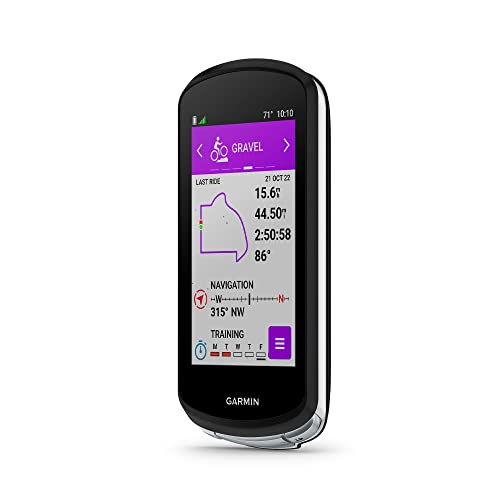
- Strava, Komoot, and TrainingPeaks support
- Solar lens boosts battery life on long rides
- Multi-band GNSS and advanced training tools
Best For: endurance cyclists and serious training riders
Value Navigation Pick

- Strava and TrainingPeaks auto-sync support
- WiFi/Bluetooth syncing plus route re-routing
- Large color screen with lots of data layouts
Best For: budget riders who want navigation and auto-sync
Climb-Focused Navigator

- Strava sync support is included
- Lightweight 77g body with touchscreen control
- Climb previews and smart rerouting for route riders
Best For: climbing-focused riders and lightweight navigation seekers
COOSPO CS600 Touchscreen GPS
Color Touchscreen GPS Bike Computer

- Auto-syncs ride data to Strava and TrainingPeaks
- 2.4-inch color touchscreen with auto-backlight
- 36-hour battery and IPX7 waterproofing
Best For: Riders who want touchscreen navigation and easy Strava syncing
iGPSPORT BiNavi Route Navigator

- Imports routes from Strava and Komoot
- 3.5-inch touchscreen with map navigation
- Dual-band GPS and climb planning features
Best For: Cyclists focused on route planning and navigation with Strava imports
Bryton Rider 650 Value Navigator

- Auto-syncs to Strava, TrainingPeaks, and Komoot
- Preloaded color maps with turn-by-turn guidance
- 33-hour battery with radar and live tracking support
Best For: Riders who want affordable navigation and Strava syncing
Premium flagship choice – Garmin Edge 1050 GPS Cycling Computer
If you want one of the most advanced bike computers with Strava-style ride planning and deep performance tools, the Garmin Edge 1050 is built for serious road and endurance riders. It combines a vivid 3.5-inch touchscreen, strong navigation, and connected ride features with a polished, premium feel.
Best For: Riders who want a high-end cycling computer with navigation, training, and group-ride features.
Pros:
- Large vivid touchscreen with responsive route creation and map viewing
- Supports connected ride features like live locations, in-ride messaging, and incident detection with a smartphone
- Built-in speaker adds workout prompts, navigation prompts, and a bike bell
- Long battery life up to 20 hours in demanding use, or 60 hours in battery saver mode
Cons:
- Premium feature set may be more than casual riders need
- Some connected features require a compatible smartphone and Garmin Connect app
- Advanced coaching and power guidance depend on compatible sensors
The Edge 1050 is a strong pick if you want top-tier navigation and connected ride tools in one device. For riders comparing bike computers with Strava-compatible ecosystem support, it stands out for its full-featured training and awareness package.
Value touch navigation pick – iGPSPORT BSC500 Touchscreen Bike Computer
The iGPSPORT BSC500 is a practical option for riders looking for bike computers with Strava route import and straightforward navigation features without going to a top-tier price point. Its 3.3-inch touchscreen, button controls, and voice prompts make it easy to use on the road.
Best For: Riders who want an affordable touchscreen bike computer with route import and voice navigation.
Pros:
- Supports Strava route imports through the iGPSPORT app
- Dual-band positioning with support for GPS, Beidou, GLONASS, Galileo, and QZSS
- Voice navigation and turn reminders help reduce screen checking
- Yaw planning can automatically re-route you after you go off course
Cons:
- Smaller brand ecosystem than the leading premium competitors
- Navigation and route tools are more basic than higher-end models
- Some features depend on app connection and route setup
This model makes sense if you want a simple, modern cycling computer with Strava-friendly route handling and useful navigation prompts. It covers the essentials well for everyday training and riding.
Long-ride performance pick – Garmin Edge 1040 GPS Bike Computer
The Garmin Edge 1040 is a strong fit for riders who want bike computers with Strava compatibility and detailed training support for long days in the saddle. It pairs advanced navigation and performance tracking with a large color touchscreen and very strong battery life.
Best For: Endurance riders and training-focused cyclists who want advanced navigation and app connectivity.
Pros:
- Connects with Strava, Komoot, TrainingPeaks, and more through Garmin Connect
- Multi-band GNSS improves positioning accuracy in challenging environments
- Up to 35 hours of battery life, or 70 hours in battery saver mode
- Includes ride type-specific maps and advanced training metrics
Cons:
- Most advanced features rely on compatible sensors and Garmin Connect
- More expensive than simpler cycling computers
- Feature depth may be unnecessary for casual riders
If you want a computer that balances navigation, training insight, and ecosystem support, the Edge 1040 is an excellent all-around choice. It is especially appealing for riders who log long rides and want better route and performance data.
Connected training pick – GEOID CC700 Pro GPS Bike Computer
The GEOID CC700 Pro is a feature-packed option for riders who want bike computers with Strava auto-sync, map navigation, and indoor training support in one device. Its 2.8-inch color touchscreen and WiFi syncing make it a practical fit for riders who like simple setup and connected ride data.
Best For: Cyclists who want a connected GPS computer with Strava sync and indoor training tools.
Pros:
- Auto-syncs cycling data with Strava and TrainingPeaks after account binding
- WiFi support speeds up syncing, firmware updates, and AGNSS downloads
- Route re-planning helps keep you moving when you go off course
- Supports indoor training with customizable power targets, resistance, and gradients
Cons:
- Re-route planning requires connection to the designated app
- Smaller 2.8-inch display than some competing models
- Feature set is broad, but the interface may not feel as polished as premium devices
For riders who want strong sync features and a useful training toolkit, the CC700 Pro offers a lot for the price. It is a sensible choice if your priority is getting ride data into Strava and keeping navigation straightforward.
Premium Endurance GPS – Garmin Edge 1040 Solar
If you want bike computers with Strava support and top-tier navigation for long rides, the Garmin Edge 1040 Solar is built for riders who care about battery life, training detail, and broad app compatibility. Its solar lens, multi-band GNSS, and ride-specific maps make it a strong pick for serious cyclists who spend a lot of time in the saddle.
Best For: endurance cyclists, route-heavy riders, and training-focused users who want Garmin’s deepest feature set.
Pros:
- Connects with Strava, Komoot, and TrainingPeaks through Garmin Connect
- Solar charging extends battery life for very long rides
- Multi-band GNSS improves positioning accuracy in challenging areas
- Power guide, stamina insights, and training prompts support structured training
Cons:
- More complex than simpler bike computers
- Higher-end feature set may be more than casual riders need
The Edge 1040 Solar is the most feature-rich option here, especially if you want detailed performance tools alongside reliable mapping and automatic syncing to popular platforms. It is best suited to riders who will use the advanced training and navigation features regularly.
Value Navigation Pick – GEOID CC700
For riders shopping for bike computers with Strava at a lower price point, the GEOID CC700 delivers route navigation, automatic syncing, and a bright 2.8-inch color screen. It is a practical choice if you want wireless connectivity, custom data pages, and easy file export without moving into a premium price tier.
Best For: budget-minded cyclists who want navigation, data display flexibility, and Strava auto-sync.
Pros:
- Compatible with Strava and TrainingPeaks for auto-sync after account binding
- WiFi and Bluetooth help speed up syncing and firmware updates
- Color route navigation includes turn reminders and re-routing
- Supports many data fields, layouts, and display styles
Cons:
- Less premium display and build than higher-end units
- Three-button design is simpler than touchscreen-heavy competitors
The CC700 is a strong value option if your priority is getting reliable navigation and Strava-friendly syncing on a large color screen. It offers a lot of features for the money, especially for riders who like configurable ride data.
Climb-Focused Navigator – iGPSPORT BiNavi Air
If you want bike computers with Strava support and a strong focus on route planning, climbing, and lightweight performance, the iGPSPORT BiNavi Air stands out. Its 3.0-inch touchscreen, smart rerouting, and climb preview tools make it especially appealing for riders who tackle unfamiliar roads, steep segments, or training routes with lots of elevation.
Best For: climbing-focused riders, racers, and route planners who want lightweight navigation with sensor compatibility.
Pros:
- Sync to Strava is listed in the product features
- Flagship navigation includes offline/online routing and fast rerouting
- Climb preview tools show gradient, distance, and elevation data
- Very light 77g design with ANT+ and Bluetooth support
Cons:
- Battery life is shorter than some endurance-focused models at 30 hours
- Smaller 3.0-inch screen may feel compact for some riders
The BiNavi Air is a good fit if you value climbing data and quick navigation in a lightweight package. It offers a balanced feature set for performance riders who want route guidance and broad sensor support without unnecessary bulk.
COOSPO CS600 Touchscreen GPS – Color Touchscreen GPS Bike Computer
If you want bike computers with Strava syncing plus easy route guidance, the COOSPO CS600 is built around convenience and long rides. It pairs a 2.4-inch color touchscreen with GPS/GLONASS tracking, breadcrumb navigation, and automatic ride uploads through the COOSPORIDE app.
Best For: Riders who want a touchscreen GPS computer with Strava sync, route navigation, and long battery life.
Pros:
- Automatic sync to Strava and TrainingPeaks through the COOSPORIDE app
- 2.4-inch high-resolution color touchscreen with auto-backlight
- Built-in route navigation with breadcrumb trail support
- 36-hour battery life and IPX7 waterproofing for long, wet rides
Cons:
- No extra sensors or extension mounts are included
- Cadence, heart rate, and power accessories are sold separately
The CS600 makes a strong case for riders who want a simple, connected head unit rather than a complicated training platform. Its long battery life, clear display, and ecosystem support make it practical for everyday training and adventure riding.
IGPSPORT BiNavi Route Navigator – 3.5" Touch Map Bike Computer
Among bike computers with Strava support, the iGPSPORT BiNavi stands out for its map-based navigation and route imports. It can pull road books from the iGPSPORT app or third-party apps like Strava and Komoot, while its dual-band GPS and climb planning features aim to keep rides on track.
Best For: Cyclists who want a large touchscreen, route import support from Strava, and navigation-focused features.
Pros:
- Imports routes and road books from Strava, Komoot, and other apps
- 3.5-inch touchscreen map display with route guidance
- Dual-band GPS and 5-satellite positioning for stronger navigation accuracy
- Music control and climb planning add useful ride-day convenience
Cons:
- Navigation and app features may be more than casual riders need
- Uses a larger screen, which may not suit cyclists wanting a compact head unit
The BiNavi is a good fit if your priority is following routes, managing climbs, and importing planned rides from familiar apps. It combines modern navigation tools with solid connectivity, making it more of a ride-planning companion than a basic speedometer.
Bryton Rider 650 Value Navigator – 2.8" Color GPS Bike Computer
If you’re comparing bike computers with Strava syncing, the Bryton Rider 650 is a practical value pick with a full-color screen and straightforward ride tools. It offers preloaded maps, turn-by-turn guidance, climb tracking, and automatic Bluetooth sync through the Bryton Active App.
Best For: Riders who want an affordable GPS bike computer with Strava sync, maps, and safety features.
Pros:
- Automatically syncs rides to Strava, TrainingPeaks, and Komoot via the Bryton Active App
- Preloaded color maps with turn-by-turn navigation and street names
- 33-hour battery life for long rides and commuting
- Supports rear-view radar, electronic shifting, and live tracking
Cons:
- Smaller 2.8-inch screen than some newer navigation-focused units
- Feature set may be more than basic riders need if they only want speed and distance
The Rider 650 feels like a balanced all-rounder: useful mapping, dependable battery life, and easy syncing without pushing into premium pricing territory. It’s a sensible option for riders who want practical navigation and Strava integration in one compact device.
How We Picked These Bike Computers with Strava
We focused on models that make Strava uploads practical rather than complicated. That means reliable GPS performance, straightforward phone or Wi-Fi syncing, solid battery life, and compatibility with common sensors and accessories. We also gave extra weight to display quality, turn-by-turn navigation, and durability, since those features matter on real rides.
Quick Comparison
In this roundup, the premium Garmin units stand out for advanced training tools, strong navigation, and polished ecosystem support, while brands like iGPSPORT, GEOID, COOSPO, and Bryton offer more budget-friendly alternatives with many of the same core essentials. If you want the simplest all-around experience, look at the premium tier. If your priority is value, longer battery life, or a larger screen for the money, the midrange options may be the better fit.
Key Buying Factors for Bike Computers with Strava
Syncing and App Compatibility
Look for devices that sync cleanly through a companion app and support automatic uploads to Strava. Faster syncing saves time after rides and reduces the chance of missing activities.
Navigation and Maps
If you ride unfamiliar routes, prioritize map support, rerouting, and clear turn prompts. A basic ride recorder is fine for simple training, but route guidance is a major upgrade for endurance, commuting, and gravel riding.
Battery Life
Battery claims vary widely based on screen brightness, GPS mode, and connected sensors. Riders doing all-day events should favor models with strong endurance or solar assistance, while shorter riders can focus more on display and interface.
Display and Controls
Touchscreens are easier for map use, but physical button controls can be more dependable in rain or with gloves. Consider the balance between convenience and reliability for your riding conditions.
Sensor and Accessory Support
Many Bike Computers with Strava work best when paired with heart-rate monitors, power meters, cadence sensors, and radar units. Make sure the model you choose supports the accessories you plan to use now or later.
Who Should Buy Which Bike Computers with Strava?
Choose a premium Garmin Edge if you want the most refined interface, robust navigation, and deeper training features. Choose iGPSPORT, GEOID, COOSPO, or Bryton if you want a lower-cost GPS computer that still handles Strava syncing, mapping, and basic ride data well.
If your rides are mostly local and simple, a compact value model is often enough. If you train seriously, ride long distances, or depend on routing, spending more on a higher-end unit usually pays off in convenience and confidence.