Automatic incline treadmills make it easier to add hills to your home workouts without stopping to adjust the deck manually. This roundup compares 10 options with incline ranges from 12% to 40%, compact folding designs, and capacities suited to different users.
Whether you need a walking pad with a handlebar, a quiet treadmill for daily running, or a heavy-duty model for steeper training, use the guide below to narrow your choices by speed, deck size, incline, and available space.
Best 10 Automatic Incline Treadmills Picks for 2026
Best High-Capacity Pick
UMAY 20% Auto-Incline Treadmill

- 20% incline across 20 automatic levels
- 400-pound capacity with an 8.0 MPH top speed
- Quiet motor, touchscreen, and hydraulic folding
Best For: Higher-weight users wanting versatile incline workouts
Best Steep-Incline Pick

- 40% maximum incline for stair-style training
- Extended 51-inch handrails for taller users
- Quiet motor with seven-layer cushioning
Best For: Steep incline walking and leg-strength workouts
Best Manual-Incline Walking Pad
YPOO 16% Incline Folding Walking Pad

- Manual 16% incline for hill-style walking
- Quiet 2.5HP brushless motor with 5 MPH top speed
- Foldable design with handles and app control
Best For: Beginners, seniors, and low-impact walking
Best Quiet Auto-Incline Treadmill
YUEJIQI 3220S Folding Treadmill

- Automatic 0%–15% incline adjustment
- 3.5HP brushless motor reaches 8.5 MPH
- Folding design with Bluetooth and pulse monitoring
Best For: Walking, jogging, and moderate home running
Best High-Incline Treadmill
20% Auto-Incline Folding Treadmill

- Up to 20% incline for steep hill workouts
- 8.7 MPH top speed with a 3.5HP motor
- 450-pound stated capacity and shock-absorbing deck
Best For: Steep-incline training and higher-capacity home workouts
Best Compact Manual Incline Pick

- 12% manual incline for hill-style workouts
- Quiet 3.0HP motor supports up to 300 pounds
- Folds for compact storage
Best For: Small-space walking and light jogging
Best Portable High-Capacity Pick
LONTEK 15% Incline Walking Pad
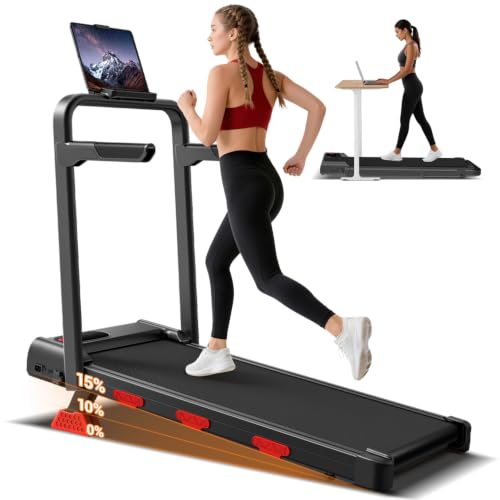
- Flat, 10%, and 15% manual incline options
- 350-pound capacity with a quiet 3.0HP motor
- Slim design stores under furniture
Best For: Portable walking and home-office use
Best Automatic Incline Pick
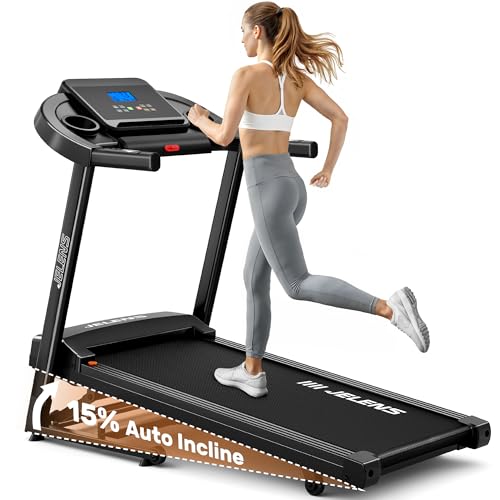
- Automatic 0–15% incline with 15 levels
- 7.5 MPH speed and 330-pound capacity
- Bluetooth app and pulse-sensing LCD display
Best For: Structured home workouts with automatic hill adjustments
Best Compact Pick – 16% Auto-Incline Folding Treadmill
This compact option stands out among automatic incline treadmills for apartment and home use. Its one-button 0–16% incline adjustment, 7.5 MPH top speed, foldable frame, and 350-pound capacity support walking, jogging, and hill-style workouts without taking up much storage space.
Best For: Small-space users who want automatic incline training and easy storage.
Pros:
- Offers 12 incline levels from 0% to 16% with one-button control.
- Supports up to 350 pounds and operates below 50 dB.
- Folds without tools and weighs 58 pounds for easier relocation.
- Six-layer cushioning and a 38-by-15-inch belt help reduce impact.
Cons:
- The 7.5 MPH maximum speed is better suited to walking and moderate running than fast running.
- The 38-by-15-inch belt may feel compact for users who prefer a larger running surface.
Choose this model if convenient folding and quiet operation matter as much as incline capability. Its smaller deck and moderate speed make it a practical home-training treadmill rather than a full-size performance machine.
Best High-Capacity Pick – UMAY 20% Auto-Incline Treadmill
For shoppers comparing automatic incline treadmills with higher capacity and speed, the UMAY U70 combines a 20% auto incline with an 8.0 MPH maximum speed and a 400-pound weight rating. Its hydraulic folding system and touchscreen controls are useful for varied home workouts.
Best For: Users who want a higher-capacity treadmill for walking, jogging, and incline intervals.
Pros:
- Provides 20 automatic incline levels for hill simulations and interval training.
- Supports up to 400 pounds with speeds from 0.6 to 8.0 MPH.
- Runs below 45 dB and includes a touchscreen with workout metrics.
- Hydraulic folding, transport wheels, and 90% pre-assembly simplify setup and storage.
Cons:
- The 44.1-inch deck length may be limiting for users with a long running stride.
- The supplied details do not specify a warranty length beyond the listed one-year warranty.
This is a strong fit when capacity and incline range take priority. The quiet motor, touchscreen, and assisted folding system add convenience, while the 8.0 MPH ceiling keeps it aimed at home walking, jogging, and moderate running.
Best Steep-Incline Pick – CURSOR 40% Incline Treadmill
The CURSOR takes a different approach to automatic incline treadmills: its 40% incline is manually adjusted across five settings rather than electronically controlled. At maximum elevation, the deck rises 15 inches, creating a stair-climbing-style workout for users focused on steep walking and leg conditioning.
Best For: Experienced incline walkers and taller users who want steep elevation training.
Pros:
- Reaches a steep 40% incline with 0%, 10%, 20%, 30%, and 40% settings.
- 51-inch handrails and a 38.6-by-15.4-inch belt support taller users.
- Reinforced supports and anti-shake pads help stabilize high-slope workouts.
- Quiet 3 HP brushless motor and seven-layer cushioning suit indoor use.
Cons:
- Incline adjustment is manual, so it lacks the button-controlled convenience of automatic models.
- The 6.2 MPH stated speed range is oriented more toward walking and light jogging.
- The 15-inch deck height at maximum incline may require extra clearance and careful mounting.
This model is best viewed as a specialized steep-incline trainer. It offers more elevation than the other options here, but buyers should be comfortable with manual adjustments and the added height created by the 40% slope.
Best Adjustable-Handle Pick – 3.5 HP 20% Auto-Incline Treadmill
This 3.5 HP model is one of the more versatile automatic incline treadmills for home use, pairing a 20% incline with speeds up to 8.7 MPH and adjustable-height handles. Its 400-pound capacity, compact folding design, and app support make it suitable for a range of household users.
Best For: Families or individuals who want adjustable handles, high capacity, and a faster top speed.
Pros:
- Offers a 20% automatic incline and speeds from 0.6 to 8.7 MPH.
- Supports up to 400 pounds with a 3.5 HP brushless motor.
- Four handle-height settings accommodate different users.
- Includes seven-layer cushioning, pause-and-resume functionality, and app connectivity.
Cons:
- The 39.2-by-15.7-inch belt is relatively compact for regular running.
- The product details do not state a touchscreen display; the console uses an LED screen.
- Its feature set may be more than needed for users focused only on basic walking.
This treadmill makes sense for buyers who value flexibility across users and workout styles. Adjustable handles and the 8.7 MPH top speed broaden its use, while the compact deck keeps the design suitable for apartments, offices, and home gyms.
Best Manual-Incline Walking Pad – YPOO 16% Incline Folding Walking Pad
For shoppers comparing automatic incline treadmills, the YPOO offers a compact alternative with a manual 16% incline. Its handlebar, foldable design, quiet motor, and walking-focused speed range make it practical for low-impact home or office workouts.
Best For: Beginners, seniors, walkers, and shoppers who want a portable incline treadmill with added balance support.
Pros:
- Manual incline reaches 16% for hill-style walking workouts.
- Anti-slip side handles provide added stability and support.
- Quiet 2.5HP brushless motor supports speeds from 0.5 to 5 MPH.
- Foldable 43-pound design includes remote, panel, and app controls.
Cons:
- Incline adjustment is manual rather than automatic.
- 5 MPH maximum speed is better suited to walking and light jogging than faster running.
- The 36.6-by-15-inch belt is narrower than many full-size treadmills.
The YPOO is a space-conscious choice when incline walking and stability matter more than high-speed running or motorized incline changes.
Best Quiet Auto-Incline Treadmill – YUEJIQI 3220S Folding Treadmill
The YUEJIQI 3220S is a strong option among automatic incline treadmills for home use, combining 0%–15% motorized incline adjustment with an 8.5 MPH top speed. Its brushless motor, folding mechanism, wide belt, and connected-workout features suit a range of walking, jogging, and running routines.
Best For: Home users who want automatic incline changes, quieter operation, and a treadmill that can accommodate walking through moderate running.
Pros:
- Fully automatic incline adjusts from 0% to 15% using dedicated controls.
- 3.5HP brushless motor reaches 8.5 MPH and is rated at 45 dB.
- 16-by-42-inch belt includes a five-layer surface and cushioning system.
- Folds with a one-touch knob and includes Bluetooth app connectivity and pulse sensors.
Cons:
- The 42-inch deck may feel short for users with a long running stride.
- At 68 pounds, it is less lightweight than a walking pad.
- Its one-year manufacturer warranty is worth checking against your coverage expectations.
With automatic incline, preset programs, heart-rate monitoring, and a higher speed ceiling, the 3220S offers a more versatile training setup than walking-focused models.
Best High-Incline Treadmill – 20% Auto-Incline Folding Treadmill
This 20% auto-incline treadmill stands out for its steep incline range, 8.7 MPH maximum speed, and stated 450-pound weight capacity. The wide deck, handlebar controls, folding frame, and shock absorption make it a practical choice for varied home workouts.
Best For: Users who prioritize steep automatic incline training, a higher stated weight capacity, and the flexibility to walk, jog, or run.
Pros:
- Automatic incline reaches 20% for demanding hill workouts.
- 3.5HP motor supports speeds up to 8.7 MPH.
- 16-by-41-inch deck includes independent suspension and four shock absorbers.
- Handrail speed and incline controls, Bluetooth, and a folding design add convenience.
Cons:
- The listed warranty is 90 days, shorter than many buyers may expect.
- The treadmill weighs 63.9 pounds and still requires storage space when folded.
- Some listed specifications identify the incline as manual, so shoppers should verify the adjustment mechanism before purchase.
If maximum incline and capacity are your priorities, this model is compelling; however, the short warranty and conflicting incline description deserve attention before ordering.
Best Compact Manual Incline Pick – Small 12% Foldable Treadmill
This compact treadmill is a practical choice for shoppers comparing automatic incline treadmills but who prefer a simple manual setup. Its 12% incline, quiet brushless motor, and folding design suit walking and light jogging in smaller homes.
Best For: Apartment dwellers and home users who want a portable treadmill with a steep manual incline.
Pros:
- 12% manual incline helps simulate hill walking and increase workout intensity.
- Quiet 3.0HP brushless motor runs below 50 dB and supports up to 300 pounds.
- Folds for storage and includes transport wheels; the folded profile is 5.5 inches high.
- LED display tracks speed, time, calories, and distance, with smart memory when paused.
Cons:
- Incline adjustment is manual rather than automatic.
- Maximum speed is 6.2 MPH, which may not suit faster runners.
- The 38-by-15-inch belt is relatively compact.
This model emphasizes portability, simple controls, and incline-based walking rather than high-speed running. The six-layer belt cushioning is useful for users prioritizing a more comfortable home workout.
Best Portable High-Capacity Pick – LONTEK 15% Incline Walking Pad
The LONTEK is a flexible alternative to automatic incline treadmills, offering three manually configured walking levels without complicated controls. Its low-profile design and 350-pound capacity make it useful for compact spaces and a broad range of walkers.
Best For: Home-office users and walkers who need a portable, under-desk-friendly treadmill with selectable manual incline positions.
Pros:
- Offers flat, 10%, and 15% incline positions that can be changed by hand.
- Supports up to 350 pounds and uses a quiet 3.0HP brushless motor rated below 45 dB.
- Low-profile body can slide under beds, desks, or sofas for storage.
- LED display tracks time, speed, distance, and calories burned.
Cons:
- Incline is manual, with no automatic adjustment.
- Maximum speed is 6.2 MPH, limiting suitability for faster running.
- The 37.4-by-15-inch belt may feel narrow for some users.
Choose this LONTEK when easy storage and weight capacity matter more than automated workout changes. Its three incline positions provide useful variety while keeping the controls straightforward.
Best Automatic Incline Pick – JELENS 15% Foldable Treadmill
For shoppers specifically seeking automatic incline treadmills, the JELENS stands out with 15 electronically adjustable incline levels. It combines a 7.5 MPH top speed, app connectivity, pulse sensors, and a folding frame for more varied home workouts.
Best For: Home users who want automatic hill adjustments, app tracking, and enough speed for walking, jogging, and moderate running.
Pros:
- Automatic 0–15% incline adjusts through 15 levels from the display controls.
- 3.0HP motor reaches 7.5 MPH and supports users up to 330 pounds.
- Bluetooth app connectivity records workout data and provides exercise courses.
- LCD display shows speed, incline, time, calories, distance, and heart rate.
Cons:
- At 79.8 pounds, it is less lightweight than the compact walking-pad options.
- The 43.31-by-15.75-inch belt may still feel limited for long-stride runners.
- It requires corded power and has a larger footprint than a low-profile walking pad.
The JELENS is the most feature-rich option here for users who want incline changes without stopping to adjust the machine. Its folding mechanism, cushioning, and connected tracking add convenience for structured indoor training.
How We Picked These Automatic Incline Treadmills
We focused on the features that most affect everyday home use: automatic incline range, maximum speed, motor output, belt dimensions, weight capacity, folding design, handlebar support, and noise-related specifications. The selection includes compact walking-oriented models as well as treadmills designed for faster running and steeper hill workouts.
Because marketplace specifications can vary by seller or model revision, verify the current listing before buying. Pay particular attention to the stated running surface, assembled dimensions, warranty, return policy, and whether the advertised incline is motorized across the full range.
Quick Comparison
| Best For | Features to Prioritize |
|---|---|
| Walking and light exercise | Low starting speed, handlebar stability, compact footprint |
| Running workouts | Higher top speed, longer belt, stronger motor |
| Hill training | At least 15% automatic incline and stable frame |
| Small rooms | Folding frame, transport wheels, manageable deck length |
| Higher-weight users | Generous capacity, reinforced construction, wide belt |
Key Buying Factors for Automatic Incline Treadmills
Incline Range and Controls
A 12% incline is useful for moderate hill simulations, while 15% to 20% provides more demanding conditioning. Models advertising 30% or 40% incline are specialized choices and need extra clearance behind and above the treadmill. Confirm that incline changes are automatic and accessible from the console or remote.
Motor, Speed, and Belt Size
Walking does not require the same performance as running. For regular running, look for a higher maximum speed and a motor intended for sustained use. A longer, wider belt generally feels safer for longer strides, especially when incline changes shift your position. Compact decks save space but may feel restrictive for taller runners.
Capacity, Stability, and Comfort
Choose a stated user capacity comfortably above your body weight rather than treating the maximum as a target. A sturdy frame, extended handrails, responsive cushioning, and a belt that stays centered can make frequent workouts more comfortable. Pulse sensors are convenient, but they are not a substitute for a dedicated heart-rate monitor.
Room Fit and Maintenance
Measure the treadmill when folded and unfolded, including room for safe access and ventilation. Incline models may require additional vertical clearance. Check deck lubrication instructions, belt-adjustment requirements, power needs, and whether the treadmill must be plugged directly into a wall outlet.
Who Should Buy Which Automatic Incline Treadmills?
Choose a compact walking-focused model if your priority is daily steps, light jogging, or a treadmill that can fit into a smaller room. Handlebar-equipped walking pads are generally more practical than completely flat designs for users who want extra balance and incline control.
Choose a 15% to 20% incline treadmill for the best all-around hill-training range. These models suit users who want brisk walking, interval sessions, and occasional running without the added size and complexity of an extreme-incline machine.
Choose a higher-capacity, longer-deck treadmill if you run regularly, have a longer stride, or want a more stable platform. Prioritize belt dimensions and frame construction over headline horsepower alone.
Choose a 30% to 40% incline model only if steep hill simulation is central to your training and you have adequate space. Before ordering, confirm clearance, stability, speed limits at high incline, and the seller’s support and return terms.