Choosing the right hydration vest can make an ultramarathon feel noticeably easier. The best designs balance water capacity, stable fit, accessible storage, breathability, and enough room for mandatory gear without bouncing or chafing.
This roundup compares 10 options across different capacities, carrying systems, and budgets so you can match your vest to race distance, weather, and personal fueling strategy.
Best 10 Running Hydration Vests for Ultramarathons Picks for 2026
Ultramarathon Capacity Pick
Ultimate Direction Ultra Vest 12L

- 12L capacity with 11 exterior pockets
- Includes two 500ml soft flasks
- Compatible with reservoirs up to 2L
Best For: Long trail races and ultramarathons needing extensive storage
Bladder-Focused Option
- Includes a 2L hydration bladder
- Breathable mesh shoulder straps
- Adjustable front and side straps
Best For: Trail runners wanting moderate storage and bladder hydration
Value Storage Pick
AONIJIE 12L Running Hydration Vest

- 12L capacity with 10 functional pockets
- Includes two 500ml soft flasks
- Rear drawcord system helps reduce bounce
Best For: Trail runners seeking spacious, organized bottle hydration
Women’s Breathable Choice
Nathan Pinnacle Breeze Hydration Vest

- Lightweight 8oz mesh construction
- Includes two 14oz soft flasks
- Quick-Fit adjustment and reflective details
Best For: Women prioritizing airflow, low weight, and compact hydration
Best Lightweight 10L Pick
Haimont 10L Trail Running Hydration Vest

- 10L storage for race essentials
- Two 500ml soft flasks included
- Rear reservoir compatible
Best For: Long trail runs and ultramarathons requiring extra gear storage
Best Structured Flask Vest
Osprey Duro LT Men's Running Hydration Vest

- Two 500ml soft flasks included
- 360-degree stretch backpanel for stability
- Three men's sizes with tailored fit
Best For: Men seeking lightweight, front-access hydration for trail races
Best for Organized Carry
Zelvot 2L Running Hydration Vest

- 2L BPA- and PVC-free bladder
- Multiple waterproof storage pockets
- Adjustable, reflective design
Best For: Trail and marathon runners carrying extra gear
Best for Lightweight Capacity
Nathan TrailMix 7L Hydration Vest
- 7L storage with a 2L bladder
- 11 oz with bladder installed
- Front bottle pockets and rear storage
Best For: Long runs requiring extra fuel and layers
Best for Pocket Organization

- 2L BPA-free PEVA bladder
- Eight total storage pockets
- Adjustable, padded cross-body fit
Best For: Runners carrying many small essentials
Ultramarathon Capacity Pick – Ultimate Direction Ultra Vest 12L
For runners comparing running hydration vests for ultramarathons, the Ultimate Direction Ultra Vest 12L emphasizes high capacity, organized storage, and a secure fit. It includes two 500ml soft flasks and supports reservoirs up to 2L, making it well suited to long outings where extra fuel and gear matter.
Best For: Ultramarathons and long-distance trail runs requiring substantial storage and flexible hydration.
Pros:
- 12L capacity with 11 exterior pockets for fuel, clothing, electronics, and race essentials.
- Includes two 500ml Body Bottles and a sleeve compatible with reservoirs up to 2L.
- Wraparound unisex fit, breathable monomesh liner, pole carry options, and reflective details.
Cons:
- A 12L vest may feel larger than necessary for shorter runs.
- The reservoir is compatible but not included.
- Sizing requires consulting the chart for the best fit.
Choose this model when carrying capacity and race-day organization take priority. Its combination of bottle storage, reservoir compatibility, and pole-carry functionality is particularly practical for demanding trail events.
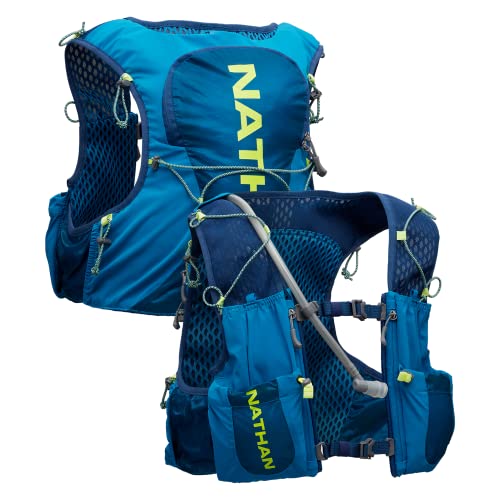
Bladder-Focused Option – Nathan Vapor Air 3.0 7L
The Nathan Vapor Air 3.0 is a practical choice among running hydration vests for ultramarathons when an included bladder and adjustable fit are priorities. Its 2L bladder, breathable shoulder straps, and 7L storage provide a balanced setup for trail runs, hikes, and longer efforts.
Best For: Runners who prefer bladder hydration with moderate storage and accessible front pockets.
Pros:
- Includes a 2L bladder for straightforward hands-free hydration.
- Moisture-wicking fabric, chafe-free binding, and breathable mesh shoulder straps support comfort.
- Adjustable front and side straps help personalize the fit, while front pockets hold nutrition and a phone.
Cons:
- Its 7L capacity is less than the largest vests in this roundup.
- The listed design has two pockets, limiting organization compared with multi-pocket models.
- Weight increases from 8.8oz without the bladder to 13.0oz with it.
This vest suits runners who want a ready-to-use bladder system without moving to a bulkier 12L pack. The adjustable construction and front access make it a useful middle-ground option.
Value Storage Pick – AONIJIE 12L Running Hydration Vest
The AONIJIE 12L vest offers generous storage for runners evaluating running hydration vests for ultramarathons on a practical budget. It includes two 500ml soft flasks, ten pockets, and adjustable chest, waist, and rear systems intended to reduce bounce on varied terrain.
Best For: Endurance runners needing high capacity, front-accessible bottles, and organized carry for trail races.
Pros:
- 12L capacity and ten functional pockets accommodate hydration, nutrition, and gear.
- Two 500ml soft flasks sit on the chest for quick access while running.
- Breathable mesh and adjustable straps are designed for airflow and a stable, chafe-free fit.
Cons:
- The one-size design has stated chest and waist fit limits, so measurements matter.
- The notes identify a bladder compartment but do not state that a bladder is included.
- Its listed use emphasizes 25KM+ races and all-day adventures rather than a specific ultramarathon distance.
This is a versatile high-capacity option for runners who value pocket organization and included bottle hydration. Check the stated strap dimensions before ordering to ensure the adjustable fit will work for you.
Women’s Breathable Choice – Nathan Pinnacle Breeze Hydration Vest
The Nathan Pinnacle Breeze is a women’s-specific option for comparing running hydration vests for ultramarathons, especially when low weight, airflow, and fit adjustment are important. It includes two 14oz flasks, offers a 2L bladder compartment, and uses reflective details for low-light visibility.
Best For: Women seeking a lightweight, breathable vest for runs where compact hydration and a close fit matter.
Pros:
- Lightweight 8oz construction with single-layer mesh panels for airflow.
- Includes two 14oz flasks with extended straws for on-the-run sipping.
- Quick-Fit adjustments, sternum slider cords, reflective elements, and front storage support secure daily use.
Cons:
- The 2L capacity is considerably smaller than the 7L and 12L options here.
- It is designed specifically for women rather than a unisex fit.
- The listed included flasks are smaller than 500ml bottles.
This vest is best for runners who prioritize breathability and a lightweight feel over maximum race storage. Its flask-focused setup is convenient, while the bladder compartment adds some flexibility for longer outings.
Best Lightweight 10L Pick – Haimont 10L Trail Running Hydration Vest
For runners seeking running hydration vests for ultramarathons, the Haimont 10L Trail Running Hydration Vest offers a practical balance of hydration access, gear capacity, and adjustable stability. It includes two soft flasks and supports a rear reservoir for longer efforts.
Best For: Trail runners and ultramarathoners who need organized storage for nutrition, layers, a phone, and other essentials.
Pros:
- Includes two 500ml soft flasks and supports a rear reservoir.
- 10L capacity provides room for race-day and trail essentials.
- Dual sternum adjustment, breathable mesh, reflective details, and hose-routing loops support trail use.
Cons:
- Only a Medium size is specified in the supplied details.
- The white color may show dirt on muddy or dusty trails.
Its combination of front and rear organization and dual hydration options makes it a versatile choice for extended trail outings. Runners should confirm the Medium fit before buying.
Best Bladder-Based Option – Nathan Hydration Vest with 2L Bladder
The Nathan hydration vest is a straightforward option among running hydration vests for ultramarathons, especially for runners who prefer a large included bladder. Its adjustable chest straps and patented 3-way harness are designed to distribute weight and limit bounce.
Best For: Runners, hikers, marathoners, and cyclists who want 2 liters of bladder-based hydration in a one-size-fits-most design.
Pros:
- Includes a 2-liter hydration bladder with bite valve.
- Adjustable chest straps accommodate a wide range of sizes.
- Breathable mesh straps are designed to reduce chafing and rubbing.
Cons:
- Only two pockets are listed, offering less stated storage than larger-capacity vests.
- The supplied details do not specify included soft flasks.
The 2-liter reservoir is useful for runners who want substantial water capacity without relying on multiple front flasks. Its one-size-fits-most approach is convenient, but fit adjustment remains important for minimizing movement.
Best Structured Flask Vest – Osprey Duro LT Men's Running Hydration Vest
The Osprey Duro LT is a streamlined choice among running hydration vests for ultramarathons, pairing two 500ml Hydraulics soft flasks with stretch storage and a men’s-specific fit. Its 360-degree stretch backpanel and dual sternum straps are designed for bounce-free movement.
Best For: Men who want lightweight, front-access hydration and organized storage for food and supplements.
Pros:
- Includes two 500ml soft flasks with removable stabilizers.
- Dual food pockets, a vertical-zip pocket, and pass-through lumbar pocket provide useful organization.
- Available in three sizes and uses a tailored men’s fit.
- Materials and components meet bluesign PRODUCT requirements.
Cons:
- The supplied capacity is 1 liter, which may be limiting for longer stretches between aid stations.
- It is designed specifically for a men’s fit rather than a unisex or one-size design.
At 159g without the flasks in Medium, the Duro LT emphasizes a light, race-focused setup while retaining practical storage. Check the chest measurement and size chart, particularly if layering or carrying more than the listed flask capacity.
Best for Organized Carry – Zelvot 2L Running Hydration Vest
For runners comparing running hydration vests for ultramarathons, the Zelvot combines a 2L bladder with practical front and rear storage. Its adjustable shoulder straps and waist belt are designed to reduce bounce, while reflective details add visibility for low-light outings.
Best For: Trail runners and marathoners who want organized storage, a 2L bladder, and a secure adjustable fit.
Pros:
- Includes a BPA- and PVC-free 2L bladder with a high-flow bite valve.
- Three waterproof zippered front pockets and two larger rear pockets accommodate essentials and extra layers.
- Adjustable shoulder straps and waist belt help limit shifting and chafing.
- Breathable mesh, water-resistant 900D Oxford fabric, and reflective accents support varied conditions.
Cons:
- At 0.65 kg, it is heavier than some minimalist running vests.
- The listed storage includes a pistol holster and tactical pen slot that may be unnecessary for many ultrarunners.
- The stated chest-fit ranges may not cover every body shape.
The Zelvot is a feature-rich option when storage and durability matter as much as hydration. It is less minimalist than a race vest, but the structured pockets and adjustable support can be useful on longer, gear-heavy efforts.
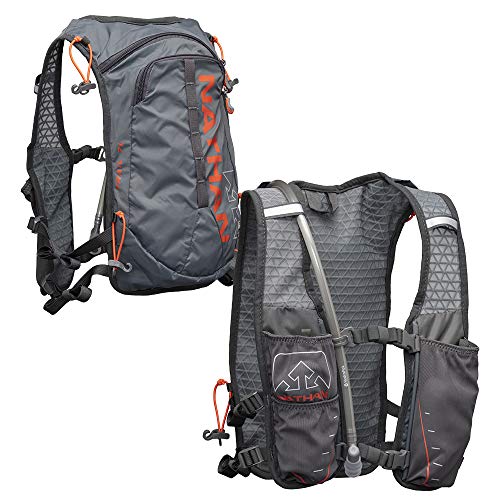
Best for Lightweight Capacity – Nathan TrailMix 7L Hydration Vest
The Nathan TrailMix is a strong fit for shoppers seeking running hydration vests for ultramarathons with more room for nutrition and layers. It provides 7 liters of storage, a 2L bladder, front bottle pockets, and a lightweight mesh build intended to minimize bounce and chafing.
Best For: Runners who need generous storage for long outings while keeping the vest relatively light.
Pros:
- Offers 7 liters of total storage with a 2L hydration bladder included.
- Weighs 7 ounces without the bladder and 11 ounces with it.
- Includes two zippered rear compartments, two front bottle pockets, and an additional front pocket.
- Moisture-wicking mesh, reflective details, and a no-bounce design support active use.
Cons:
- The fit runs slightly small, so sizing up may be necessary.
- Front bottles are not included.
- The supplied specifications list two pockets despite describing additional storage compartments, so capacity details may require confirmation.
With the most clearly stated storage capacity in this group, the TrailMix is well suited to longer runs where food, clothing, and hydration all need to come along. Check the sizing carefully before ordering, especially if layering underneath.
Best for Pocket Organization – Criuage 2L Hydration Vest
The Criuage is aimed at runners who want running hydration vests for ultramarathons with extensive small-item organization. It pairs a dedicated 2L BPA-free PEVA bladder with eight pockets, adjustable cross-body straps, and wide mesh shoulder padding for longer wear.
Best For: Endurance athletes who prioritize numerous accessible pockets for snacks, electronics, and small essentials.
Pros:
- Includes a dedicated 2L BPA-free PEVA water bladder.
- Eight total pockets—four front-facing and four rear—provide substantial organization.
- Adjustable straps and wide mesh shoulder padding are designed to improve comfort and reduce movement.
- Listed capacity is 5 liters, leaving room for gear beyond the bladder.
Cons:
- At 750 g, it is comparatively heavy for a lightweight running vest.
- The supplied dimensions and cross-body design may feel less streamlined than a traditional race vest.
- It lacks a stated overall storage layout beyond the pocket count, so larger items may require planning.
The Criuage stands out for pocket count rather than minimal weight. It makes sense for runners who carry many small items and want quick front access, but weight-conscious ultramarathoners may prefer a lighter design.
How We Picked the Best Running Hydration Vests for Ultramarathons
We focused on the features that matter most during long trail races: usable hydration capacity, front-accessible storage, adjustability, ventilation, weight, and versatility. The selection includes vests with soft flasks, 2-liter reservoirs, or both, along with compact designs for runners who rely on frequent aid stations and larger packs for longer unsupported stretches.
We also considered whether each vest can carry practical essentials such as gels, a phone, keys, a wind shell, and extra layers. Because fit varies substantially by body shape, we treated sizing range, strap adjustment, and pocket placement as important differentiators rather than assuming one design works for everyone.
Quick Comparison
| Best For | What to Look For |
|---|---|
| Minimalist race setup | Lightweight construction, front flasks, and streamlined storage |
| Long sections between aid stations | At least 2 liters of water capacity and room for extra nutrition |
| Mandatory gear | Approximately 7–12 liters of storage with secure rear compartments |
| Hot-weather running | Breathable mesh panels and limited contact with the back |
| Value-focused buyers | Included flasks or bladder, adjustable fit, and accessible pockets |
Key Buying Factors for Running Hydration Vests for Ultramarathons
Capacity and Hydration System
Estimate the longest distance between aid stations, then add a safety margin. Front soft flasks make it easy to drink and monitor intake, while a rear bladder provides higher capacity. A vest with both options offers flexibility but may add weight when fully loaded.
Fit and Stability
A secure vest should sit close to the torso without restricting deep breathing. Look for adjustable chest straps, broad sizing options, and minimal movement when the pack is loaded. Test it with the clothing and supplies you expect to wear on race day.
Storage and Access
Front pockets are ideal for gels, salt capsules, a phone, and frequently used items. Rear storage should fit layers or mandatory equipment without making the vest sag. Zippered pockets are useful for valuables, while stretch pockets allow faster access on the move.
Breathability and Durability
Mesh-backed panels can reduce heat buildup, especially in warm conditions. Check the fabric, stitching, bottle retention, and zipper quality if you expect frequent use on rough trails. Reflective details are also helpful for early-morning or evening training.
Who Should Buy Which Running Hydration Vests for Ultramarathons?
Choose a compact vest if your races have frequent aid stations and you prefer carrying only water, calories, and a few essentials. Pick a 7-liter model for a balanced setup that handles most trail races and training runs. A 10- or 12-liter vest is better for longer unsupported sections, cooler weather, mandatory gear, or runners who carry more nutrition and clothing.
Runners who dislike hose systems may prefer front soft flasks, while those who want fewer refills may favor a bladder. If you are unsure, prioritize fit and storage access first; hydration capacity is only useful when the vest remains comfortable and stable for several hours.